The U.S. Centers for Medicare & Medicaid Services (CMS) issued the final rule for data interoperability and prior authorization (PA) for health plans, which is designed in part to improve the PA process used by payers.
Though the PDUFA date for its BLA wasn’t until March 30, 2024, Vertex Pharmaceuticals Inc. celebrated the U.S. FDA approval Jan. 16 for Casgevy (exagamglogene autotemcel), expanding use the CRISPR/Cas9 gene-edited cell therapy in patients, 12 and older, with transfusion-dependent beta-thalassemia.
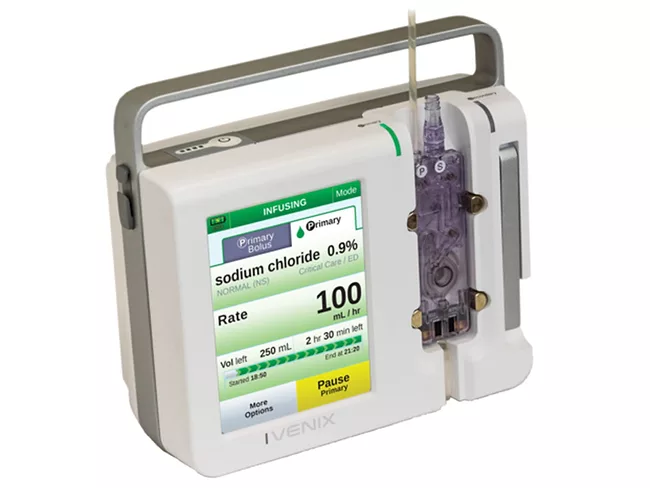
The U.S. FDA has announced a class I recall of Iveninx large-volume infusion pumps made by Fresenius Kabi USA of Lake Zurich, Ill., due to a mechanical issue with fluid valve pins that could cause the pumps to shut down. Fresenius is rolling out a remediation plan for more than 900 pumps affected by the recall, which to date has been associated with no reports of injury or death.
The history of med-tech patent litigation is replete with long-running conflicts that test the willpower of the participants, which increasingly seems to be the case in a series of lawsuits between Masimo Corp. and Apple Inc.
The U.S. Patent and Trademark Office (USPTO) published new enablement guidelines Jan. 10 to provide more consistency across technologies to ensure patent applications truly enable the breadth of their claims in keeping with the Supreme Court’s unanimous decision last year in Amgen Inc. v. Sanofi SA.
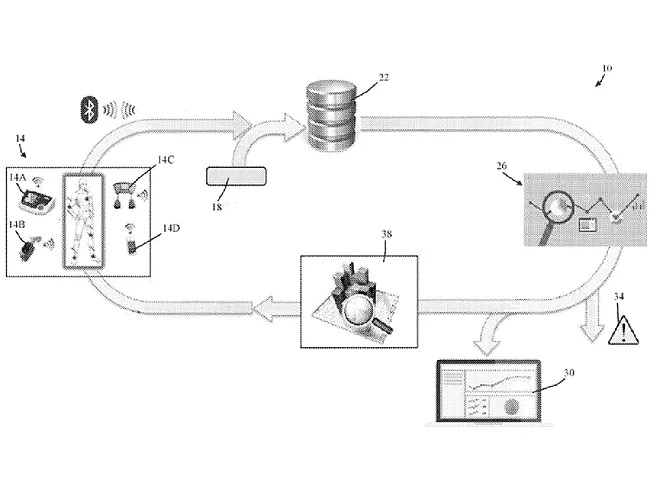
In what represents the first patenting from Immersive Reality Group LLC, the company’s co-founders describe their Intellighealth system for detecting the early onset of respiratory diseases using artificial intelligence and wearable remote health monitoring technologies.
The ongoing controversy over the use of ethylene oxide (EtO) as a medical device sterilant has yielded a certification by the U.S. FDA for hydrogen peroxide as an alternative category A sterilant. The news is a welcome bit of relief for industry and for patients as the Environmental Protection Agency still seems bent on imposing what some in industry see as draconian controls on EtO, which is still employed to sterilize half of all medical devices used in the U.S. each year.
Medtronic plc received the greenlight from the U.S. FDA for its latest deep brain stimulation system, the Percept RC. The rechargeable neurostimulator includes the company’s sensing technology which captures data from brain signals and allows for more personalized therapy.
The U.S. FDA is promising to make 2024 a “breakout” 12 months for gene therapies, with a number of initiatives to promote clinical development, approvals and uptake. “This is a great year to focus on gene therapy,” said Peter Marks, director of the Center for Biologics Evaluation and Research at the FDA. “I just want to focus on moving ahead gene therapy,” he told attendees of the J. P. Morgan Healthcare Conference on Jan. 8.
The U.S. Patent and Trademark Office (USPTO) published new enablement guidelines Jan. 10 to provide more consistency across technologies to ensure patent applications truly enable the breadth of their claims in keeping with the Supreme Court’s unanimous decision last year in Amgen Inc. v. Sanofi SA.
 RSS
RSS