Although consensus was not reached on the World Health Organization’s pandemic agreement, the World Health Assembly recognized the progress made by member states to develop a pandemic agreement and to strengthen International Health Regulations (IHR, 2005) during the 77th World Health Assembly meeting held May 27 to June 1 in Geneva.
Unblinding, zealous therapists, severity of harms, abuse potential and actual benefit could all be part of the conversation June 4 when the U.S. FDA’s Psychopharmacologic Drugs Advisory Committee meets in person for the first time since the COVID-19 lockdowns to consider the use of a psychedelic drug, guided by psychotherapy, to treat post-traumatic stress disorder, or PTSD.
The EMA has been sent back to the drawing board to re-evaluate PTC Therapeutics Inc.’s Duchenne muscular dystrophy therapy Translarna (ataluren), after failing to get the usual rubber stamp following its recommendation in January that the drug’s conditional approval be withdrawn.
The American Society of Clinical Oncology (ASCO) meeting opened at the McCormick Place convention center in Chicago with after-lunchtime sessions on breast cancer, melanoma, sarcoma and advancements on adjuvant cancer vaccines. As ASCO revved up, the CEOs of Merck & Co. Inc., Gilead Sciences Inc. and Eli Lilly and Co. vented their frustrations about the impact of the Inflation Reduction Act on innovation.
Moderna Inc. gained U.S. FDA approval on May 31, nearly three weeks past its original PDUFA date, for its respiratory syncytial virus (RSV) vaccine Mresvia (mRNA-1345), which had both breakthrough therapy and fast track designations in the U.S.
Despite U.S. NIH policy and its peer-review grant process, providing for inclusive enrollment in phase III NIH-funded clinical trials seems to be a check-the-box exercise for many researchers. In a review of a sample of phase III NIH-funded trials conducted between 2016 and 2020, the Health and Human Services Office of Inspector General found that two-thirds had the required inclusive enrollment plans, but 57% of the trial plans provided no explanation or rationale for the enrollment targets.
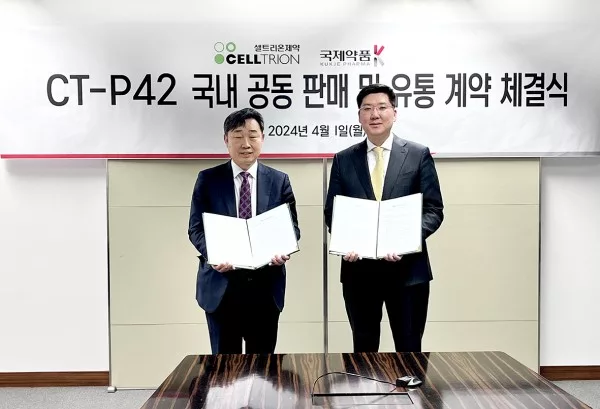
Celltrion Inc., of Incheon, South Korea, gained MFDS clearance of Eydenzelt (CT-P42) as a biosimilar referencing Regeneron Pharmaceuticals Inc./Bayer AG’s Eylea (aflibercept) on May 30. The news comes on the heels of the U.S. FDA approving the first Eylea interchangeable biosimilars on May 20.
The EU has given the go ahead for a large-scale transnational project that will invest €6.9 billion (US$7.45 billion) to address unmet medical need and fill gaps across the pharmaceutical value chain.
A recent hearing in the U.S. House of Representatives highlighted some of the issues Congress has with the agency’s performance, but there were questions as well about the FDA’s statutory authorities. One of these is the lack of statutory authority to require a recall for prescription drugs as well as the deadline for notifying the agency of device recalls, both of which are areas of legislative interest on the part of Congress.
 RSS
RSS