The European Council adopted a regulation Jan. 25 giving the EMA a stronger role in crisis preparedness and the management of drugs and medical devices during a crisis.
LONDON – The industry is expressing divergent views of changes to how the U.K. health technology assessment agency, the National Institute for Health and Care Excellence (NICE), will in the future select what products to assess and the methods and processes it will use to carry out its evaluations.
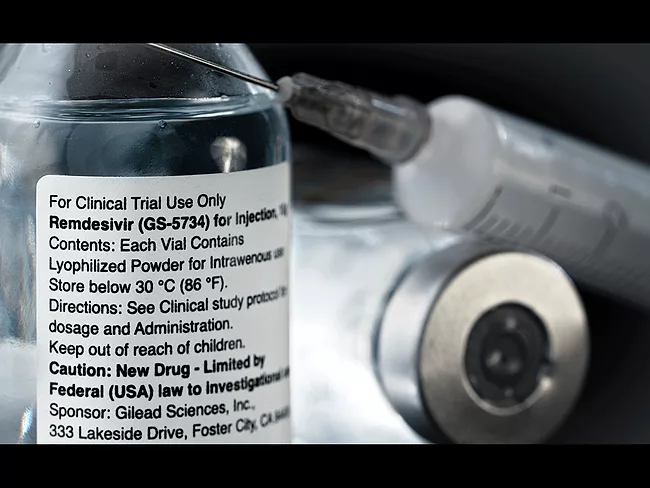
Once again, the U.S. FDA giveth and it taketh away. Just a few days after expanding its approval for Gilead Sciences Inc.’s Veklury (remdesivir) to provide access to more people infected with COVID-19, the FDA essentially shut down the use of two monoclonal antibody (mAb) treatments Jan. 24 that had been authorized to treat mild-to-moderate COVID-19 infections – Regeneron Inc.’s Regen-Cov (Ronapreve in Europe), an antibody cocktail of casirivimab and imdevimab, and Eli Lilly and Co.’s bamlanivimab and etesevimab that are administered together.
In late February 2021, Oncopeptides AB scored a big win on the FDA’s accelerated approval for the first cancer peptide-drug conjugate, Pepaxto (melphalan flufenamide), in multiple myeloma. Less than eight months later, it was shutting down commercial operations and heading back to the drawing board after safety issues emerging in the confirmatory Ocean study prompted the Stockholm-based firm to pull Pepaxto from the market, just ahead of what was likely to be a negative FDA advisory panel vote.
Despite success in other parts of the world, Opko Health Inc. and Pfizer Inc. are still struggling to gain U.S. FDA approval for the recombinant human growth hormone somatrogon in treating pediatric patients, drawing a complete response letter (CRL) with their BLA. The delay caused by the setback gives Skytrofa (lonapegsomatropin) from Ascendis Pharma A/S a chance to charge even further ahead in the pediatric market.
Merck & Co Inc. has had a setback with its chronic cough drug gefapixant after the FDA rejected its NDA, a decision that also briefly hit the share price of rival Bellus Health Inc. before it regained market traction late Jan. 24. The FDA had been reviewing gefapixant since March 2021, but the regulator is now asking for additional information related to measurement of efficacy in a dreaded complete response letter. Merck said the response was not related to the safety of gefapixant, a P2X3 receptor antagonist, under development for treatment of refractory chronic cough (RCC) or unexplained chronic cough in adults. Shares in Merck (NYSE:MRK) ticked down 1.4% to $78.86 while Bellus Health shares (NASDAQ:BLU) rose by 1.8% to $5.66.
Regulatory snapshots, including global drug submissions and approvals, clinical trial approvals and other regulatory decisions and designations: Arch, Kura, Lannett, Regulus.
Administering multiple booster doses against COVID-19 is not sustainable in the longer term, international drug regulators said during a meeting of the International Coalition of Medicines Regulatory Authorities, held Jan. 12. Regulators argued that a long-term strategy should involve vaccines capable of tackling several variants at once, not just omicron, and that tweaking existing vaccines and comparing them with first-generation vaccines using clinical studies is the way forward, according to a report from the meeting.
Regulatory snapshots, including global drug submissions and approvals, clinical trial approvals and other regulatory decisions and designations: AB Science, Amgen, AN2, Aptorum, Argenx, Beigene, Betterlife, Clairvoyant, Compass, Idorsia, Jeil, Marker, Novavax, Nuvation, Omeros, Opko, Palleon, Pfizer, Rockwell, Senhwa, Turning Point.
 RSS
RSS