The U.S. FDA’s Anesthetic and Analgesic Drug Products Advisory Committee will scrutinize Jan. 10 the safety and efficacy of Ferring Pharmaceuticals Inc.’s SI-6603 (condoliase), a chemonucleolytic drug for radicular leg pain associated with lumbar disc hernia.
It’s taken nearly a decade for the U.S. FDA to go from zero to 60 in approving biosimilars. Currently, 63 biosimilars have been approved in the U.S., thanks to 18 new approvals in 2024 that stretched the number of biologics referenced by biosimilars from 14 to 17. That’s an all-time record, CDER Director Patrizia Cavazzoni said, as she released the drug center’s annual approval report for 2024.
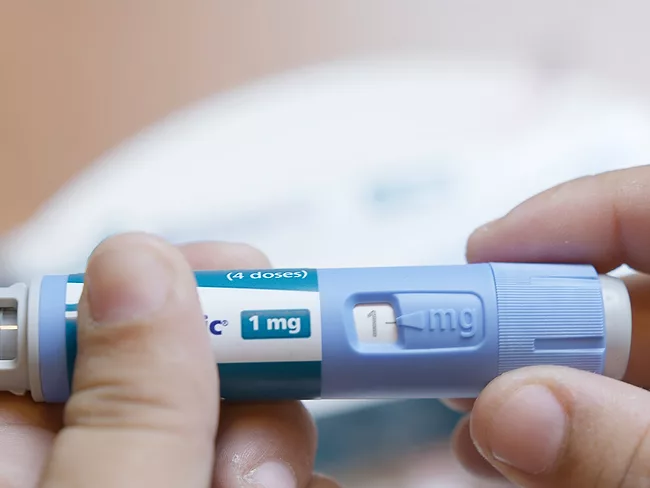
With obesity drugs taking the U.S. and global markets by storm and more than 100 clinical programs currently in progress for the drugs, the U.S. FDA released a draft guidance Jan. 7 to help sponsors develop drugs and biologics for weight reduction and long-term maintenance of body weight.
What does it mean for a confirmatory trial to be “underway”? That’s a question that’s been plaguing some drug sponsors, especially those in the ultra-rare disease space, since the U.S. Congress, in 2023, gave the FDA the authority to require that a confirmatory trial be underway at the time accelerated approval is granted.
Stressing the importance of integrity in taxpayer-funded biomedical research, the U.S. Department of Justice reported that Athira Pharma Inc. has agreed to pay more than $4 million to resolve False Claims Act allegations that it failed to report potential research misconduct to the NIH and the Department of Health and Human Services’ Office of Research Integrity in grant applications and progress reports.
China’s health regulator gave conditional approval to Platinum Life Excellence Biotech Co. Ltd.’s amimestrocel injection (hUC-MSC PLEB-001, Ruibosheng) as the nation’s first human umbilical cord-derived mesenchymal stem cell therapy to treat steroid-refractory acute graft-vs.-host disease on Jan. 2, 2025.
Tanvex Biopharma Inc. said its U.S. subsidiary, Tanvex Biopharma U.S.A. Inc., received an FDA complete response letter (CRL) on Jan. 3 for its TX-05 BLA, a biosimilar that references Roche AG’s Herceptin (trastuzumab). The CRL cites unnamed issues that need to be addressed by the downstream manufacturer of TX-05, which is a third-party service provider of Tanvex U.S. for its drug product.
South Korea’s government continued to ramp up investment in its pharmaceutical and med-tech sector in 2025, including a 7.2% hike for the Ministry of Health and Welfare’s budget and a near 15% increase in funding to research and develop innovative biotechnologies.
With artificial intelligence (AI) becoming more and more common in drug development since 2016, the U.S. FDA is now issuing its first draft guidance on that use. The “FDA recognizes the increased use of AI throughout the drug product life cycle and across a range of therapeutic areas. In fact, CDER has seen a significant increase in the number of drug application submissions using AI components over the past few years,” a CDER spokesperson told BioWorld. “These submissions traverse the drug product life cycle, which includes nonclinical, clinical, postmarketing and manufacturing phases.”
Makers of digital health apps are not often subject to the provisions of the Health Insurance Portability and Accountability Act (HIPAA), but any such liabilities may soon become more onerous. The Department of Health and Human Services released a draft update for HIPAA cybersecurity mandates – the final version of which is sure to be accompanied by much more vigorous enforcement.

 RSS
RSS