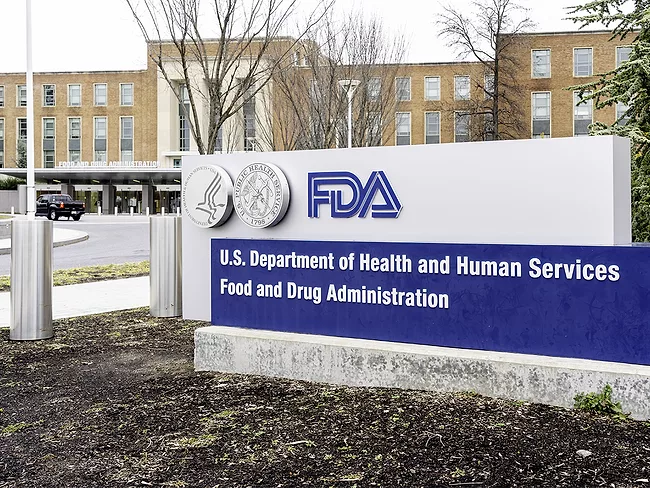
The U.S. FDA’s draft guidance for package labeling recommendations for hernia mesh products did not draw a large volume of comments, but the Medical Device Manufacturers Association advised the agency that the information disclosed on package labels should be limited as the package is often too small to provide adequate readable information.
The U.S. FDA’s Aug. 11, 2025, warning letter to LeMaitre Vascular Inc. discloses that the agency was troubled by what it saw as problems with sterility-related processes used to manufacture the Artegraft device, findings that could complicate relations between the company and its customers.
The 50 million Europeans with peripheral artery disease have a new treatment option thanks to help restore blood flow to vessels below the knee now that Abbott Laboratories' Esprit BTK everolimus-eluting resorbable scaffold system has received CE mark. The stent, made of a material similar to dissolvable sutures, dissolves within three years.
The U.S. Patent and Trademark Office has reacted to the Federal Circuit’s decision in Shockwave v. CLSI with a policy memo that draws tighter lines around the use of applicant admitted prior art in attempts to invalidate a patent during inter partes reviews.
The Medical Device Authority of Malaysia reported on Aug. 22 the piloting of a bilateral medical device approval program with Singapore to streamline the review and launch of medical devices in both countries.
The U.S. FDA has announced a class I recall for the Wallstent Monorail system by Boston Scientific Corp. of Marlborough, Mass, a device for treatment of carotid artery stenosis. The company advised customers in early July to return any unused inventory because the inner diameter of the stent is narrower than intended, which may lead to difficulties in extracting the delivery device after placement of the stent.
Medtronic plc expects its Hugo robotic-assisted surgery system to be a key growth driver, especially when it receives U.S. FDA approval. Already approved for use in Europe, Medtronic recently received CE mark for the Ligasure technology to be used with the Hugo RAS system, expanding its capabilities for gynecologic, general and urologic procedures, across the region.
The U.S. FDA has cleared Artrya Ltd.’s 510(k) for its Salix coronary plaque (SCP) module that is a bolt-on module to the company’s Salix coronary anatomy platform.
The U.K. National Institute for Health and Care Excellence has recommended that physicians in the U.K. use the least expensive, clinically appropriate TAVR device when possible, concluding a pricing review that commenced roughly a year ago.
On Thursday, the Supreme Court handed the Trump administration another significant victory in its attempts to defund NIH-sponsored research. In a 5-4 decision, the justices paused the June 16 order of U.S. District Judge William Young to restore funding for hundreds of canceled NIH research grants focusing on gender and diversity, equity and inclusion (DEI). The funding had first been cut through a series of executive orders shortly after President Donald Trump resumed power in January.
 RSS
RSS