The U.S. FDA’s stated policy is that it will not review emergency use authorizations (EUAs) for lab-developed tests (LDTs) for the COVID-19 pandemic, but that doesn’t mean labs are completely shut out. The FDA’s Toby Lowe said that a lab that wants to pair an assay that already has an EUA with a new software installation on lab instrumentation can work with the assay developer to update that EUA.
The latest global regulatory news, changes and updates affecting medical devices and technologies, including: HHS plans retrospective regulatory review.
Royal Philips NV is reporting the launch of Philips Ventilator Bipap A40 EFL, a noninvasive ventilator that aims to help patients with chronic obstructive pulmonary disease (COPD) breathe easier. With its CE mark in hand, the company has tagged initial target markets as France, Italy and the U.K. Additional European markets are expected to come next year.
The U.S. FDA has granted breakthrough device designation to Salvia Bioelectronics BV for its implantable neurostimulation system to treat chronic migraine. The designation, which provides for priority review and consultation with the agency on product development, underscores the need for effective treatments for the costly and debilitating condition. According to a summary in a patent filing, the wireless system comprises a treatment pulse generator unit and an implantable electrode unit to provide neurostimulation therapy for headaches.
The latest global regulatory news, changes and updates affecting medical devices and technologies, including: FDA announces recall of discontinued Medtronic catheter.
Regulatory snapshots, including global submissions and approvals, clinical trial approvals and other regulatory decisions and designations: Abbott, Biolytical Laboratories, DNA Genotek, Pari Pharma, Salvia Bioelectronics.
To say a lot is riding on the Nov. 3 presidential and congressional election in the U.S. would be an understatement, as the outcome could impact drug pricing, patent reform, research spending and pandemic response and preparedness.
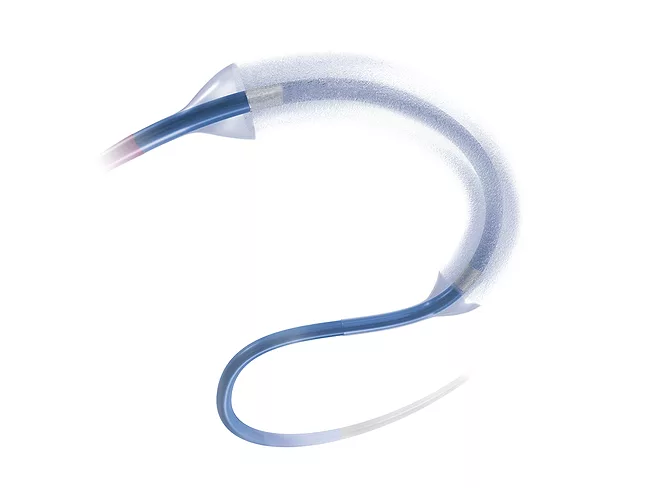
Boston Scientific Corp. has scooped up an approval from the U.S. FDA for the Ranger drug-coated balloon to help those with peripheral artery disease in the superficial femoral artery and proximal popliteal artery.
Patient perspectives on medical device development are becoming much more central to the U.S. FDA’s regulation of devices, thus the August 2020 draft guidance for selection of patient-reported outcome (PRO) instruments for device evaluation. However, the draft is sufficiently vague on the question of when an existing PRO can be tweaked without an entirely new validation study to prompt the Advanced Medical Technology Association (Advamed) to press the agency for more clarity on that point.
 RSS
RSS