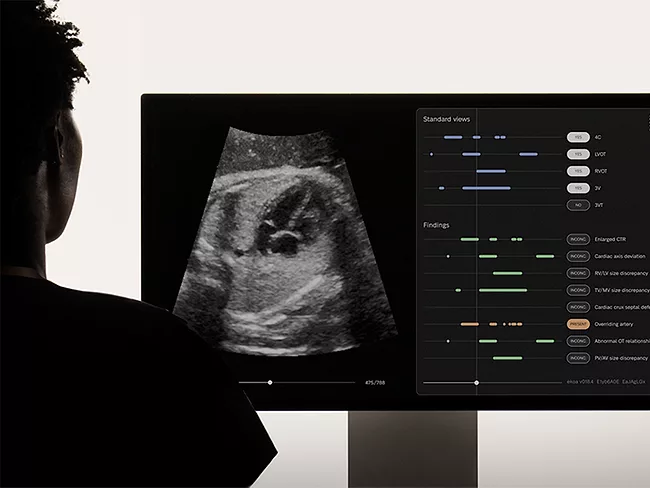
The U.S. FDA granted Brightheart SAS 510(k) clearance for its artificial intelligence software which helps doctors detect congenital heart defects in fetuses. The software will transform prenatal ultrasound evaluations of the fetal heart and improve the outcomes for newborns, Cécile Dupont, Brightheart’s CEO, told BioWorld.
Smartcardia SA received U.S. FDA clearance for mobile outpatient cardiac telemetry for its seven-lead live ECG monitoring patch and cloud platform. With the approval, the solution can now be used for remote live monitoring of a patient’s ECG and immediately notify clinicians in cases of arrhythmias.
Makers of devices and diagnostics face a new set of policy questions following the 2024 U.S. general elections, but many of the impending changes at the executive branch seem directed more toward drugs and vaccines, seemingly leaving the device and diagnostics industries largely out of harm’s way.
Med-tech companies raised $7.35 billion in the third quarter of 2024, slightly down from $7.49 billion in the second quarter but up from $6.45 billion in Q1. Through the first three quarters of the year, total funding reached $21.28 billion, marking a 48% increase compared to $14.36 billion during the same period in 2023.
Eko Health Inc. recently won a category III CPT code for its Sensora platform for cardiovascular disease detection. While a “cat III” CPT code hasn’t traditionally excited industry, the company is convinced that payers will respond because of the massive costs associated with cardiovascular disease.
Johnson & Johnson received U.S. FDA investigational device exemption to begin the pivotal clinical trial for the Ottava robotic surgical system. If the trial goes well, Ottava could pose a significant challenge to decades-long dominance of the robotic surgical market by Intuitive Surgical Inc.’s Da Vinci system.
Device makers are not necessarily fond of the need to acquire Medicare coverage by picking off one Medicare administrative contractor at a time, but Cleerly Labs Inc. worked this path with gusto.
The U.S. FDA’s Nov. 1 warning letter to Owens & Minor Inc. criticized the company for a lack of documentation that two components of convenience kits had been validated for sterilization with ethylene oxide.
 RSS
RSS