Regulatory snapshots, including global drug submissions and approvals, clinical trial approvals and other regulatory decisions and designations: Amylyx, Aneurotech, Dyne, Hyloris, Novavax, Pfizer, Sanofi, Xbrane.
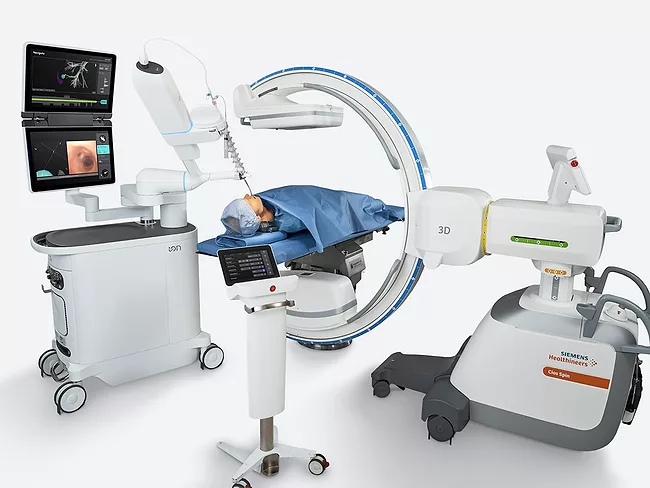
Lung cancer claims more lives each year than any other cancer, making early and accurate diagnosis crucial to improving survival rates. To that end, the U.S. FDA has cleared the integration of Intuitive Surgical Inc.’s Ion endoluminal system and Siemens Healthineers AG’s Cios Spin mobile imaging cone-beam CT imaging technology to enhance robotic lung biopsies.
Two Israeli companies aiming to improve in vitro fertilization (IVF) success rates received good news recently, with Aivf Ltd. hauling in $25 million in a series A round for Ema, its IVF software platform, and Fairtility Ltd. gaining CE mark for its CHLOE EQ embryo quality decision-support tool.
The U.S. FDA is hailing two revised draft guidances it released July 5 as “critical steps” toward implementing the electronic drug tracing requirements of the Drug Supply Chain Security Act.
Curevac NV has filed a patent lawsuit against fellow German mRNA pioneer Biontech SE claiming that the latter firm’s COVID-19 vaccine, Comirnaty, infringes its intellectual property.
A U.S. federal jury breathed new life into so-called pay-for-delay settlements when it found that a 2010 agreement between Endo International plc and Impax Laboratories LLC was procompetitive as it allowed Impax to launch its generic version of Opana ER, an opioid pain drug, before key patents expired.
South Korea’s Ministry of Food and Drug Safety has granted marketing authorization to SK Bioscience Ltd.’s COVID-19 vaccine, Skycovione (GB-510), marking the country’s first homegrown COVID-19 vaccine to be approved. The company has already signed an advanced purchase agreement with the Korea Centers for Disease Control for 10 million doses of the vaccine.
Japan is establishing a centralized infectious disease crisis management agency that will be under direct control of the prime minister. One of the goals is to better clarify the chain of command and to bring together resources and COVID-19 task forces from the Cabinet Secretariat and the Ministry of Health, Labor and Welfare.
As an ever-increasing share of companies seek signs of efficacy for investigational drugs in early stage studies, single-arm trials to confirm those effects and support marketing applications are also becoming more common. Now, China’s Center for Drug Evaluation has released draft guidelines on how single-arm trials can be regulated, used to support the new drug application for cancer drugs, and accelerate oncology drug development.
Akeso Inc. has been given the green light by China’s NMPA for its PD-1/CTLA-4 antibody Kaitanni (cadonilimab), which was approved for the treatment of patients with relapsed or metastatic cervical cancer whose disease has progressed on or after platinum-based chemotherapy.

 RSS
RSS