Additive manufacturing, often referred to as 3D printing, has evolved considerably over the past few decades, and plays a significant role in the world of orthopedic devices. Despite numerous technological advances, additive manufacturing (AM) still accounts for a small share of the device market and may never overwhelm traditional manufacturing for the med-tech industry due to a number of limitations.
My01 Inc. has received FDA clearance for its My01 Continuous Compartmental Pressure Monitor with full Bluetooth capabilities. The device is intended to help doctors diagnose and avert the risks of developing compartment syndrome, a potentially devastating complication of certain fractures and trauma injuries.
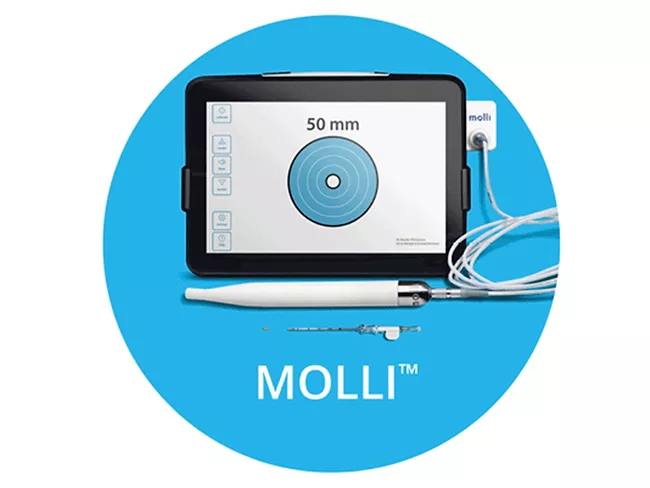
Molli Surgical Inc. has won the FDA’s nod for its wire-free localization technology for breast cancer surgery. The company said the Molli system helps radiologists tag cancerous lesions quickly and precisely, facilitating surgical excision and eliminating a source of anxiety associated with breast tumor removal.
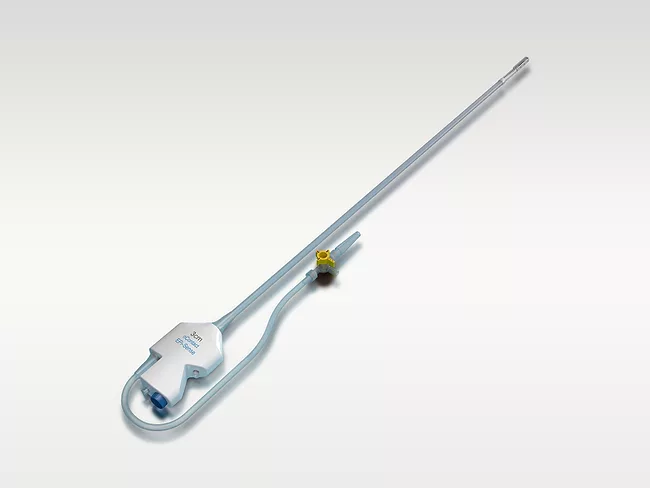
Atricure Inc. has received the green light from the FDA for its Epi-Sense guided coagulation system with Visitrax technology to treat patients diagnosed with long-standing, persistent atrial fibrillation (AF). The device was previously cleared via a 510(k) for the coagulation of cardiac tissue, and is already available in the U.S. The FDA approval represents the first and only minimally invasive ablation therapy for the more than 3 million Americans with longstanding AF.
The FDA’s premarket review mechanisms for class II medical devices may strike some as little more than so much regulatory esoterica, and several courts have ruled that information about the 510(k) process is inadmissible during jury trials due to the possibility of sowing confusion among jurors. An appellate court in New Jersey has ruled that such an exclusion of evidence is prejudicial in a case involving surgical mesh manufactured by two device companies, however, opening a larger debate about the propriety of such exclusions in product liability litigation for medical devices.
Depression treatment still isn’t “once and done,” but the time needed to reduce symptoms continues to drop for patients using electromagnetic stimulation. Brainsway Ltd.’s Theta Burst brings treatment times down to just three minutes with its FDA 510(k) clearance.
The FDA has approved Roche AG’s Ventana MMR Rxdx panel for patients with advanced or recurrent endometrial cancer. The companion diagnostic is the first to identify patients who are eligible for treatment with Glaxosmithkline plc’s (GSK’s) Jemperli (dostarlimab-gxly) monotherapy. The PD-1 antibody immunotherapy received FDA approval on Thursday.
Zimmer Biomet Holdings Inc. has won the FDA’s nod for its Rosa Partial Knee system for robotically assisted partial knee arthroscopy. The new system is the latest addition to the Rosa Robotics platform, which also includes the Rosa Knee system for total knee replacement and Rosa One for neurosurgical and spine procedures. The Rosa Partial Knee system is designed to be compatible with Zimmer’s Personal partial knee. It incorporates 2D to 3D X-Atlas imaging technology and real-time, intraoperative data collection on both soft tissue and bone anatomies to ensure accurate bone cuts and improve range of motion gap analysis.
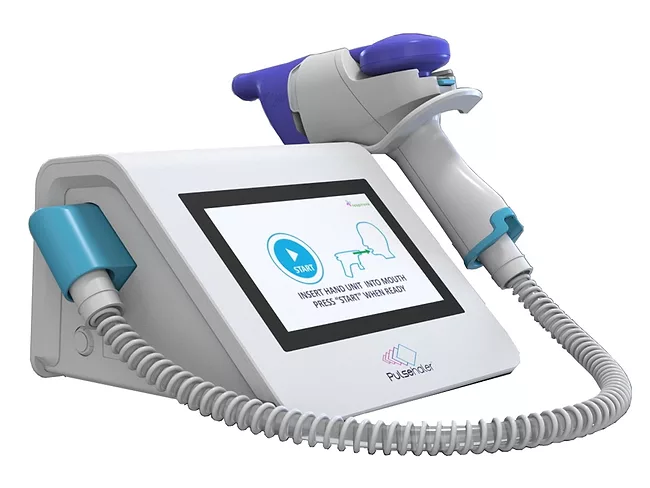
The management team at Respinova Ltd. is breathing easier with the FDA's 510(k) clearance of the company's Pulsehaler. Using pulsed air pressure, the device opens airways and clears secretions in patients with respiratory diseases. The clearance represents the device’s first endorsement by a regulatory agency, though the company hopes it will soon be joined by others.
Vysioneer Inc. has won the FDA’s nod for its Vbrain artificial intelligence (AI)-powered tumor autocontouring software. The company said Vbrain is the first AI device to receive FDA clearance for tumor autocontouring in radiation therapy. Vbrain is a neural network-based AI solution, trained from clinical data.
 RSS
RSS