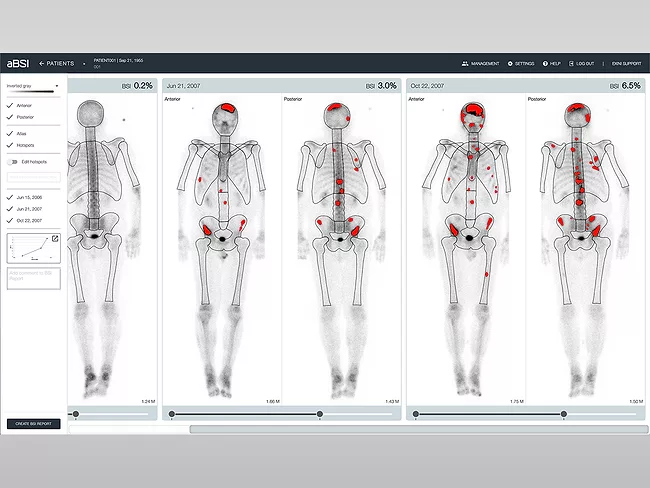
The U.S. FDA granted 510(k) clearance to Lantheus Holdings Inc.'s artificial intelligence (AI)-enhanced automated bone scan index (aBSI) product for prostate cancer on GE Healthcare's Xeleris platform. ABSI improves quantification and management of disease progression in advanced prostate cancer patients.
Abiomed Inc. has won the U.S. FDA’s nod for its Breethe Oxy-1 device, an all-in-one, compact cardiopulmonary bypass system designed for easy mobility. The company plans a controlled release at U.S. hospitals between now and March of 2021, with widespread availability later that year.
Aidoc Inc., a provider of artificial intelligence (AI) solutions in radiology, has won U.S. FDA clearance to market the first software solution for flagging and triaging incidental pulmonary embolism (PE). The AI technology, which includes triaging and notification algorithms, is an “always on” technology that analyzes chest CT scans in real time and alerts the radiologist to any potentially abnormal findings – possibly speeding up diagnosis by hours.
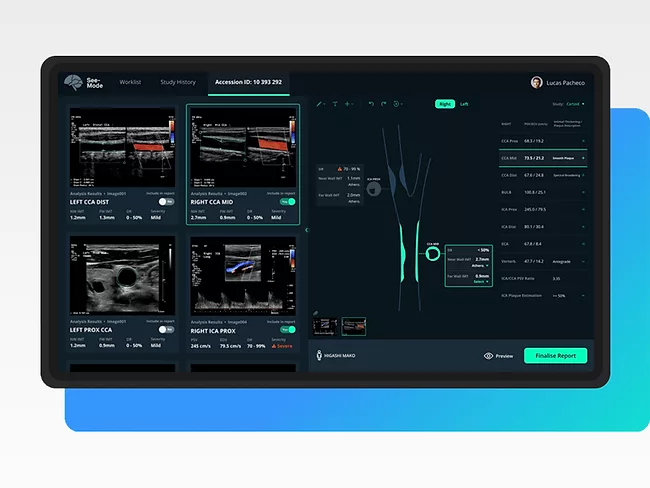
PERTH, Australia – See-Mode Technologies has received 510(k) clearance from the U.S. FDA to market its Augmented Vascular Analysis (AVA) program that uses artificial intelligence (AI) to analyze vascular ultrasound scans to better predict stroke. Caused by plaque that ruptures in blood vessels and blocks blood flow to the brain, stroke affects roughly 15 million people per year and is the second-leading cause of death globally.
The U.S. FDA cleared Ezra AI Inc.'s artificial intelligence (AI) system for prostate cancer and its cloud-based picture archiving and communication system (PACS) that enables radiologists to use the Prostate AI from their browser. The New York-based company’s Prostate AI is the first prostate-focused artificial intelligence system to gain clearance. The Prostate AI accurately quantifies prostate volume, lesion size, and renders 3D volumes of the prostate gland and lesions.
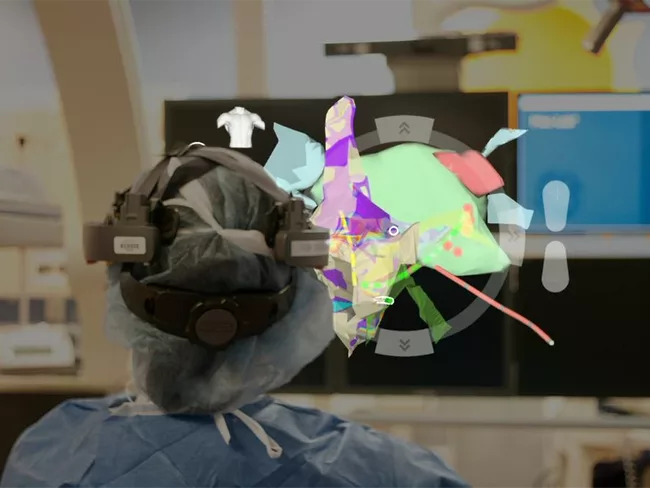
Sentiar Inc. received U.S. FDA clearance for its holographic guidance system, known as Commandep, for use in cardiac ablation procedures. The system allows electrophysiologists (EPs) to visualize 3D electroanatomic models in real-time, using augmented reality (AR), to seamlessly navigate invasive procedures. “The Commandep is intended for use as a medical imaging system that allows the review, analysis, communication and media interchange of multidimensional digital images,” Berk Tas, Sentiar’s CEO, told BioWorld.
TORONTO – Ka Imaging Inc. has received U.S. FDA 510(k) clearance for a portable, dual-energy X-ray detector that distinguishes itself from others in this class by delivering regular digital radiography, bone and tissue images in a single X-ray exposure. Designed for early detection of pneumonia, including COVID-19, the Reveal detection system also differentiates bone and soft-tissue.
B-Temia Inc.’s Keeogo mobility device is on the move in the U.S. now that it has received 510(k) clearance from the U.S. FDA. Unlike currently available exoskeletons that move for patients, the Keeogo (keep on going) Dermoskeleton system amplifies signals from patients who can initiate movement but need additional assistance.
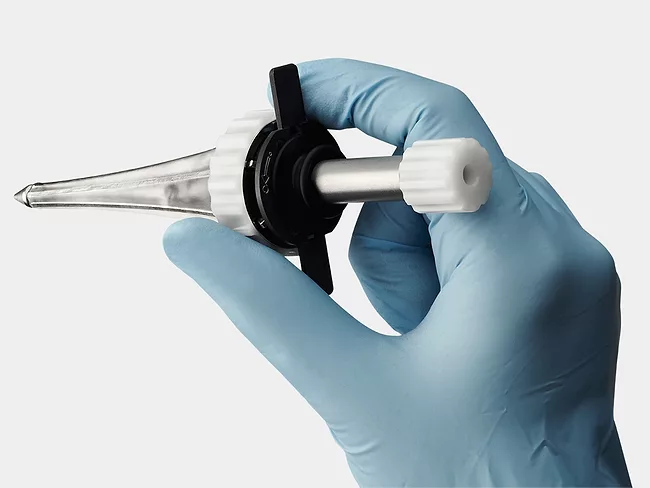
Minnetronix Medical Inc. has won the U.S. FDA’s nod for its Mindseye Expandable Port for neurosurgical procedures. The company touts the device as the first minimally invasive, retractable deep brain access system for use in the treatment of stroke, cancer and other conditions.
LONDON – Gyroscope Therapeutics Ltd. is poised to move the field of ocular gene therapy on from the treatment of inherited rare diseases to address more common eye conditions, after receiving FDA 510(k) clearance for its Orbit SDS subretinal delivery device.
 RSS
RSS