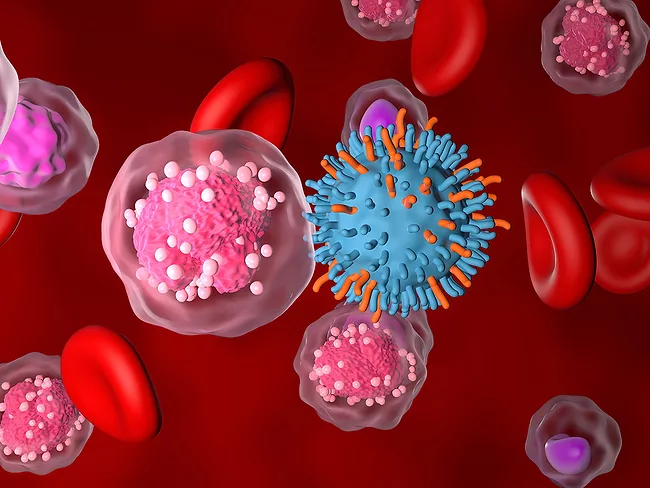
Autolus Therapuetics plc has been granted FDA approval for Aucatzyl (obecabtagene autoleucel) for the treatment of acute lymphoblastic leukemia in adults, becoming the first marketed CAR T therapy that does not have a risk evaluation and mitigation strategy attached to its label. The approval of Aucatzyl was based on results of the Felix clinical trial in relapsing/remitting ALL, which showed a strong safety profile compared to existing CAR T-cell therapies. The conduct of the trial was dogged by the COVID-19 pandemic, but of the 65 patients from an initial dosed cohort of 95 for whom efficacy was evaluated by the FDA, 63% achieved overall complete remission.
Gene therapy faces complexities in delivering treatments due to persistent safety concerns and daunting immune responses, but Next Generation Gene Therapeutics Inc. has found a way around this issue using dual-functional vectors to simultaneously remove harmful, mutated genes and replace them with normal, healthy genes to restore cellular function.
While uncertainty often casts a shadow on the Street, U.S. investors welcomed the presidential and congressional election results with a late-night surge that carried into the morning Nov. 6. The Dow Jones peaked at 1,380.47 points early the day after, up 3.27% from Election Day itself and hitting its highest point of the year so far. The celebration extended to the biotech sector, with the BioWorld Index, which covers more than 500 companies, up 17.06% for the year, compared with a 12.28% increase for the year on Nov. 1.
The FDA has lifted a clinical hold on Carsgen Therapeutics Holdings Ltd.’s. CAR T products after issuing the company a warning letter following a December 2023 FDA inspection that found the company violated good manufacturing practices at its Research Triangle Park facility in Durham, N.C.
Drug regulators around the world have a unique opportunity – and, in some cases, a legal mandate – to remove the taint of forced labor from the biopharma supply chain. But some of them, including the U.S. FDA and Japan’s PMDA, may be turning a blind eye to those responsibilities, according to a recent report from the nonprofit Centers for Advanced Defense Studies.
Japan’s Pharmaceuticals and Medical Devices Agency (PMDA) set up its second overseas regulatory office in Washington, four months after the drug and med-tech regulator opened its first Asia base in Bangkok, Thailand, in July 2024.
Disc Medicine Inc. found itself after an end-of-phase II meeting with the U.S. FDA in what Wainwright analyst Douglas Tsao called a “best-case scenario” regarding the path forward for bitopertin in erythropoietic protoporphyria (EPP).
The second time around wasn’t lovelier for Lexicon Pharmaceuticals Inc. as it once again made its case before the U.S. FDA’s Endocrinologic and Metabolic Drugs Advisory Committee for Zynquista (sotagliflozin) as an adjunct to insulin to improve glycemic control in people with type 1 diabetes and mild to moderate chronic kidney disease.
Cell and gene therapy companies are the beneficiaries of positive changes along the regulatory path that the U.S. FDA is paving for them, according to a panel of executives who spoke at the BioFuture 2024 conference in New York. The agency is trying to set up cell and gene companies for success and that’s a very different agency than what it was years ago, said Paul Bresge, CEO of Ray Therapeutics Inc.
Lexicon Pharmaceuticals Inc. is counting on the Oct. 31 meeting of the U.S. FDA’s Endocrinologic and Metabolic Drugs Advisory Committee to help it break through the type 1 diabetes (T1D) door with Zynquista (sotagliflozin), proposed as an adjunct to insulin to improve glycemic control in people with T1D and mild to moderate chronic kidney disease.
 RSS
RSS