Endogenex Inc. closed an oversubscribed $88 million series C financing round to support completion of its investigational device exemption trial for the Recet system. The Recet system uses non-thermal pulsed electric fields to remodel the duodenal tissue to treat adults with type 2 diabetes.
Even though the U.S. FTC recently claimed a court victory in its campaign to shut down the listing of device patents for drugs in the FDA’s Orange Book, 80% of the listings targeted in the commission’s first round of warning letters remain in place more than seven months later.
It appears that the expression no news is good news is especially applicable to intra-aortic balloon pumps (IABPs), thus the class I recall of Arrow International devices was bad news for patients.
After a rocky year, Akili Inc. received U.S. FDA clearance for use of its non-prescription product, Endeavorotc, for treatment of adults with attention deficit/hyperactivity disorder (ADHD). Endeavorotc employs a video game format to improve attention in individuals with inattentive or combined-type ADHD.
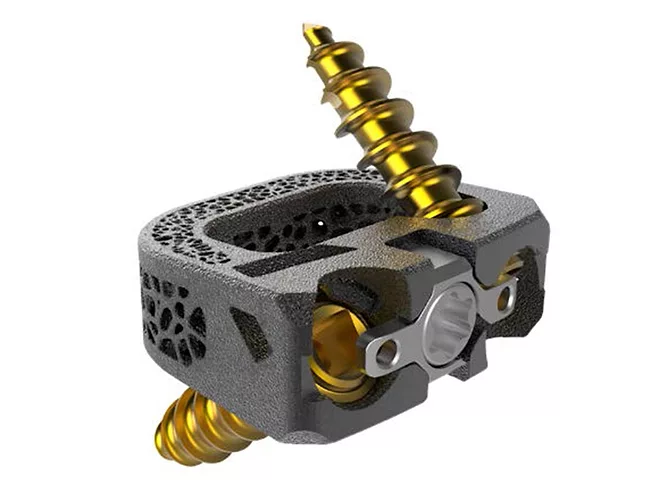
Inosys Korea Co. Ltd. gained U.S. FDA 510(k) clearance for Unispace, a cervical spine cage manufactured with 3D printing technology. Unispace can be used during spinal fusion surgery, Busan-based Inosys said, wherein operators can remove a patient’s diseased or damaged disc and replace it with the cervical cage to maintain the original length of the spine.
Elutia Inc. received U.S. FDA clearance for its antibiotic-eluting bioenvelope. Designed to prevent post-operative complications from the implantation of cardiac devices such as pacemakers and defibrillators, Elupro (formerly Cangaroo RM) combines slow release of the antibiotics rifampin and minocycline with a biomatrix that stimulates regeneration of a tissue pocket to surround and protect the device.
For the third time in as many years, Health Canada, the U.S. FDA and the UK Medicines and Health Care Products Regulatory Agency have teamed up to issue a set of recommendations for artificial intelligence used in or as a medical device.
Criticisms over the U.S. FDA’s use of advisory committees led the agency to hold a June 13 public hearing during which FDA commissioner Bob Califf said the agency is working to improve the experience of special government employees who take part in these hearings.
Just as it is for terminally ill cancer patients, time is of the essence for people in the early stages of Alzheimer’s disease. Thus, the clinical meaningfulness of Eli Lilly and Co.’s donanemab is the time it gives patients before the disease progresses, Reisa Sperling, a neurology professor at Harvard Medical School and director of the Center for Alzheimer’s Research and Treatment at Brigham and Women’s Hospital, told the U.S. FDA’s Peripheral and Central Nervous System Drugs Advisory Committee June 10.
The U.S. Supreme Court unanimously upheld the FDA’s relaxed regulation of the abortion drug mifepristone when it ruled June 13 that the organizations challenging those changes lacked the standing to do so.
 RSS
RSS