The U.S. FDA granted Avicenna.AI SAS 510(k) clearance for Cina-VCF, its artificial intelligence-based solution that detects unsuspected vertebral compression fractures (VCFs) in patients undergoing chest or abdomen CT scans. The company hopes that early detection of VCFs will allow patients to be checked for osteoporosis and start treatments early to reduce the risk of their fracture deteriorating.
The granting of emergency use authorization by the U.S. FDA to Roche AG for its four-in-one molecular test for SARS-CoV-2, Influenza A/B viruses and respiratory syncytial virus will allow the company to quickly bring the test to near-patient care environments ahead of the flu season, to address a real need in the marketplace, Ian Parfrement, head of the point of care customer area, at Roche Diagnostics, told BioWorld.
The U.S. FDA is keen to develop tools for oversight of artificial intelligence (AI) as demonstrated by a batch of research projects designed to inform the review of medical applications of AI. The agency’s concern is that there is a dearth of “robust evaluation methods” for evaluating AI products, thus the need for tools that will allow the agency to clear or approve such products with an assurance that these algorithms are safe and effective for their intended use.
The U.S. National Institutes of Health has jumped into the artificial intelligence pool with a prognostic that predicts a patient’s response to immune checkpoint inhibitors as cancer therapies.
Dublin-based Medtronic plc. has issued an urgent device correction letter to customers using the company’s Stealthstation robotic surgical system due to a software error that may provide inaccurate information about the location of the system’s surgical tip in the cranial anatomy.
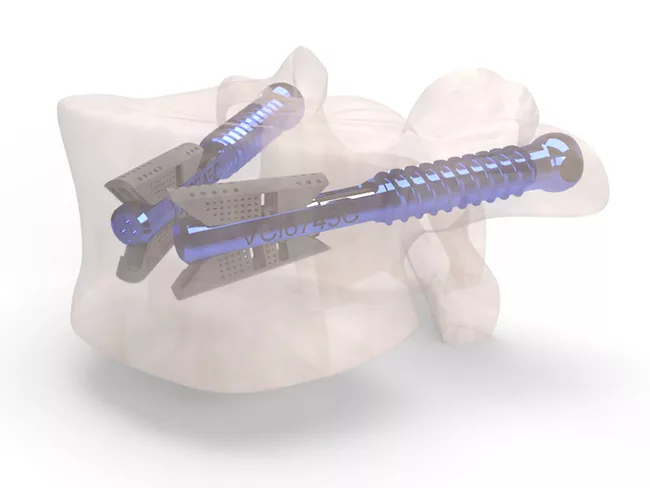
Amber Implants BV reported promising results from the first-in-human trial of patients fitted with its Vcfix spinal system which treats vertebral compression fractures. Data showed that patients experienced significant pain relief and regained the ability to walk without discomfort.
As renal denervation (RDN) makes a comeback for treatment-resistant hypertension, Deepqure Inc. is advancing its RDN medical device dubbed Hyperqure with the U.S. FDA granting clearance for a U.S.-based study.
Abbott Laboratories received U.S. FDA clearance for its Lingo and Libre Rio over-the-counter continuous glucose monitoring systems, enabling it to challenge Dexcom Inc. in this rapidly growing market. Dexcom received FDA clearance for its OTC Stela continuous glucose monitor in March.
Moon Surgical SAS recently received U.S. FDA clearance for the commercial version of its Maestro surgical robotic system for laparoscopic procedures. The greenlight is “pretty massive” for the company as it will allow the robotic platform to be rolled out in the U.S., to help enhance the surgeon’s performance while carrying out procedures, Anne Osdoit, CEO of Moon Surgical, told BioWorld.
Medical device manufacturers based in China may feel the FDA has a bullseye on their backs, but two firms located in Canada were the subjects of recently posted FDA warning letters.
 RSS
RSS