It’s no surprise to hear that industry’s view of a device’s inherent risk differs from that of the U.S. FDA, a disparity that came to surface in a new citizen petition from Metaltronica SpA of Pomezia, Italy. The company petitioned the agency to down-classify digital breast tomosynthesis system to class II, a move that would align the risk classification with full-field digital mammography and ease the premarket path for future digital breast tomosynthesis applications.
In a May 8 Senate hearing, U.S. FDA commissioner Bob Califf described the agency’s advisory committee process as a useful source of information, but Califf reassured members of the Senate that the FDA is not intent in doing away with advisory hearing votes altogether.
This time a positive result for a cancer screening test brought good news, as Geneoscopy Inc. secured U.S. FDA approval for its RNA screening test for colorectal cancer. The agency based its decision on strong results from the phase III CRC-PREVENT trial in its approval of the noninvasive test for use in individuals aged 45 years and older with average risk for the disease.
The U.S. FDA and industry have been in scramble mode for some time to address the Environmental Protection Agency’s actions on ethylene oxide, but some manufacturers must also deal with other regulators’ perceptions of what constitutes an acceptable method of sterilization.
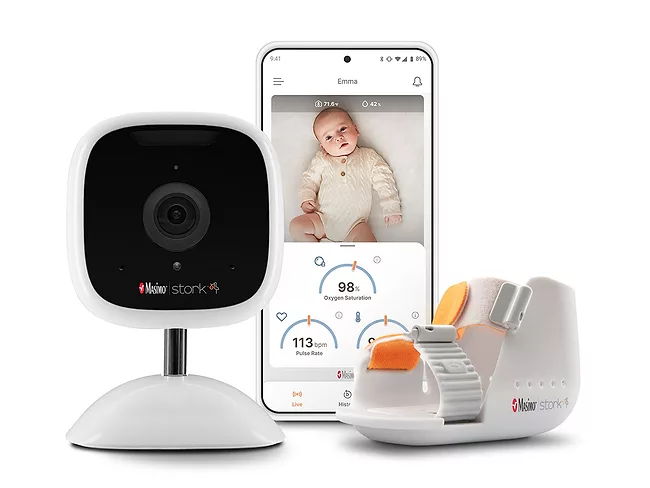
Masimo Corp.’s pride and joy, the Stork baby monitor, achieved a new developmental milestone with U.S. FDA clearance for over-the-counter marketing. The agency cleared Stork, which monitors key vital signs including oxygen saturation level, pulse rate and skin temperature, for use on a prescription basis in December. It has been available in the U.S. as a health and wellness device since August 2023.
Cytovale Inc. has posted a feverish run of wins lately. The company gained U.S. FDA clearance for its Intellisep rapid test for sepsis in January 2023, raised $84 million in a series C in November and just published results showing the test has negative predictive value of 97.5%.
Apple Inc. said the U.S. FDA has approved the Apple Watch's atrial fibrillation (AF) history feature under its rigorous Medical Device Development Tools (MDDT) program that specifies what devices health professionals can rely on.
Just a few days after the U.S. Congressional Research Service issued a report suggesting ways Congress could resolve the unanswered questions about patent listings in the FDA’s Orange Book, the FTC sent a second round of warning letters to eight biopharma companies and their subsidiaries, citing the listing of device patents for combination products.
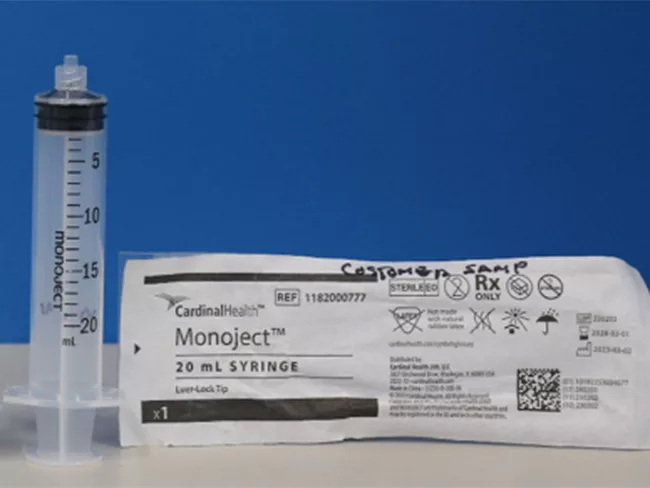
The U.S. FDA issued a handful of warning letters to device makers in the month of April 2024, one of which is for the Waukegan, Il., plant operated by Cardinal Health Inc., of Dublin, Ohio. While the Waukegan plant escaped citations for most routine Quality System Regulation deviations, the FDA said Cardinal’s handling of contract manufactured luer locks and syringes fell well short of the agency’s expectations given that these issues led to a massive recall, a product removal and an FDA advisory.
Epitel Inc. received U.S. FDA clearances for two epilepsy-focused technologies that simplify detection and analysis of seizures in patients with suspected epilepsy. The Remi remote electroencephalogram monitoring system is a wearable device that allows patients to continue with their daily activities for extended periods without the restrictions of wires, while still capturing intermittent seizures. The Remi Vigilenz artificial intelligence system uses machine learning to identify and note seizure events in the Remi EEG records.
 RSS
RSS