Medical device manufacturers based in China may feel the FDA has a bullseye on their backs, but two firms located in Canada were the subjects of recently posted FDA warning letters.
Molecular diagnostics company Genetic Signatures Ltd. is gearing up to launch its Easyscreen gastrointestinal parasite detection kit in the U.S. following its first FDA 510(k) clearance.
The saga of Illumina Inc.’s attempt to reacquire Grail Inc., seems to have come to an end with a capitulation to market regulatory authorities, but Illumina has chosen to spin off Menlo Park, Calif,-based Grail rather than sell the company outright.
The U.S. FDA’s draft guidance for control of thermal effects of medical devices may not have broken new conceptual ground, but two trade associations are of the view that the draft is nonetheless expansive in a manner that raises serious questions.
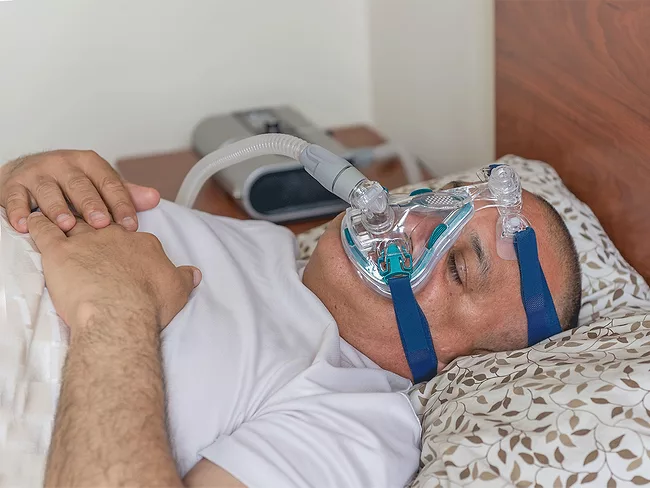
The U.S. FDA has received a citizen petition to grant over-the-counter status to continuous positive airway pressure (CPAP) machines, an oddly timed petition given a recent enforcement action against one of the prime movers in the CPAP space.
The problem of counterfeit devices has perplexed the U.S. FDA for some time, given that the agency had previously been forced to send the illicit products back to the originator, only to see the same devices reenter the U.S.
The American Clinical Laboratory Association has followed through on its promise to file suit against the U.S. FDA over the agency’s final rule for lab-developed tests. The lawsuit will be heard in the U.S. District Court for the Eastern District of Texas, which is also the venue for litigation against another federal government agency, the Federal Trade Commission, suggesting that litigants expect a favorable review of their case in this court.
The U.S. FDA’s reissued draft guidance for pre-submission activity addresses the circumstances in which a manufacturer’s questions can be handled informally, but industry has a few misgivings about the draft. One of these is that a preformatted template proposed by the FDA would limit the number of topics that can be handled in an informal manner, which the Advanced Medical Technology Association said might drive more utilization of formal pre-submission programs, an outcome that would thwart the intent of these informal interactions.
The U.S FDA approved Camaps FX for use in pregnant women with type 1 diabetes. This first, hybrid, closed-loop app was developed by Camdiab Ltd., a spinout from Cambridge University, allows individuals aged two years and older with type 1 diabetes to manage their glucose levels.
A recent hearing in the U.S. House of Representatives highlighted some of the issues Congress has with the agency’s performance, but there were questions as well about the FDA’s statutory authorities. One of these is the lack of statutory authority to require a recall for prescription drugs as well as the deadline for notifying the agency of device recalls, both of which are areas of legislative interest on the part of Congress.
 RSS
RSS