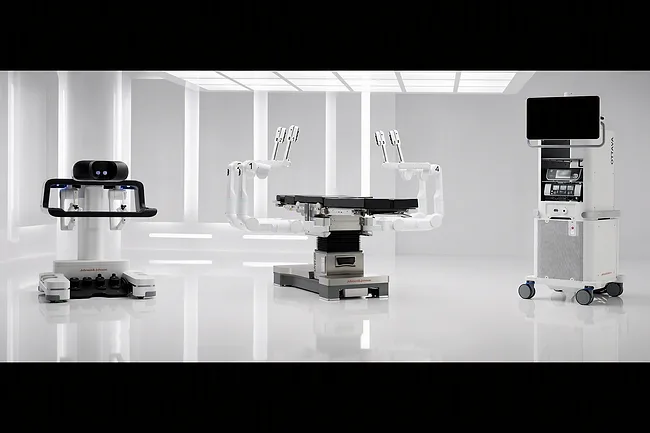
The U.S. FDA granted Johnson & Johnson de novo authorization for its Ottava robotic surgical system, which can now be marketed for multiple surgeries, including Roux-en-Y gastric bypass, gastrectomy, cholecystectomy, splenectomy and others.
While the pace of executive orders (EOs) coming out of the White House continues to decline, the impact of new EOs on U.S. health agencies, life sciences industries and the practice of medicine remains just as disconcerting as a year ago.
In a rapid-fire voting session, the U.S. House suspended the rules July 20 to pass, by voice vote, a slate of bipartisan health bills ranging from reducing animal testing in drug development to clarifying Medicare coverage of wheelchairs.
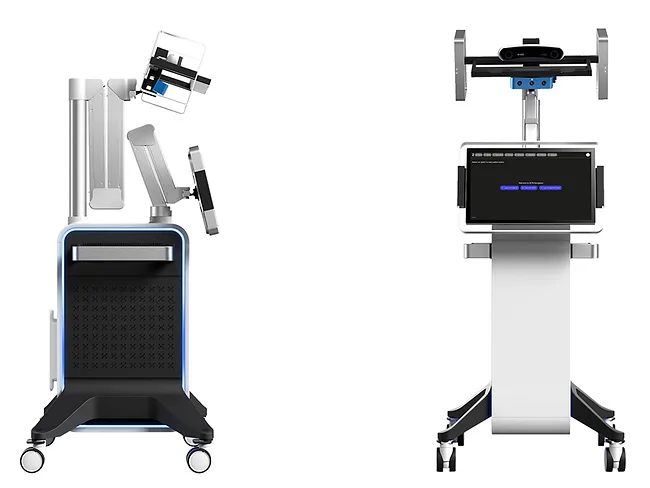
Zeta Surgical Inc. received U.S. FDA 510(k) clearance for its transcranial magnetic stimulation (TMS) robotic system which is designed to support precise and repeatable TMS therapy for patients with treatment-resistant depression.
Ready or not, the future has arrived. Novel AI and brain-computer interface (BCI) systems are no longer confined to the realm of science fiction. As an increasingly intertwined human-machine model moves closer to adoption in real-world clinical and military practice, technological advances are sparking concerns over public health, ethics and national security.
Rather than reinventing the wheel for every gene therapy that uses genome editing, the U.S. FDA is advising sponsors on leveraging existing knowledge, be it publicly available or platform-based, to more efficiently advance their products across multiple stages of development.
The evolution of cancer diagnostics continues with the FDA’s May 20 approval of Guardant Health Inc.’s Guardant360 Liquid cDx. The new blood-based comprehensive genomic test assesses a 100-times wider genomic footprint than the previously approved Guardant360 cDx to deliver comprehensive tumor profiling results, according to the company. It noted that the seven companion diagnostic indications already approved for the older test will transfer to the new one.
Of all the issues that could be on the table at the talks between U.S. President Donald Trump and China President Xi Jinping, the life sciences sector is the “sweet spot” for collaboration between the two countries in a way that would benefit the world, Sen. Thom Tillis, R-N.C., said in a Brookings Institution webinar in advance of the two-day summit that starts May 14.
On the heels of the ouster of Marty Makary as the U.S. FDA commissioner and the serial leadership vacancies at the CDC and the FDA’s drugs and biologics centers, the government’s adherence to science took another blow May 16 when Sen. Bill Cassidy, R-La., lost the Louisiana primary, ending his bid for re-election.
Of all the issues that could be on the table at the talks between U.S. President Donald Trump and China President Xi Jinping, the life sciences sector is the “sweet spot” for collaboration between the two countries in a way that would benefit the world, Sen. Thom Tillis, R-N.C., said in a Brookings Institution webinar in advance of the two-day summit that starts May 14.
 RSS
RSS