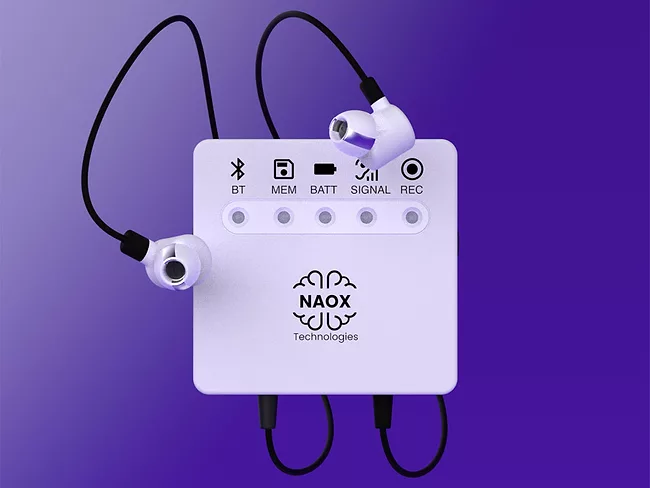
Naox Technologies SAS secured U.S. FDA 510(k) clearance for Naox Link, its in-ear electroencephalography (EEG) device for clinical use both at home and in health care settings. Naox Link is a pair of earbuds the company hopes will transform how the brain activity is monitored, helping diagnose and track a number of conditions affecting the brain.
The U.S. FDA’s final guidance for clinical trial inspections conducted under the bioresearch monitoring (BiMo) program seems to deviate little if at all from the 2024 draft, but that is precisely the rub for some stakeholders. The Advanced Medical Technology Association pressed the agency to ensure that the final guidance takes into account the hazards of electronic access during remote BiMo audits, but the final guidance makes no such concessions.
The new U.S. FDA leadership has broken with standing agency practice in several areas and in the latest move seeks to cut out the middleman in FDA contracting practices, a development that might aid small firms that are financed by venture capital.
The U.S. FDA’s final rule for regulation of lab-developed tests was destined to be controversial at best and exceptionally susceptible to legal challenge according to more than one legal opinion. The inevitable legal challenge succeeded wildly in a decision rendered in district court in March 2025, marking one of the rare instances in which the courts thwarted FDA rulemaking and thus is easily the regulatory story of the year for 2025. Attempts to regulate AI in the U.S. and Europe also dominated the regulatory landscape.
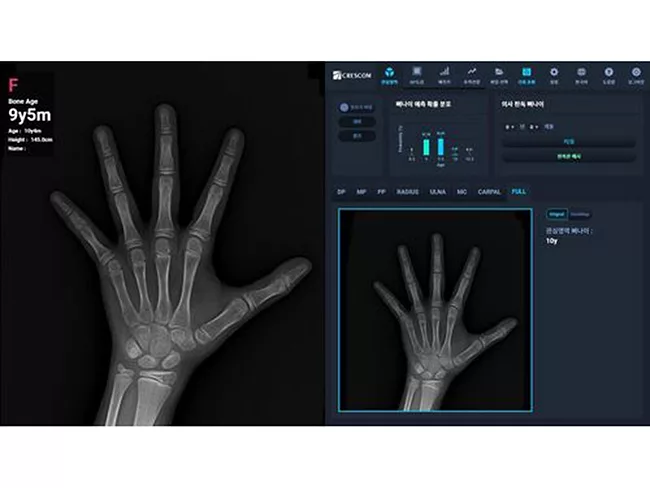
Crescom Co. Ltd., an AI musculoskeletal imaging company, gained U.S. FDA 510(k) clearance Dec. 24 for MediAI-BA, its AI-powered pediatric and adolescent bone age analysis software.
Classified as a class II medical device, MediAI-BA evaluates bone age and suggests predicted adult height based on growth plate status assessed by hand and wrist X-ray imaging. Prior clinical trial results demonstrated MediAI-BA had specialist-level accuracy, recording a mean absolute deviation (MAD) of 0.39 years.
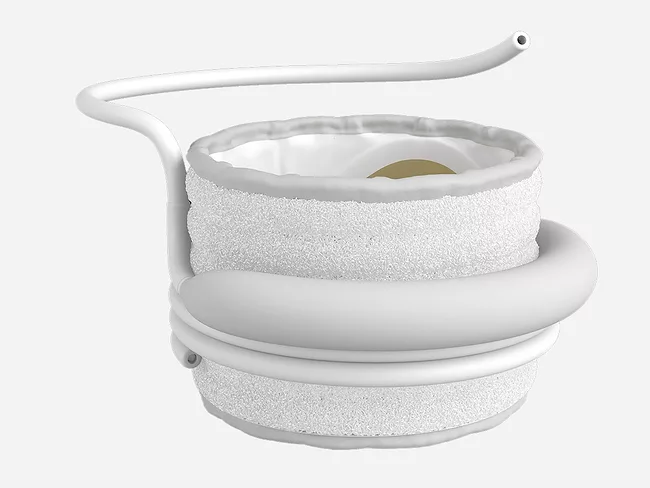
Edwards Lifesciences Corp. received U.S. FDA approval for its Sapien M3 mitral valve replacement system, making it the first transcatheter therapy utilizing a transseptal approach to be indicated for treatment of mitral regurgitation (MR). The Sapien M3 transcatheter mitral valve replacement system is indicated for the treatment of patients with symptomatic moderate-to-severe or severe MR or symptomatic mitral valve dysfunction who are deemed unsuitable for surgery or TEER by a multidisciplinary heart team.
Two years after the U.S. FDA approved the first pulsed field ablation system, Abbott Laboratories finally got the regulatory nod for its Volt PFA system. Abbott follows Medtronic plc, Boston Scientific Corp., Johnson & Johnson and Kardium Inc. in receiving approval for its approval for use of its PFA device to treat atrial fibrillation.
The FDA’s final guidance for the use of real-world evidence (RWE) was touted by FDA commissioner Marty Makary as opening the door to the use of existing de-identified data in premarket device submissions, but the final guidance lends also clarifies a couple of points about when an investigational device exemption will be needed for RWE studies.
Companion Spine SAS received premarket approval from the U.S. FDA for its DIAM spinal stabilization system, for treatment of degenerative disc disease. The approval comes as the company recently completed the acquisition of a number of assets from Xtant Medical Holdings Inc., including Paradigm Spine GmbH, as it continues to strengthen its position in providing solutions to treat spinal degenerative conditions.
The U.S. FDA announced Dec. 15 that it will take a more relaxed approach to device premarket applications using real-world evidence from data sources that lack individual patient-level data, a switch that might ease manufacturers’ efforts to expand a device’s labeled indication for use.
 RSS
RSS