The U.S. House is expected to vote late Nov. 12 on an amended continuing resolution (CR) to end the historic 43-day partial government shutdown. Already passed by the Senate, the CR would fully reopen the government and fund it through Jan. 30. President Donald Trump has said he will sign the CR, which ensures federal employees furloughed during the shutdown will receive back pay and will not be terminated.
Magstim Co. Ltd. reported that the U.S. FDA cleared its Magstim Rapid magnetic stimulation system for the treatment of chronic pain. The clearance provides a clinically validated therapy that directly targets neural pathways involved in pain processing to deliver a non-invasive, drug-free treatment for chronic pain.
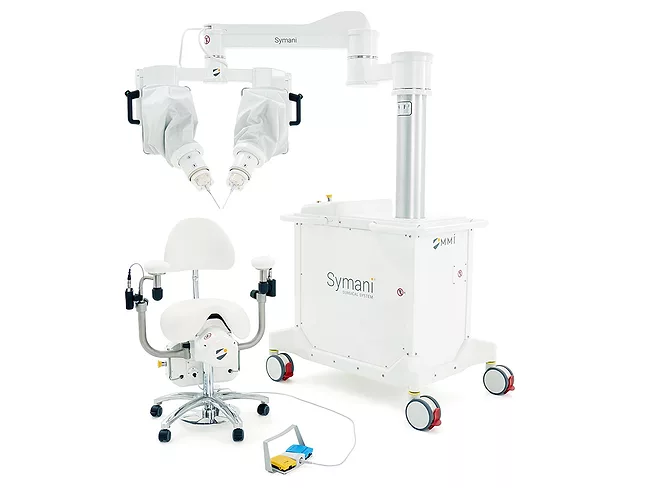
Medical Microinstruments Inc., reported the U.S. FDA approval of an investigational device exemption for a study using its Symani surgical system for treating Alzheimer’s disease, one of its earliest forays into the brain.
The U.S. FDA’s attempts to harmonize with other nations on quality management received a dose of good news recently when the International Organization for Standards decided to stand pat on ISO 13485, which also leaves the FDA’s Quality Management System Regulation intact.
Tulyp Medical Inc. has emerged from stealth mode with a pressure-driven perfusion system designed to improve vascular procedures. The company, born out of Sofinnova Partners' medical device accelerator, has submitted the technology to the U.S. FDA for 510(k) clearance following initial clinical results that demonstrated safety and functionality.
Nexgel Biotech Co. Ltd. and CG Bio Co. Ltd. agreed to co-develop a thermosensitive polyphosphazene hydrogel-based long-acting drug delivery platform through a new collaboration agreement signed Oct. 31.
John Crowley doesn’t worry about where his kids’ toys are made, but he told the Senate Health, Education, Labor and Pensions Committee that he does care where their medicines are made. His concerns, as a father and as president/CEO of the Biotechnology Innovation Organization, are becoming more urgent, he testified at an Oct. 29 HELP hearing on the future of biotech in the U.S.
San Diego-based Dexcom Inc., is the target of a class action lawsuit in U.S. district court over the company’s G7 continuous glucose monitors, an action which follows a U.S. FDA warning letter by a mere seven months and a recall announced in July, suggesting that litigation often follows other sources of bad news for firms in the med-tech business.
The U.K. Medicines and Healthcare Products Regulatory Agency reported the winners of the second phase of the AI Airlock challenge, which includes the Tortus AI, a medical scribe system developed by physicians in the U.K. National Health Service.
Digital mental health tools are popping up with some regularity lately, but both Australia’s Therapeutic Goods Administration and the U.S. FDA have enough concerns about these products that they are taking a closer look at their risks and benefits.

 RSS
RSS