The U.K. Medicines and Healthcare Products Regulatory Agency reported the winners of the second phase of the AI Airlock challenge, which includes the Tortus AI, a medical scribe system developed by physicians in the U.K. National Health Service.
Digital mental health tools are popping up with some regularity lately, but both Australia’s Therapeutic Goods Administration and the U.S. FDA have enough concerns about these products that they are taking a closer look at their risks and benefits.
The International Medical Device Regulators Forum (IMDRF) has issued a draft guidance for predetermined change control plans for software as a medical device. The problem for advocates of regulatory harmonization is that the IMDRF draft overlaps awkwardly with the FDA’s approach, which has issued separate policies for the AI subset of device software functions and a separate guidance for all other devices, including non-AI software.
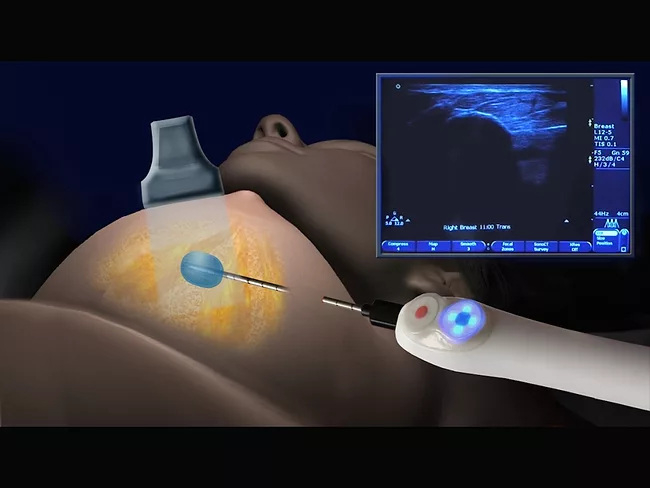
Icecure Medical Ltd. reported that the U.S. FDA has granted marketing authorization to Icecure's de novo application for the Prosense cryoablation system for the local treatment of breast cancer in patients 70 years of age or older with biologically low-risk tumors. The authorized indication includes patients that are not suitable for surgery for breast cancer treatment.
The U.S. FDA device center’s guidance agenda for fiscal 2026 is the classic case of something old and something new, but what was borrowed from FY 2025 may make some blue.
Caught between the start of fiscal 2026 and a congressional funding standoff that shut down much of the U.S. federal government Oct. 1, the FDA will not be able to collect 2026 user fees until Congress agrees on a continuing resolution or a 2026 appropriations bill.
The U.S. FDA’s early alert program has communicated a number of potential device malfunction episodes since its inception in late 2024, but the agency announced that the program is now moving out of the pilot phase to include all device types as of Sept. 29.
Despite down-to-the-wire negotiations, the odds are that parts of the U.S. government will shut down at midnight Sept. 30, as Senate Democrats refused to support a seven-week, clean continuing resolution already passed by the House to keep the government funded while Congress hammers out fiscal 2026 spending bills.
Rakuten Medical Inc. is advancing a pipeline of solid tumor therapeutics built on its Alluminox platform worldwide, having gained conditional early approval of ASP-1929, an Alluminox-derived photoimmunotherapy, in Japan in 2020.
About five months after the U.S. FDA disclosed its roadmap to move away from animal testing in favor of new approaches for biopharma drug development, the U.S. National Institutes of Health (NIH) said it is awarding $87 million in contracts over three years to launch the Standardized Organoid Modeling Center.
 RSS
RSS