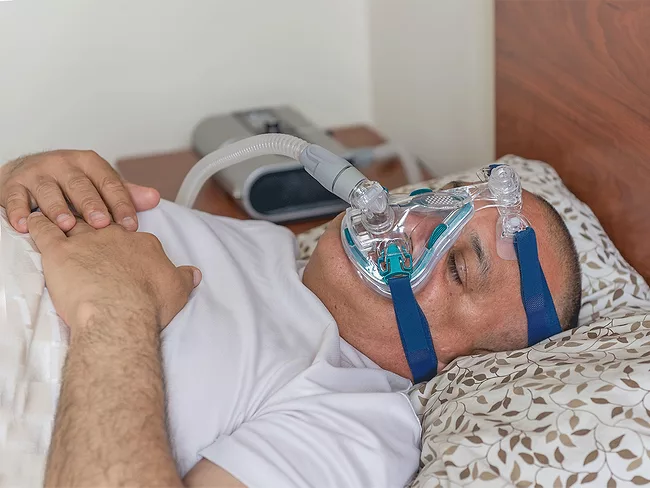
Murrysville, Pa.-based Philips Respironics Inc. has had its share of troubles with its devices for respiratory use, including several CPAP machines. The FDA reported March 21 that the company’s V60 and V60 Plus respirators are now the subjects of a class I recall due to the use of an expired adhesive that could ultimately lead to a shut-down of the devices, including instances in which the shut-down would not be accompanied by an alarm.
Citing a court order for its haste, the U.S. FDA skipped the draft and went straight to issuing a final guidance that will change how certain ophthalmic drugs are regulated.
The U.S. biosimilar review process seems to be hitting its stride, with the FDA approving, in the first cycle, 67%, or 14, of the 21 biosimilar applications filed and acted upon in the first four years of BsUFA II.
"Now is the time to discuss the need for future boosters as we aim to move forward safely, with COVID-19 becoming a virus like others such as influenza that we prepare for, protect against and treat,” the FDA’s Peter Marks said in announcing an April 6 virtual meeting of the Vaccines and Related Biological Products Advisory Committee (VRBPAC).
Bristol Myers Squibb Co.’s relatlimab will hit the market as the first U.S. FDA-approved LAG-3 inhibitor, cleared by the agency for use in a fixed-dose combination with Opdivo (nivolumab) to treat adult and pediatric patients with unresectable or metastatic melanoma. The approval, a day ahead of the March 19 FDA target date, adds another type of immune checkpoint inhibitor to the oncology arsenal, which already includes drugs targeting PD-1/PD-L1 and CTLA4.
Royal Philips NV has been handed a health care policy order requiring it to recall and replace 277,500 defective respiratory therapy devices in France within four months. Twelve ranges of respiratory device for patients who depend on mechanical breathing assistance as well as continuous positive airway pressure devices used to treat sleep apnea, have been affected by a design issue.
The FDA unloaded on Neurofield Inc. for misbranding of its products, which are only approved as class II biofeedback devices, as neurostimulation and electroencephalogram (EEG) signal processing devices. The warning letter called on “Neurofield to cease any activities that result in the adulteration or misbranding of the Neurofield X3000/X3000 Plus, Neurofield Q21, Neurofield64 and Neurofield EEG.”
The FDA has cleared Royal Philips NV’s latest Philips Capsule Surveillance system, setting the stage for deployment in the U.S. Designed to stream data from almost any connected medical device, Philips Capsule Surveillance aggregates patient data, analyzes it to generate actionable insights and alerts and relays timely notifications to patients’ caregivers so they can intervene before further deterioration occurs.
 RSS
RSS