The ongoing tension between manufacturers of imaging systems and entities that perform extensive servicing activities has prompted activity on Capitol Hill in the form of H.R. 7253, the Clarifying Remanufacturing to Protect Patient Safety Act.
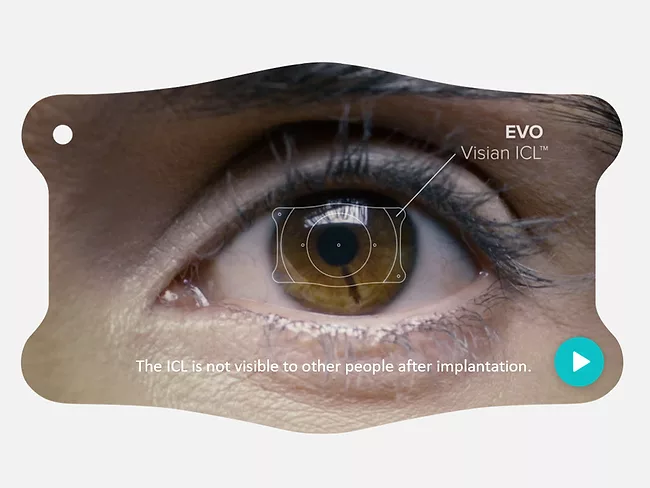
After more than 10 years on the market in Europe, Staar Surgical Co. can finally see a brighter future for its newest lenses in the U.S. This week, the company received FDA premarket supplement approval of its Evo/Evo+ Visian implantable lens for the correction of myopia and myopia with astigmatism in patients aged 21 to 45. Made of a proprietary poly(2-hydroxyethyl methacrylate)-based collagen co-polymer the company calls Collamer, the lens is inserted behind the iris in a quick procedure and can be removed, if needed. Unlike laser-assisted in situ keratomileusis (LASIK), the Evo procedure does not remove corneal tissue.
Biobeat Technologies Ltd. reported its remote patient monitoring system received FDA clearance to monitor respiratory rate and body temperature. The wireless chest and wrist monitoring device is already cleared for cuffless blood pressure monitoring, blood oxygen saturation and pulse rate. The artificial intelligence platform utilizes a photoplethysmography-based sensor at the surface of the skin that measures volumetric variations of blood circulation.
The beleaguered PI3K-delta inhibitor space took another blow after MEI Pharma Inc. and partner Kyowa Kirin Co. Ltd. said the U.S. FDA won’t greenlight zandelisib without data from a randomized study.
Innovent Biologics Co. Ltd. and Eli Lilly and Co. are "assessing next steps" for their jointly developed PD-1 inhibitor, sintilimab, following receipt of a complete response letter (CRL) from the U.S. FDA.
Zogenix Inc.’s Fintepla (fenfluramine) cleared the U.S. FDA hurdle shortly after its March 25 PDUFA date, expanding the drug’s use in patients with Lennox-Gastaut syndrome (LGS) and validating UCB SA’s $1.9 billion acquisition of Emeryville, Calif.-based firm, which closed earlier this month.
Investors didn’t respond well to the U.S. FDA’s briefing document for the March 30 advisory committee meeting on Amylyx Pharmaceuticals Inc.’s amyotrophic lateral sclerosis (ALS) candidate. Shortly after the materials for the adcom were posted Monday, Amylyx (NASDAQ:AMLX) dropped from a morning high of $25.68 per share to an all-time low of $10.49 in the heaviest trading since the company went public in January. With share volume exceeding 15 million, Amylyx rebounded somewhat, ending the day at $16.01, down nearly 36% from its March 25 close of $25.
The beleaguered PI3K-delta inhibitor space took another blow after MEI Pharma Inc. and partner Kyowa Kirin Co. Ltd. said the U.S. FDA won’t greenlight zandelisib without data from a randomized study. The firms had hoped to win accelerated approval in relapsed/refractory follicular lymphoma and marginal zone lymphoma based on a single-arm phase II study called Tidal.
Innovent Biologics Co. Ltd. and Eli Lilly and Co. are "assessing next steps" for their jointly developed PD-1 inhibitor, sintilimab, following receipt of a complete response letter (CRL) from the U.S. FDA. The pair sought approval of a BLA for sintilimab plus pemetrexed and platinum chemotherapy for the first-line treatment of people with nonsquamous non-small-cell lung cancer (NSCLC) but found near-unanimous opposition from FDA advisers dissatisfied with China-only trial data submitted in support of the application. The medicine is already approved for multiple indications in China, where it’s marketed as Tyvyt.
The U.S. FDA has approved Novartis AG’s Pluvicto (lutetium Lu 177 vipivotide tetraxetan, formerly referred to as 177Lu-PSMA-617) for treating adults with metastatic prostate-specific membrane antigen-positive metastatic castration-resistant prostate cancer. The treatment is the indication’s first FDA-approved targeted radioligand therapy that contains a radioisotope.

 RSS
RSS