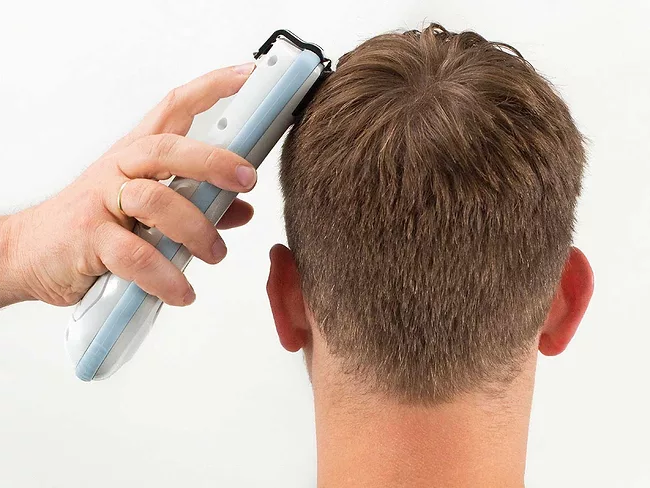
The FDA unloaded on Neurofield Inc. for misbranding of its products, which are only approved as class II biofeedback devices, as neurostimulation and electroencephalogram (EEG) signal processing devices. The warning letter called on “Neurofield to cease any activities that result in the adulteration or misbranding of the Neurofield X3000/X3000 Plus, Neurofield Q21, Neurofield64 and Neurofield EEG.”
The FDA has cleared Royal Philips NV’s latest Philips Capsule Surveillance system, setting the stage for deployment in the U.S. Designed to stream data from almost any connected medical device, Philips Capsule Surveillance aggregates patient data, analyzes it to generate actionable insights and alerts and relays timely notifications to patients’ caregivers so they can intervene before further deterioration occurs.
Myriad Genetics Inc. is launching a new suite of genetic tests designed for personalizing chemotherapy treatment. The Precise oncology offering includes Myriad’s precise tumor molecular profile test and two companion diagnostic tests, Mychoice CDx and Bracanalysis CDx. The company said the combination of germline, somatic and companion testing aims to maximize information for oncologists as they assign individual treatment plans. Results from each test are gathered as a single report accessed on an online portal.
The FDA issued a rare 518(a) Notification Order to Royal Philips NV last week that requires the company to take more aggressive measures to notify patients, physicians and distributors about the June 2021 class I recall of its continuous positive airway pressure (CPAP) and bilevel positive airway pressure (BiPAP) systems. The recall stemmed from health risks posed by the deterioration of the polyester-based polyurethane (PE-PUR) noise reducing foam in the equipment.
The list of FDA warning letters in recent months has conspicuous in its absence of letters to device makers, but that trend has reversed with three warnings posted March 8, including a warning letter to Cardioquip LLC.
Developed by Infrascan Inc., the FDA-cleared Infrascanner device was touted as the first hand-held device to help detect bleeding in the skull and supported financially by the U.S. military anxious to treat moderate to severe traumatic brain injury in wounded service members. The FDA has now expanded the Infrascanner’s use to traumatic intracranial hematomas or brain bleeds in pediatric patients aged 2 years and older.
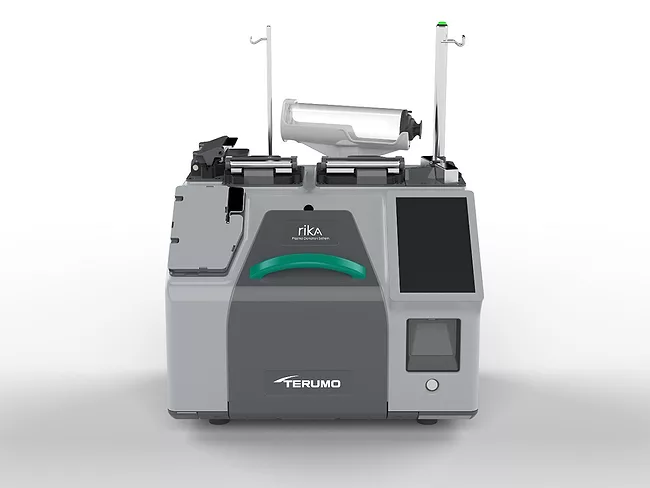
The FDA has cleared a plasma collection device developed by Terumo Blood and Cell Technologies (Terumo BCT) and plasma collection network CSL Plasma. The companies, which are subsidiaries of Terumo Corp. and CSL Ltd., signed a collaboration deal in 2021 to develop the new Rika device for CSL Plasma collection centers. The automated technology is designed to reduce plasma collection time to 35 minutes or less. According to the Red Cross, plasma donations currently take on average about 1 hour and 15 minutes.
The U.S. FDA has issued an advisory regarding vulnerabilities identified in the Axeda line of remote access software published by PTC Inc., which may affect more than 100 products made by dozens of manufacturers. The vulnerability could allow a hacker to trigger changes in the operation of the affected devices, a massive risk to patients undergoing medical imaging and radiotherapy procedures. The FDA notice stated that the Axeda Agent and desktop server programs are the subject of a notice by the Cybersecurity & Infrastructure Security Agency (CISA), which characterizes the vulnerability as requiring only a low-complexity attack to exploit.
The FDA and device makers have finally wrapped up what may be the most contentious set of negotiations in the history of the device user fee program. Despite industrial antipathy to a recurrent doubling of user fee volumes, the fifth device user fee deal will provide the FDA with as much as $1.9 billion in user fees, roughly double the fees collected under the current agreement.
 RSS
RSS