The U.S. FDA has at last published what is nominally a draft rule for harmonization of the Quality System Regulation (QSR) with an international standard, ISO 13485, but the draft rule is conspicuous for the absence of specifics.
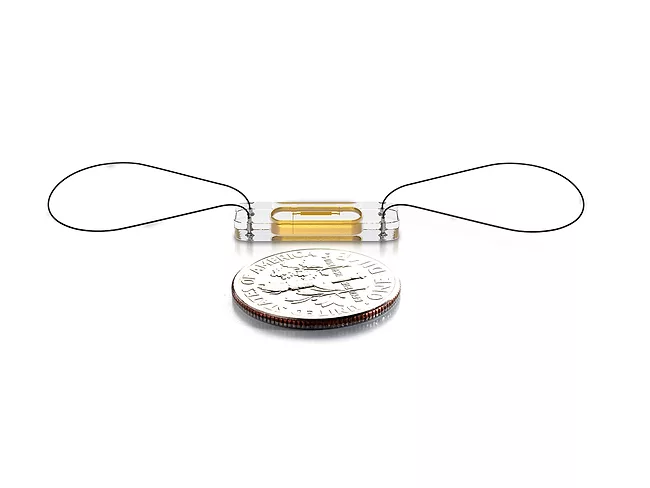
Abbott Laboratories’ Cardiomems heart failure (HF) system is open to a larger patient population following an expanded approval from the FDA. Abbott’s system had previously been approved for class III HF patients that had been hospitalized for HF in the past year. A new expanded indication enables the sensor to be utilized by class II (earlier stage) HF patients and those whose blood test show elevated levels of biomarkers known as natriuretic peptides. The FDA based the approval on findings from the GUIDE-HF trial, which suggested class II HF patients and patients with elevated natriuretic peptides had better outcomes when their therapy was guided by pulmonary pressure monitoring, with a 34% and 25% reduction in heart failure hospitalizations and emergency visits, respectively, based on study data adjusted for the impact of COVID-19.
The FDA’s device center has long been at the task of reclassifying legacy devices that promise a moderate degree of risk, but successful de novo device applications also call for a class II listing. The agency recently posted five such risk classifications, including for a device developed by Edwards Lifesciences Corp., of Irvine, Calif.
The FDA’s approval of Agios Therapeutics Inc.’s Pyrukynd (mitapivat) for treating hemolytic anemia marks a turnaround from nearly a year ago. That’s when Agios sold its commercial, clinical and research-stage oncology portfolio to privately held Servier Pharmaceuticals LLC to concentrate on rare diseases.
As part of its ongoing effort to speed drug pricing competition in the U.S. through the development of generics, the FDA is releasing another batch of draft and revised draft product-specific guidances on the design of bioequivalence studies to support abbreviated new drug applications. Among the 30 new draft guidances is one specific to remdesivir, which was approved in October 2020 as a COVID-19 treatment.
The FDA’s device center has been eyeing an overhaul of its Quality System Regulation (QSR) for several years, and the latest development is the scheduling of a March 2 advisory committee hearing to review the proposal. The default assumption is that the agency will post the draft rule prior to the hearing, although the routine two-day window for reviewing FDA meeting materials prior to an advisory hearing might leave stakeholders with insufficient time to examine the agency’s proposal.
The selection of Robert Califf to run the U.S. FDA might seem like a safe move on the part of the White House, but some believe his prior experience at the FDA does not necessarily suggest an acceptance of the regulatory status quo. Peter Pitts, president of the Center for Medicine in the Public Interest, told BioWorld that while Califf is “not a flashy pick,” Califf possesses a very keen understanding of the need to modernize the FDA’s practice of regulatory science, which should be a welcome bit of news for makers of drugs and devices.
With an FDA 510(k) clearance now in hand, Cloudcath Inc. is planning a phased launch of its remote monitoring platform for peritoneal dialysis (PD) patients. The company will make the system available on a limited basis in second half of 2022 “with broad U.S. availability increasing throughout 2023 and 2024,” Cloudcath CEO Aly ElBadry told BioWorld. The Cloudcath system continuously analyzes the dialysate fluid used in PD to detect early signs that a patient needs evaluation or intervention and then alerts both patients and clinicians.
The U.S. FDA has granted Datar Cancer Genetics Ltd. a breakthrough device designation for a blood test to detect early-stage prostate cancer. The circulating tumor cell (CTC) detection blood test can identify early-stage prostate cancer in men of age 55-69 years at around 99% accuracy.
 RSS
RSS