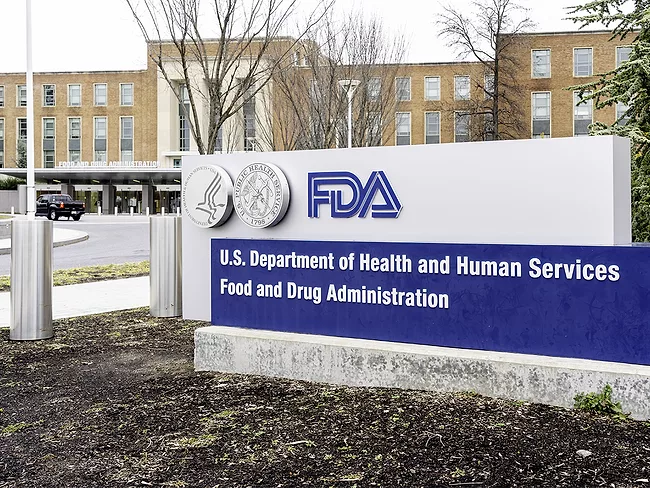
"Now is the time to discuss the need for future boosters as we aim to move forward safely, with COVID-19 becoming a virus like others such as influenza that we prepare for, protect against and treat,” the FDA’s Peter Marks said in announcing an April 6 virtual meeting of the Vaccines and Related Biological Products Advisory Committee (VRBPAC).
Bristol Myers Squibb Co.’s relatlimab will hit the market as the first U.S. FDA-approved LAG-3 inhibitor, cleared by the agency for use in a fixed-dose combination with Opdivo (nivolumab) to treat adult and pediatric patients with unresectable or metastatic melanoma. The approval, a day ahead of the March 19 FDA target date, adds another type of immune checkpoint inhibitor to the oncology arsenal, which already includes drugs targeting PD-1/PD-L1 and CTLA4.
Royal Philips NV has been handed a health care policy order requiring it to recall and replace 277,500 defective respiratory therapy devices in France within four months. Twelve ranges of respiratory device for patients who depend on mechanical breathing assistance as well as continuous positive airway pressure devices used to treat sleep apnea, have been affected by a design issue.
The FDA unloaded on Neurofield Inc. for misbranding of its products, which are only approved as class II biofeedback devices, as neurostimulation and electroencephalogram (EEG) signal processing devices. The warning letter called on “Neurofield to cease any activities that result in the adulteration or misbranding of the Neurofield X3000/X3000 Plus, Neurofield Q21, Neurofield64 and Neurofield EEG.”
The FDA has cleared Royal Philips NV’s latest Philips Capsule Surveillance system, setting the stage for deployment in the U.S. Designed to stream data from almost any connected medical device, Philips Capsule Surveillance aggregates patient data, analyzes it to generate actionable insights and alerts and relays timely notifications to patients’ caregivers so they can intervene before further deterioration occurs.
Myriad Genetics Inc. is launching a new suite of genetic tests designed for personalizing chemotherapy treatment. The Precise oncology offering includes Myriad’s precise tumor molecular profile test and two companion diagnostic tests, Mychoice CDx and Bracanalysis CDx. The company said the combination of germline, somatic and companion testing aims to maximize information for oncologists as they assign individual treatment plans. Results from each test are gathered as a single report accessed on an online portal.
The FDA issued a rare 518(a) Notification Order to Royal Philips NV last week that requires the company to take more aggressive measures to notify patients, physicians and distributors about the June 2021 class I recall of its continuous positive airway pressure (CPAP) and bilevel positive airway pressure (BiPAP) systems. The recall stemmed from health risks posed by the deterioration of the polyester-based polyurethane (PE-PUR) noise reducing foam in the equipment.
The list of FDA warning letters in recent months has conspicuous in its absence of letters to device makers, but that trend has reversed with three warnings posted March 8, including a warning letter to Cardioquip LLC.

 RSS
RSS