Imagine an orthopedic implant that not only accelerates bone healing but also captures data to support real-time clinical decisionmaking. That’s the vision of Intelligent Implants Ltd., whose Smartfuse system recently won FDA breakthrough device designation. The first indication is for lumbar spinal fusions.
The decision by the U.S. Centers for Medicare & Medicaid Services (CMS) to suspend the Medicare Coverage of Innovative Technology (MCIT) rule a second time was controversial, but CMS’s Tamara Syrek Jensen vowed that the agency has made no final decision. Jensen acknowledged that the agency has not foreclosed a full-blown rescission of the MCIT proposal, a not-implausible outcome given the prospect that legislation in the works in the House Energy and Commerce Committee could render the rule moot.
The FDA has lifted clinical holds on four studies from Bluebird Bio Inc., following recent similar actions with other gene therapy programs. Two of the studies concern phase I/II and phase III clinical trials of the gene therapy Lentiglobin (BB-1111) in treating sickle cell disease. The remaining two studies are phase III clinical trials of betibeglogene autotemcel gene therapy, which share a vector with Lentiglobin, for treating transfusion-dependent beta-thalassemia.
Novo Nordisk A/S will this month launch its weekly weight loss glucagon-like peptide-1 injection Wegovy (semaglutide) at the same monthly cost as its older daily shot Saxenda (liraglutide), following FDA approval in overweight and obese adults.
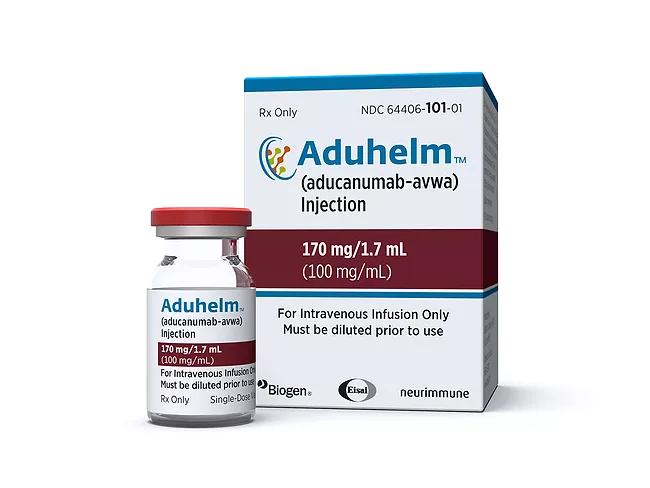
By granting accelerated approval for Biogen Inc.’s Aduhelm (aducanumab) for Alzheimer’s disease (AD), the FDA is “essentially confirming that the beta-amyloid hypothesis has been validated,” Mizuho analyst Salim Syed said in an alert to investors. Shares of Cambridge, Mass.-based Biogen (NASDAQ:BIIB) closed $395.85, up $109.71, or 38.3%, as Wall Street hailed the first new AD therapy to reach the market since 2003.
A day before its June 5 PDUFA date and three months after its original PDUFA, Ryplazim (plasminogen, human-tvmh), from Liminal Biosciences Inc., won FDA approval for treating plasminogen deficiency type 1 hypoplasminogenemia, becoming the first approved therapy for the rare genetic disorder.
Following years of testing against a lengthy roster of viral foes, Chimerix Inc.'s Tembexa (brincidofovir) has finally won FDA approval as a medical countermeasure against smallpox.
Ortho Regenerative Technologies Inc. received a clinical hold letter from the FDA in connection with its investigational new drug (IND) application to begin a phase I/II trial for Ortho-R. The FDA asked for additional information on chemistry, manufacturing and control for the drug/biologic combination that the company is evaluating as an adjunct to rotator cuff repair surgery.
Early feasibility studies for cardiology devices were a massive problem for the FDA and industry in times gone by, a problem that was believed to drive device flight from the U.S. That problem has been largely solved, according to the FDA’s Andrew Farb, but Farb noted that neurological devices are the next target for improved early feasibility study (EFS) development in the U.S., which suggests that the path to pivotal studies for devices in this space will soon be much less cumbersome.
Medtronic plc is ceasing global sales and distribution of its Heartware ventricular assist device (HVAD) due to safety concerns. The news sent Medtronic shares down about 1% in early morning trading. The Dublin-based company said it made the decision to stop selling the HVAD left ventricular assist device after clinical comparisons found a higher frequency of neurological adverse events, including stroke and mortality, with its heart pump device vs. other circulatory support systems.
 RSS
RSS