The FDA’s legal authority to regulate lab-developed tests (LDTs) has come into question on several occasions in a number of venues, and the issue is enjoying new life yet again thanks to more activity on Capitol Hill. While two competing pieces of legislation are back in play, the most critical question may be whether the FDA has any authority left at all after the August 2020 rescission letter from the Department of Health and Human Services.
In a rare move, the FDA disclosed summary trial information May 17 about Cytodyn Inc.’s Vyrologix (leronlimab), noting that currently available data don’t support the clinical benefit of the drug as a COVID-19 treatment.
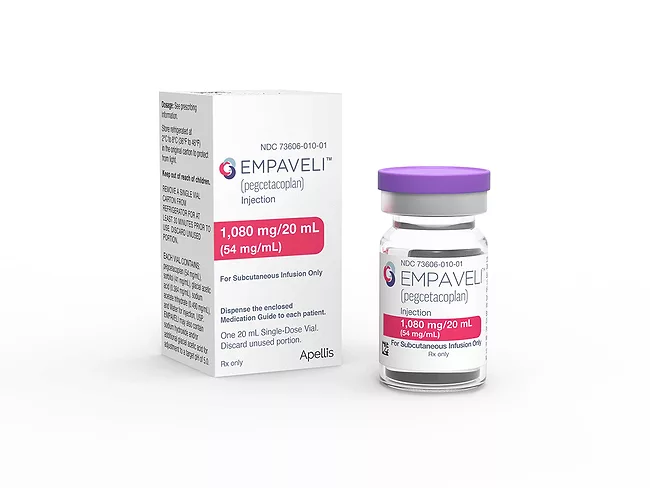
Now that Apellis Pharmaceuticals Inc.’s Empaveli pegcetacoplan has won FDA approval as the first targeted C3 therapy for treating paroxysmal nocturnal hemoglobinuria (PNH), the cost of treating the rare blood disorder is hefty.
To accelerate drug development targeting the pandemic, the FDA issued final guidance May 17 on master protocols for drugs intended to prevent or treat COVID-19 infections. Although the guidance is geared toward developing COVID-19 drugs, the FDA said it expects master protocols to continue to play an important role in addressing the public health needs in future pandemics.
While saying "white rabbit, white rabbit" on the first of the month may be a luck-bringing superstition, Whiterabbit.ai aims to take luck out of the equation in identifying early breast malignancies. The Santa Clara, Calif.-based company emerged from stealth mode with FDA clearance for its Wrdensity tool, two other products, and more than $49 million in funding to date.
Additive manufacturing, often referred to as 3D printing, has evolved considerably over the past few decades, and plays a significant role in the world of orthopedic devices. Despite numerous technological advances, additive manufacturing (AM) still accounts for a small share of the device market and may never overwhelm traditional manufacturing for the med-tech industry due to a number of limitations.
The potential for using real-world data (RWD) to support the development of cancer drugs for children has yet to be realized as researchers, sponsors and regulators continue to struggle with the collection of meaningful data.
It took a few years and three tries, but Heron Therapeutics Inc. finally got its pain drug, HTX-011, now branded Zynrelef, over the FDA finish line. Even so, the approval comes with a less broad label than Heron would have liked. Zynrelef (bupivacaine and meloxicam), which had a May 12 PDUFA date, is approved for use in adults for soft tissue or periarticular instillation to produce postsurgical analgesia for up to 72 hours after bunionectomy, open inguinal herniorrhaphy and total knee arthroplasty.
It’s no secret that physicians are the interface between device makers and the patient, but their role in cybersecurity has been limited to date. However, Christian Dameff, assistant professor of biomedical informatics and computer science at the University of California San Diego, said its time to engage physicians once they are in practice and to include cybersecurity in medical school education, two efforts he said would go a long way toward improving medical device cybersecurity in the clinical setting.
Avenda Health Inc. has taken a page out of the breast cancer book with a new technology that offers very localized treatment of prostate tumors in a procedure the company refers to as a prostate cancer lumpectomy. The FDA granted breakthrough device designation to the product based on its potential to transform care for one of the most common cancers.
 RSS
RSS