The FDA told Provention Bio Inc. that its BLA under priority review for teplizumab needs some work but the May 27 advisory committee meeting to discuss the application in full is still on the calendar.
The FDA has its hands full with the impact of the mutations to the SARS-CoV-2 virus, but test developers can count on an ever-increasing base of data for those viruses thanks to a new contract taken by the CDC. The CDC indicated recently that its sequencing efforts and that of other organizations churned out nearly 14,000 sequences for the week of April 3, but Aegis Sciences Corp., of Nashville, Tenn., announced April 7 that it had undertaken an agreement to perform next-generation sequencing of samples from all 50 states and Puerto Rico, ensuring plenty of access to up-to-date information on those mutations.
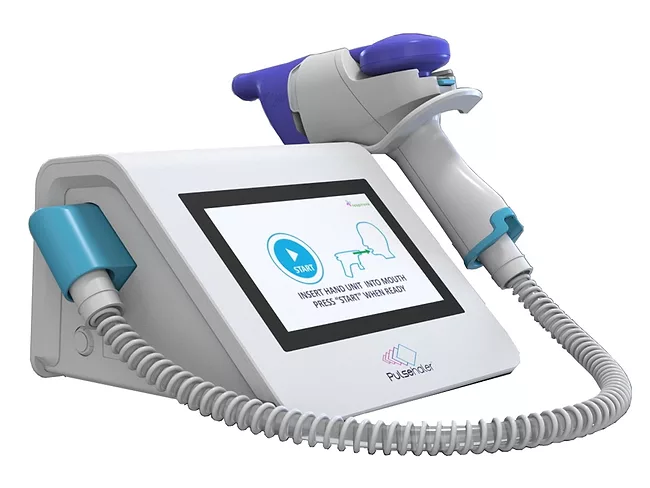
The management team at Respinova Ltd. is breathing easier with the FDA's 510(k) clearance of the company's Pulsehaler. Using pulsed air pressure, the device opens airways and clears secretions in patients with respiratory diseases. The clearance represents the device’s first endorsement by a regulatory agency, though the company hopes it will soon be joined by others.
The shortage of hearts for transplant is a matter of record for both cardiologists and patients, a problem that Transmedics Inc. proposed to solve with its Organ Care System (OCS). Despite several significant issues associated with the pivotal clinical study for the OCS, Transmedics snared a 12-5 vote that the benefits of the system outweigh the risks, an outcome that may bring at least some relief for heart transplant patients by mid-year if analyst expectations are on target.
The latest global regulatory news, changes and updates affecting medical devices and technologies, including: FDA hits company for deviations from drug, device GMPs; Stryker undertakes correction for AEDs; MHRA: Creams, ointments may interfere with CGM function; NICE says liver perfusion suffers for want of evidence of efficacy; NIAID testing vaccine allergy hypothesis; EC provides emergency funding for COVID-19 research; Medtronic splits Ninth Appeals’ review of lower court decision; Industry, docs push back on prior authorization.
Fibrogen Inc. said senior management’s prep for an upcoming FDA advisory committee meeting included a surprise. The internal review unearthed a primary cardiovascular safety analysis of roxadustat for treating anemia of chronic kidney disease (CKD) that included post-hoc changes to the phase III study’s stratification factors.
Device reprocessing has intermittently prompted FDA action in an effort to tamp down on infection-driven adverse events for various types of endoscopes, and the latest spate of events involves endoscopes used in urological applications. While the three associated fatalities all took place outside the U.S., the FDA nonetheless indicated that it is considering the possibility that a device redesign is in order, a move the agency endorsed in connection with infections blamed on duodenoscopes.
Vysioneer Inc. has won the FDA’s nod for its Vbrain artificial intelligence (AI)-powered tumor autocontouring software. The company said Vbrain is the first AI device to receive FDA clearance for tumor autocontouring in radiation therapy. Vbrain is a neural network-based AI solution, trained from clinical data.
The latest global regulatory news, changes and updates affecting medical devices and technologies, including: FDA adds fingerstick sample to roster of COVID EUAs; NICE: Sonata system not backed by head-to-head studies.
The FDA has granted 510(k) clearance to Orthofix Medical Inc.’s Construx Mini Ti spacer system for anterior cervical discectomy and fusion (ACDF) procedures. Company documents claim the implant has an optimized porosity and pore size, which creates a 3D porous surface with the potential for bone ingrowth.
 RSS
RSS