The latest global regulatory news, changes and updates affecting medical devices and technologies, including: SUNSET rule suspended; Alliance calls for speedy nomination of FDA commissioner; Pandemic costly to TB effort; FDA announces May 4 patient data meeting.
Barely five and a half years since the company was founded, Kiniksa Pharmaceuticals Ltd. has moved its first drug over the finish line, winning FDA approval for interleukin-1 blocker (IL-1) rilonacept to treat recurrent pericarditis and reduce the risk of recurrence in adults and children 12 and older.
The latest global regulatory news, changes and updates affecting medical devices and technologies, including: FDA grants de novo for Biofire multianalyte assay; No injuries or deaths associated with Acist Kodama recall; Supreme Court to hear assignor estoppel case; Cardiac rehab bill resurfaces in U.S. House.
Although U.S. President Joe Biden has yet to nominate his choice to lead the FDA, his nomination of Xavier Becerra as the next Health and Human Services (HHS) secretary – and Becerra’s Senate confirmation March 18 – could signal a shift to a more conservative approach at the FDA when it comes to approving new drugs and devices.
The administration of President Joseph Biden announced March 17 a $10 billion allocation of funds for testing to reopen schools in the final months of the current school year, a source of revenues that was provided by the recently passed $1.9 trillion American Rescue Plan. The news follows by one day a new FDA policy on screening tests that allows test developers to distribute tests designed to screen those who are asymptomatic without first validating the test for this use, although there are still questions as to whether this new push will yet again crimp vital testing supplies.
The latest global regulatory news, changes and updates affecting medical devices and technologies, including: FDA sets up webpage, template for screening; Stryker’s STAR ankle exhibiting fracture risk.
The latest global regulatory news, changes and updates affecting medical devices and technologies, including: FDA comments on two patent term extensions; Comment period reopened on Orange Book patents.
Most of the med-tech companies doing business during the COVID-19 pandemic are experienced and already have their FDA compliance systems in place. However, Dennis Gucciardo, a partner at the D.C. office of Morgan, Lewis & Bockius LLP, told BioWorld that while the FDA will give industry sufficient time to transition their emergency use authorizations (EUAs) to conventional premarket filings, the cost of setting up a quality management system may be greater than some current EUA holders are willing to bear.
The latest global regulatory news, changes and updates affecting medical devices and technologies, including: FDA announces recall of infusion sets; Recall announced for Roche testing systems; NIH announces technique for improved photoreceptor imaging.
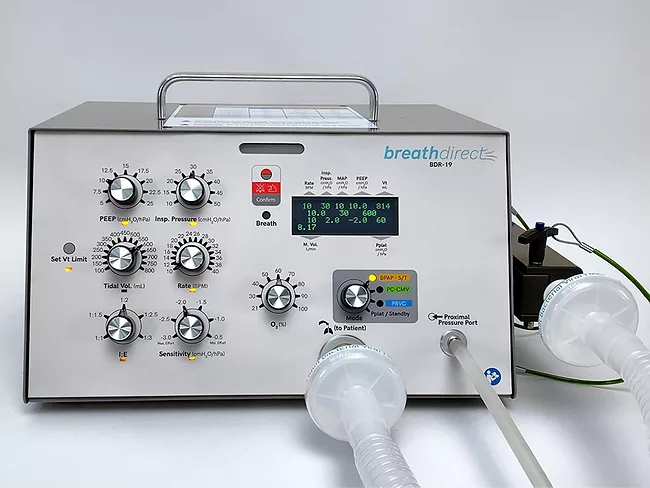
The U.S. FDA has granted emergency use authorization (EUA) to Breath Direct Inc. for its BDR-19 critical care ventilator for the treatment of critical care patients with respiratory insufficiency. Initial shipments of the device are expected within weeks. The EUA marks a major milestone for the fledgling Long Beach, Calif.-based company, which was started by medical device entrepreneur Darren Saravis in the early days of the pandemic.

 RSS
RSS