The FDA’s breakthrough devices program encodes a number of policy objectives for the agency, but industry might see the program principally as a vector for faster time to market. However, Janice Hogan, partner at Hogan Lovells US LLP, said device makers might want to consider that the greater benefit is reducing regulatory uncertainty, not beating the typical FDA review clock.
There’s been a change of plans. Following a preliminary review of briefing materials for a type C meeting, the FDA told Reata Pharmaceuticals Inc. that a pre-NDA meeting is instead the next best step in the development of omaveloxolone (RT-408) for treating Friedreich’s ataxia (FA).
The FDA’s legal authority to regulate lab-developed tests (LDTs) has come into question on several occasions in a number of venues, and the issue is enjoying new life yet again thanks to more activity on Capitol Hill. While two competing pieces of legislation are back in play, the most critical question may be whether the FDA has any authority left at all after the August 2020 rescission letter from the Department of Health and Human Services.
In a rare move, the FDA disclosed summary trial information May 17 about Cytodyn Inc.’s Vyrologix (leronlimab), noting that currently available data don’t support the clinical benefit of the drug as a COVID-19 treatment.
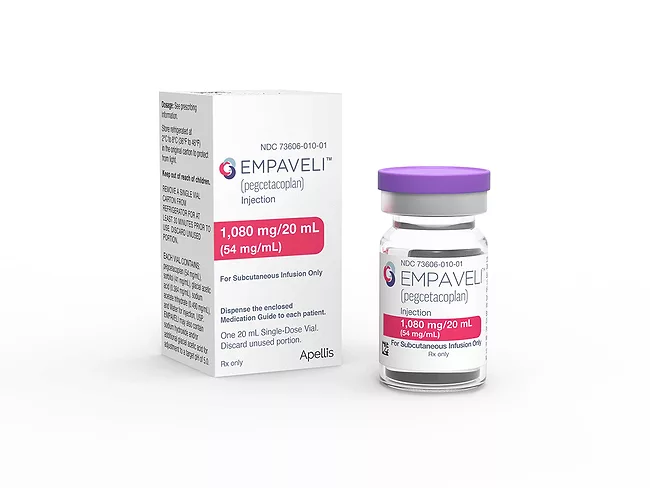
Now that Apellis Pharmaceuticals Inc.’s Empaveli pegcetacoplan has won FDA approval as the first targeted C3 therapy for treating paroxysmal nocturnal hemoglobinuria (PNH), the cost of treating the rare blood disorder is hefty.
To accelerate drug development targeting the pandemic, the FDA issued final guidance May 17 on master protocols for drugs intended to prevent or treat COVID-19 infections. Although the guidance is geared toward developing COVID-19 drugs, the FDA said it expects master protocols to continue to play an important role in addressing the public health needs in future pandemics.
While saying "white rabbit, white rabbit" on the first of the month may be a luck-bringing superstition, Whiterabbit.ai aims to take luck out of the equation in identifying early breast malignancies. The Santa Clara, Calif.-based company emerged from stealth mode with FDA clearance for its Wrdensity tool, two other products, and more than $49 million in funding to date.
Additive manufacturing, often referred to as 3D printing, has evolved considerably over the past few decades, and plays a significant role in the world of orthopedic devices. Despite numerous technological advances, additive manufacturing (AM) still accounts for a small share of the device market and may never overwhelm traditional manufacturing for the med-tech industry due to a number of limitations.
The potential for using real-world data (RWD) to support the development of cancer drugs for children has yet to be realized as researchers, sponsors and regulators continue to struggle with the collection of meaningful data.

 RSS
RSS