The U.K. National Institute for Health and Care Excellence announced an increase in the cost effectiveness thresholds for its health technology assessment program, but this new threshold falls far short of where the figure should be when adjusting for inflation.
Vertebral compression fractures are one of the more obvious signs of osteoporosis but can be difficult to diagnose, one of several reasons the U.K. National Institute for Health and Care Excellence has given the nod to five AI products that can improve rapid detection of these fractures.
The U.K. National Institute for Health and Care Excellence unveiled a plan that is designed to provide less cumbersome market access for medical technologies.
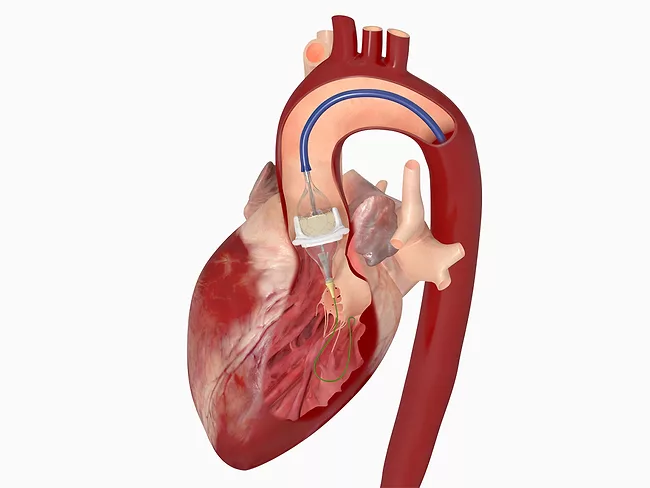
The U.K. National Institute for Health and Care Excellence has recommended that physicians in the U.K. use the least expensive, clinically appropriate TAVR device when possible, concluding a pricing review that commenced roughly a year ago.
The U.K. National Institute for Health and Care Excellence updated its guidance for the use of single-procedure insertion of scaffolds for knee cartilage repairs, specifying that only qualified surgeons should perform the procedure.
The U.K. Medicines and Healthcare Products Regulatory Agency unveiled another round of measures designed to promote access to the latest medical technology, which includes a move to jettison domestic device markings in favor of unique device identifiers.
The U.K. government has committed to reduce the cost of drug and device approvals by 25% as part of a long-awaited life sciences strategy which sets out a 10-year plan for the sector.
The U.K. National Institute for Health and Care Excellence (NICE) has endorsed the use of pulsed field ablation for atrial fibrillation, and while several trusts in the U.K. are already using these devices for their patients, the endorsement is certain to expand utilization in the U.K., which according to data from Clarivate’s Epidemiology Intelligence may come to nearly 4 million.
The U.K. government has committed to reduce the cost of drug and device approvals by 25% as part of a long-awaited life sciences strategy which sets out a 10-year plan for the sector.
The U.K. National Health Service may or may not deploy transcatheter aortic valve replacement devices as widely as in the U.S., but the National Institute for Health and Care Excellence officially staked out the position the data are not yet compelling for anyone other than high risk patients.
 RSS
RSS