The latest global regulatory news, changes and updates affecting medical devices and technologies, including: FDA warns about differing complication rates for acellular dermal matrix; CDC and NIH initiate COVID-19 self-testing pilot program; GHIT invests $21M; MHRA updates guidance.
The latest global regulatory news, changes and updates affecting medical devices and technologies, including: FDA announces recall of infusion sets; Recall announced for Roche testing systems; NIH announces technique for improved photoreceptor imaging.
The latest global regulatory news, changes and updates affecting medical devices and technologies, including: NIH touts new polygenic risk score methodology; HHS extends comment period for HIPAA NPRM.
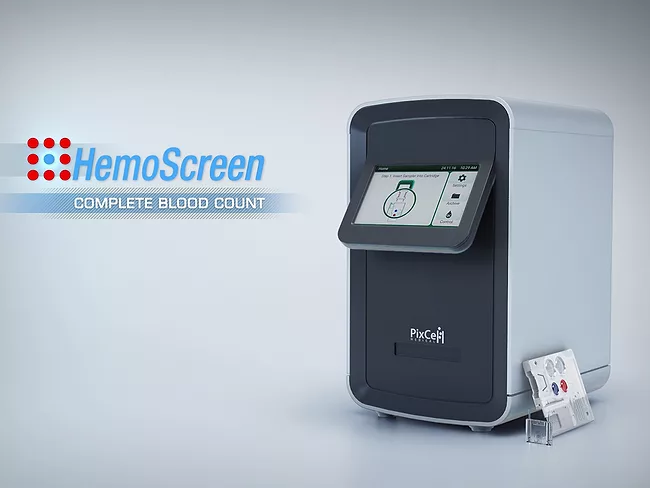
The National Institutes of Health selected Pixcell Medical Ltd.’s Hemoscreen hematology analyzer as part of the six-year Risk Underlying Rural Areas Longitudinal (RURAL) research study, aiming to gain insight into the specific health-related concerns of the rural southeastern United States' population. The RURAL study is funded by the National Heart, Lung and Blood Institute and aims to understand health concerns specific to rural communities in the South, particularly related to increased rates of heart, lung, blood and sleep disorders.
The latest global regulatory news, changes and updates affecting medical devices and technologies, including: ACLA sees need for clarification of test coverage; MITA seeks transparency at USPSTF; NIH eyes license for cancer therapy; GAO says federal agencies falling short on recommendations; TGA updates guidance for risks in drugs and devices.
Preventive medicine hasn’t always had the backing of hard data, but research into genomics at the U.S. National Institutes of Health may soon change that.
Preventive medicine hasn’t always had the backing of hard data, but research into genomics at the U.S. National Institutes of Health may soon change that. Evan Eichler of the Howard Hughes Medical Institute said on a recent NIH webinar that phased genome assembly may allow medical science to efficiently treat diseases caused by genetic disorders, but will also enable preventive medicine, the holy grail of those who seek to restrain the ever-increasing cost of medical care.
Opticyte Inc., a medical device startup, is planning the first clinical trial of its cellular oxygen monitor, a new device that could help emergency physicians diagnose sepsis faster and prevent organ failure. The prospective, observational trial is set to launch in mid-2021.
The latest global regulatory news, changes and updates affecting medical devices and technologies, including: HHS examines device classification process at FDA; NIH offers NGS system for SARS-CoV-2; FDA issues pandemic policy for coagulation systems.
The latest global regulatory news, changes and updates affecting medical devices and technologies, including: New test beats biopsy for transplant rejection; NICE eyes digital health HTAs; MHRA moves on the hazards of bedrails; TGA zeroes in on tests for COVID-19; HHS posts rule for agency enforcement action.

 RSS
RSS