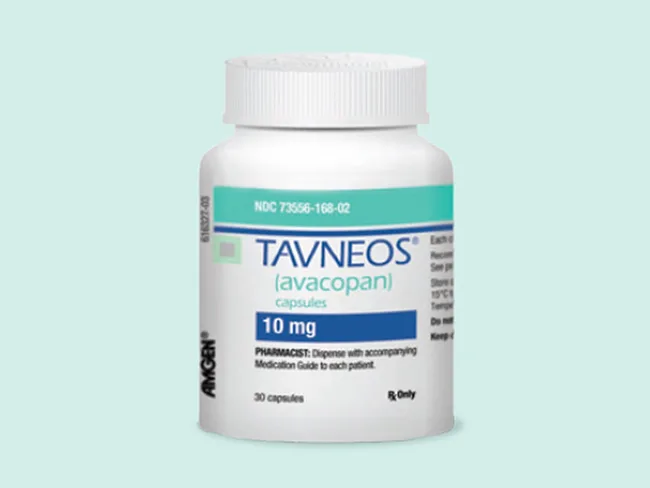
The fight to keep Tavneos (avacopan) on the market is continuing, with Amgen Inc. submitting its defense of the vasculitis drug to the U.S. FDA just as the July 29 deadline approached. The submission is in support of a request for a hearing on Tavneos after the FDA proposed on April 30 that the marketing approval be annulled.
Niagen Bioscience Inc.’s proprietary lead small-molecule drug candidate, NB-4168, has been awarded European orphan drug designation and U.S. rare pediatric disease designation for the treatment of ataxia telangiectasia.
SL Science Holding Ltd. has submitted an orphan drug designation request to the FDA for its γδ T-cell therapy product, Vδ2+ γδ T cells, for the treatment of glioblastoma multiforme.
At the BIO International Convention, nonprofit and for-profit companies discussed ways to fund orphan drug development, especially for ultra-rare diseases where development costs can be challenging. One of the simplest ways to keep costs down is to skip the discovery phase and use repurposed drugs or rescue shelved therapeutic assets as the Orphan Therapeutics Accelerator has done. The Cambridge, Mass.-based accelerator was founded in 2024 to rescue shelled therapeutic assets for ultrarare diseases.
Elixiron Immunotherapeutics Inc. announced positive interim open-label phase II Alzheimer’s disease (AD) study findings of enrupatinib, an oral brain-penetrant colony-stimulating factor 1 receptor inhibitor, with plans to move the asset into a biomarker-based and placebo-controlled study.
Elixiron Immunotherapeutics Inc. announced positive interim open-label phase II Alzheimer’s disease (AD) study findings of enrupatinib, an oral brain-penetrant colony-stimulating factor 1 receptor inhibitor, with plans to move the asset into a biomarker-based and placebo-controlled study.
Agios Pharmaceuticals Inc.’s potential $665 million deal for Oscotec Inc.’s cevidoplenib, a phase III-ready oral SYK inhibitor to treat immune thrombocytopenia, marks a new chapter of development focused on cancer therapy resistance for Oscotec, CEO Yoon Tae-young said.
Gen1e Lifesciences Inc. has obtained both orphan drug and rare pediatric disease designations from the U.S. FDA for GEn-1123 for the treatment of Duchenne muscular dystrophy (DMD).
Agios Pharmaceuticals Inc.’s potential $665 million deal for Oscotec Inc.’s cevidoplenib, a phase III-ready oral SYK inhibitor to treat immune thrombocytopenia, marks a new chapter of development focused on cancer therapy resistance for Oscotec, CEO Yoon Tae-young said.
 RSS
RSS