Work at the Chinese University of Hong Kong has led to the identification of bilobalide derivatives reported to be useful for the treatment of cancer, Alzheimer’s and Parkinson’s diseases.
The Council of Scientific and Industrial Research (India) has synthesized new benzo[de]isoquinoline-1,3-dione-based fluorophore probes acting as decaprenylphosphoryl-β-D-ribose oxidase (DprE1) (M. tuberculosis) inhibitors reported to be useful for the diagnosis and treatment of tuberculosis.
Kind Pharmaceuticals LLC has patented substituted benzocyclobutene compounds acting as erythropoietin (EPO) production inhibitors reported to be useful for the treatment of cancer and polycythemia.
Shanghai Pharmaceuticals Holding Co. Ltd. has disclosed aza-ergoline derivatives acting as dopamine D2 receptor and/or D3 receptor agonists reported to be useful for the treatment of attention deficit hyperactivity disorder (ADHD), depression, erectile dysfunction, substance abuse and dependence, restless legs syndrome, schizophrenia, Parkinson’s and Alzheimer’s disease, among others.
Enanta Pharmaceuticals Inc. has developed mast/stem cell growth factor receptor kit (KIT; c-KIT; CD117) inhibitors reported to be useful for the treatment of cancer, autoimmune disease, fibrosis, pulmonary arterial hypertension, irritable bowel syndrome, inflammatory, dermatological and respiratory disorders, among others.
Terremoto Biosciences Inc. has synthesized new 3H-imidazo[4,5-b]pyridine compounds acting as RAC-α serine/threonine-protein kinase (AKT1; PKB-α) inhibitors reported to be useful for the treatment of cancer.
Astrazeneca has identified anthracycline compounds and antibody-drug conjugates consisting of an antibody covalently bound to anthracycline derivatives reported to be useful for the treatment of cancer.
Merck KGaA has patented substituted bicyclic transcriptional coactivator YAP1/transcriptional enhancer factor (TEAD) and/or TAZ/TED interaction inhibitors reported to be useful for the treatment of cancer.
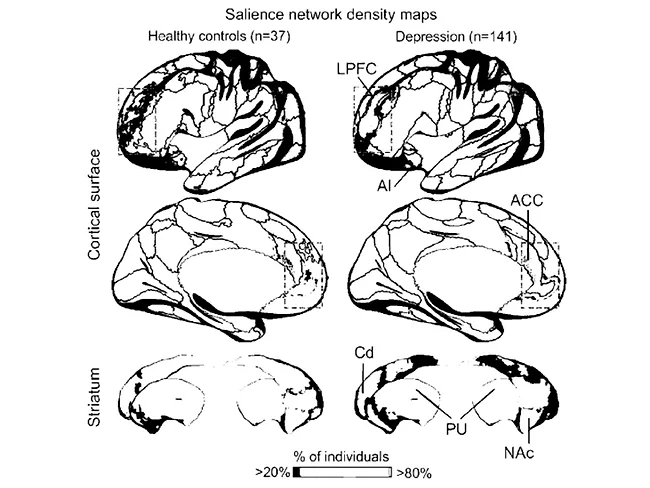
Researchers from Weill Cornell University filed for protection of discoveries made from investigations into the mechanisms underlying depression, which revealed that a specific brain network is significantly larger in individuals affected by depression.

 RSS
RSS