Beijing Avistone Pharmaceuticals Biotechnology Co. Ltd. has patented HER2 (erbB2) Ex20Ins mutant inhibitors. They are reported to be useful for the treatment of cancer, atherosclerosis and pulmonary fibrosis.
Shanghai Haiyan Pharmaceutical Technology Co. Ltd. and Yangtze River Pharmaceutical Group have divulged new isoindoline proteolysis targeting chimeric (PROTAC) compounds comprising cereblon (CRBN) ligands covalently linked to a eukaryotic peptide chain release factor GTP-binding subunit ERF3A (GSPT1)-targeting moiety. They are reported to be useful for the treatment of cancer.
Work at Apertor Pharmaceuticals Inc. has led to the preparation of new hetero-bifunctional compounds acting as mTOR complex 1 (mTORC1) inhibitors potentially useful for the treatment of cancer.
Chia Tai Tianqing Pharmaceutical Group Co. Ltd. has disclosed proteolysis targeting chimeric (PROTAC) compounds comprising a E3 ubiquitin ligase-binding moiety covalently linked to an estrogen receptor-α (ERα)-targeting moiety. They are reported to be useful for the treatment of breast cancer.
Siren Biotechnology Inc. has obtained IND approval from the FDA enabling the initiation of its first-in-human trial for its lead investigational program SRN-101 in adult patients with recurrent high-grade glioma.
Boomray Co. Ltd. has disclosed new conjugates comprising a fibroblast activation protein-α (FAPα) inhibitor covalently linked to radiolabeled chelating agents through a linker. They are reported to be useful for the diagnosis and treatment of cancer, inflammation, atherosclerosis, fibrosis, metabolic and neurological disorders.
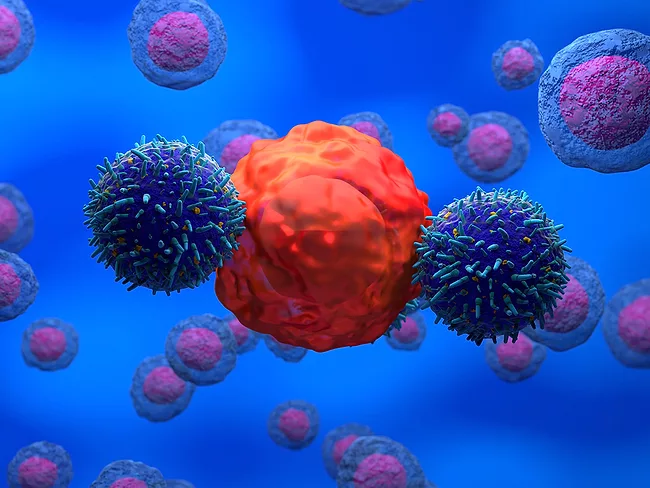
Despite the successful application of adoptive T-cell transfer with chimeric antigen receptor (CAR)-engineered T cells for the treatment of various hematologic malignancies, several other hematologic disorders, such as BCR::ABL1-negative myeloproliferative neoplasms (MPNs), still lack effective treatment options.
Chemotherapy is often seen solely as a tumor-targeting treatment, yet new evidence reveals a paradox: the tissue injury it causes can reprogram the body’s defenses, influencing the risk of metastasis. Researchers from the University of Lausanne and collaborators reported that chemotherapy reshapes the gut-immune axis by inducing microbiota-derived indole-3-propionic acid (IPA), which reprograms myelopoiesis to curb monocyte-driven immunosuppression and metastasis in colorectal cancer (CRC).
Gwangju Institute of Science & Technology, National Cancer Center of Korea and Seoul National University have jointly divulged new PreS1 (hepatitis B virus, HBV) derivatives for the treatment of HBV infection.
The University of Kansas has synthesized TNF-α (ARE sequence)/ELAV-like protein 1 (HuR) interaction inhibitors. They are reported to be useful for the treatment of cancer, kidney fibrosis, liver fibrosis, pulmonary fibrosis and myocardial fibrosis.

 RSS
RSS