BioWorld. Link to homepage.

Clarivate
  • BioWorld
  • BioWorld Science
  • BioWorld Asia
  • Data Snapshots
    • Biopharma
    • Medical technology
    • Infographics: Dynamic digital data analysis
    • Index insights
    • NME Digest
  • Special reports
    • Infographics: Dynamic digital data analysis
    • Trump administration impacts
    • Med-tech outlook 2026
    • Under threat: mRNA vaccine research
    • BioWorld at 35
    • Biopharma M&A scorecard
    • Bioworld 2025 review
    • BioWorld MedTech 2025 review
    • BioWorld Science 2025 review
    • Women's health
    • China's GLP-1 landscape
    • PFA re-energizes afib market
    • China CAR T
    • Alzheimer's disease
    • Coronavirus
    • More reports can be found here

BioWorld. Link to homepage.

  • Sign In
  • Sign Out
  • My Account
Subscribe
BioWorld - Tuesday, April 7, 2026
Breaking News: Best of BioWorld Science: Q1Breaking News: Best of BioWorld Science: Q1Breaking News: Best of BioWorld Science: Q1
Home » Topics » BioWorld Science, Cardiovascular

BioWorld Science, Cardiovascular
BioWorld Science, Cardiovascular RSS Feed RSS

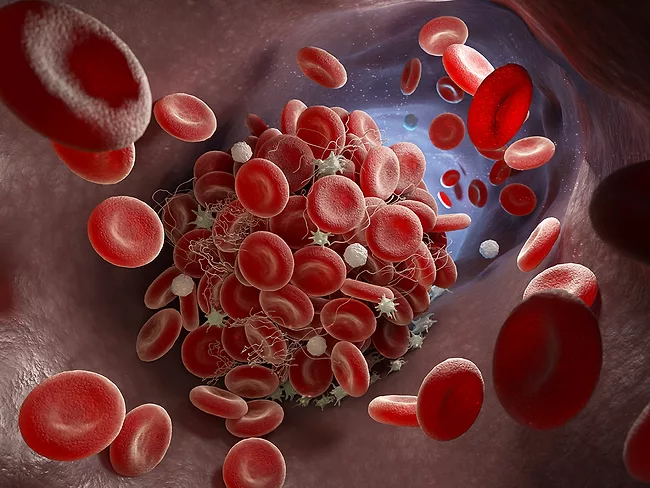
Illustration of vascular system in the legs
Cardiovascular

BAZ1A-AS1 behind neointima formation after saphenous vein graft disease

Nov. 21, 2022
Noncoding RNAs, such as long noncoding RNAs (lncRNAs), are important regulators and markers of cardiovascular diseases. Saphenous veins are frequently used in coronary artery bypass surgery, but about 50% of the saphenous vein grafts fail in the first 10 years after surgery due to neointima formation.
Read More
Vascular system
Biomarkers

Lower ApoJ-Glyc levels found in patients with ischemia

Nov. 15, 2022
Recent findings have suggested glycosylated apolipoprotein J (ApoJ-Glyc) levels to be a marker for the diagnosis of myocardial ischemia. Analysis of this marker was performed in a cohort of patients with chest pain suggestive of acute coronary syndrome (ACS) (N=404). ApoJ-Glyc serum levels were analyzed with a novel ELISA assay that targets a specific glycosylated variant of ApoJ (ApoJ-GlycA6). It was found that 291 patients were diagnosed as having a nonischemic event, while 113 were classified as having an ischemic event, 33 as STEMI, 48 as non-STEMI, 27 as unstable angina pectoris and 5 as unclassifiable ACS patients.
Read More
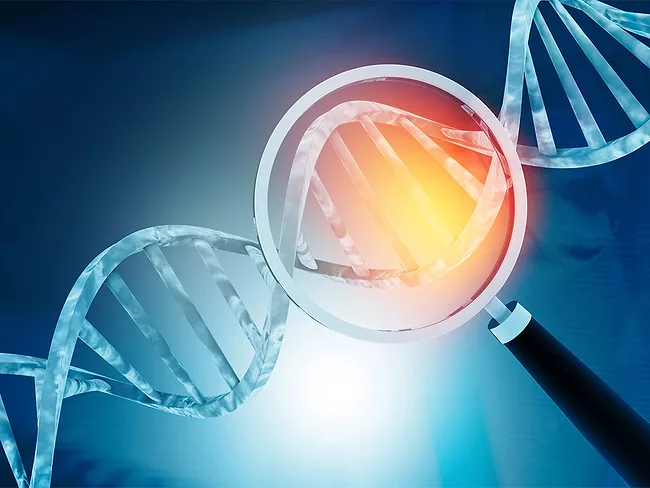
Heart and DNA
Cardiovascular

AAV9-cTnT-GSLA01 improves lifespan and cardiac function in Lmna DCM mouse model

Nov. 15, 2022
LMNA gene mutations are the second most common cause of genetic dilated...
Read More
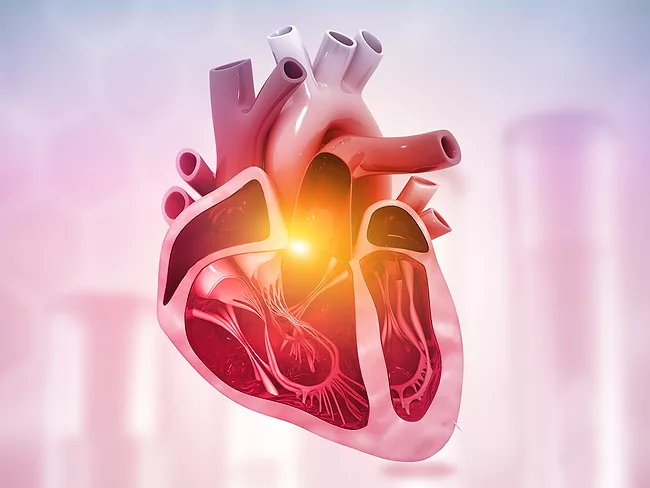
Colorful illustration of the heart
Cardiovascular

MMP-targeting VS-041 shows promise for improving cardiac function in HFpEF patients

Nov. 14, 2022
Increased expression and elevated levels of matrix metalloproteinase-2 (MMP-2) and MMP-9 play a role in impaired cardiac function. These MMPs make for essential targets in the treatment of heart failure, specifically heart failure with preserved ejection fraction (HFpEF).
Read More
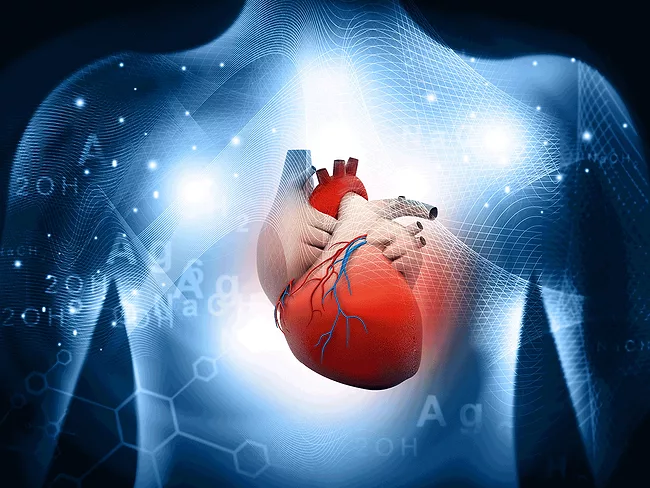
Blue heart and data grid
Cardiovascular

Preclinical results show potential of AS-100283, a CaMKIIδ inhibitor, for the treatment of β-blocker-resistant arrhythmias

Nov. 14, 2022
Calcium/calmodulin-dependent protein kinase II (CaMKII) is involved in the regulation of calcium and its hyperactivation can lead to cardiac issues, particularly with rhythm and contraction.
Read More
3D illustration of heart cross section
Cardiovascular

NMX-2 unique dual mode of action used to improve cardiac health

Nov. 11, 2022
AMPK activation improves cardiac function in multiple ways, from regulating lipid and glucose to directly protecting cardiac cells.
Read More
Cardiovascular

Hormonal therapies can reduce immunotherapy-associated cardiotoxicity in women

Nov. 11, 2022
By Subhasree Nag
Immune checkpoint inhibitor (ICI) treatment reduced levels of estrogen and important heart-protective proteins, researchers reported in the Nov. 2, 2022, online edition of Science Translational Medicine. Hormone therapies could target this endocrine-cardiac-immune pathway and mitigate myocarditis risk without affecting treatment responses.
Read More
Cardiovascular

35Pharma presents in vivo study results for HS-135 in pulmonary hypertension

Nov. 10, 2022
Investigators from 35Pharma Inc. carried out in vivo testing of HS-135, an activin-receptor-based fusion protein (ActRIIB ligand trap), focusing on target engagement, effect on body composition and efficacy in pulmonary arterial hypertension (PAH).
Read More
Heart illustration
Cardiovascular

SBT-255 reduces myocardial infarct size and increases perfusion

Nov. 9, 2022
Myocardial infarction, a result of uncontrolled heart disease, often results in death.
Read More
Electron microscopy images of rodent heart cell nuclei.
Cardiovascular

Nuclear border closings reduce stress but impair regeneration

Oct. 26, 2022
By Anette Breindl
As they matured from prenatal to adult, heart cells reduced the number of nuclear pores by more than 60%. That decrease protected them from the consequences of stress, but also impaired their ability to regenerate. “These findings are an important advance in fundamental understanding of how the heart develops with age and how it has evolved to cope with stress,” senior author Bernhard Kühn, professor of pediatrics and director of the Pediatric Institute for Heart Regeneration and Therapeutics at the University of Pittsburgh School of Medicine, said in a press release. Kühn and his colleagues published those findings in the Oct. 24, 2022, issue of Developmental Cell.
Read More
Previous 1 2 … 39 40 41 42 43 44 45 46 47 … 849 850 Next

Popular Stories

  • Today's news in brief

    BioWorld
    BioWorld briefs for April 6, 2026.
  • Hengrui discovers new Nav1.8 blockers

    BioWorld Science
    Researchers from Jiangsu Hengrui Pharmaceuticals Co. Ltd. and Shanghai Hengrui Pharmaceutical Co. Ltd. have patented new sodium channel protein type 10 subunit α...
  • News in brief

    BioWorld Asia
    BioWorld Asia briefs for March 31, 2026
  • Cancer and blood cells

    Hematopoietic stem cell research points to leukemia’s early roots

    BioWorld Science
    Hematopoietic stem cell (HSC) research over the past century has shown that leukemia may be driven by an invisible hand of inflammation. The bone marrow and...
  • 3D illustration of antibodies

    Infinimmune presents preclinical data on anti-IL-22 antibody for atopic dermatitis

    BioWorld Science
    Infinimmune Inc. has recently presented results at the annual American Academy of Dermatology conference regarding their anti-IL-22 antibody IFX-101 for the...
  • BioWorld
    • Today's news
    • Analysis and data insight
    • Clinical
    • Data Snapshots
    • Deals and M&A
    • Financings
    • Medical technology
    • Newco news
    • Opinion
    • Regulatory
  • BioWorld Science
    • Today's news
    • Biomarkers
    • Cancer
    • Conferences
    • Endocrine/metabolic
    • Immune
    • Infection
    • Neurology/psychiatric
    • NME Digest
    • Patents
  • BioWorld Asia
    • Today's news
    • Analysis and data insight
    • Australia
    • China
    • Clinical
    • Deals and M&A
    • Financings
    • Newco news
    • Regulatory
    • Science
  • More
    • About
    • Advertise with BioWorld
    • Archives
    • Article reprints and permissions
    • Contact us
    • Cookie policy
    • Copyright notice
    • Data methodology
    • Infographics: Dynamic digital data analysis
    • Index insights
    • Podcasts
    • Privacy policy
    • Share your news with BioWorld
    • Staff
    • Terms of use
    • Topic alerts
Follow Us

Copyright ©2026. All Rights Reserved. Design, CMS, Hosting & Web Development :: ePublishing