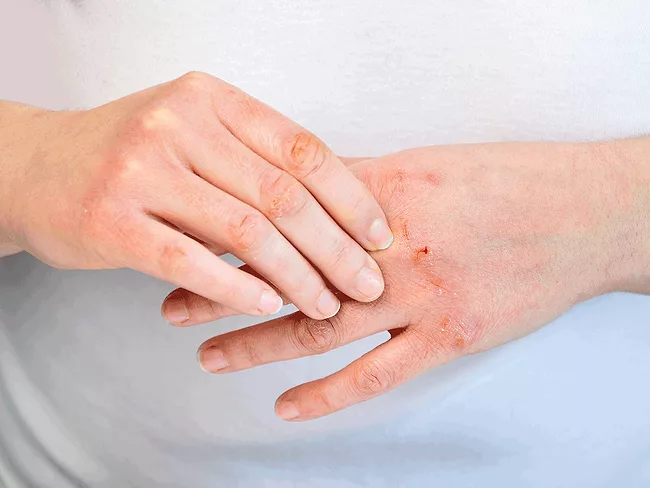
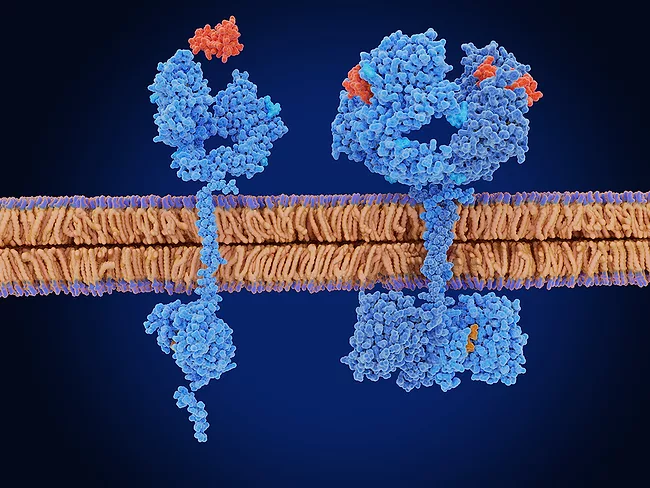
Daegu-Gyeongbuk Medical Innovation Foundation and Seoul National University Hospital have jointly developed adiponectin-derived peptoid derivatives reported to be useful for the treatment of skin inflammation, wound infection, alopecia, fibrosis, aging, skin wrinkling, cancer and metabolic diseases, among others.
Interleukin-17 (IL-17), a cytokine produced by T helper 17 (Th17) cells, is a key player in host inflammation and immune dysfunction leading to autoimmune diseases such as psoriasis, rheumatoid arthritis, multiple sclerosis or asthma, among others.
Researchers at Guangzhou Baiyunshan Pharmaceutical Holdings Co. Ltd. and Medshine Discovery Inc. have divulged novel non-fluorinated quinolones reported to be useful for the treatment of acne, bacterial infections and inflammatory disorders.
Researchers have developed NCP-112 (Novacell Technology Inc.), a novel FPR2-selective synthetic heptameric peptide ligand, and tested it in preclinical models of atopic dermatitis.
Researchers from Universität zu Köln have published data from a study that investigated the pathophysiology of disabling pansclerotic morphea (DPM), and as such, gain better understanding of the much larger range of disorders characterized by poor wound healing and severe, unchecked fibrosis.
Emris Pharma, a recent spin-off of Hadasit Medical Research Services and Development Ltd. and Yissum Research Development Co., has started development of a new topical drug to treat skin toxicities caused by epidermal growth factor receptor (EGFR) inhibitors used to treat cancer.
At the recent American Transplant Congress, researchers from McGill University presented the discovery and preclinical evaluation of a novel retinoic acid receptor-related orphan receptor γt (RORγt) inhibitor, TF-S14, being developed as a potential therapy to delay skin allograft rejection.
Liminal Biosciences Inc. has nominated a lead preclinical candidate, LMNL-6326, from its oxoeicosanoid receptor 1 (OXER1) antagonist program, targeting the treatment of eosinophil-driven diseases such as eosinophilic asthma and atopic dermatitis.
Shenzhen Winkey Technology Co. Ltd. has described tetrapeptide derivatives reported to be useful for the treatment of skin inflammation and hyperpigmentation.
 RSS
RSS