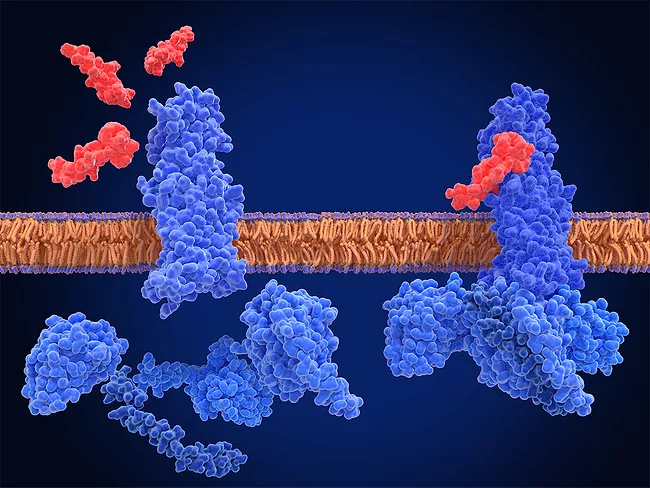
Hinova Pharmaceuticals Inc. has divulged glucagon-like peptide 1 receptor (GLP-1R) agonists reported to be useful for the treatment of type 2 diabetes, obesity, hepatic steatosis and polycystic ovary syndrome.
Pfizer Inc. has disclosed salts of gastric inhibitory polypeptide receptor (GIPR) antagonists reported to be useful for the treatment of type 2 diabetes and obesity.
Rpxds Co. Ltd. has described α-ketoglutarate-dependent dioxygenase FTO inhibitors reported to be useful for the treatment of obesity, diabetes, atherosclerosis and more.
Viking Therapeutics Inc. has identified amylin analogues acting as calcitonin receptor (CALCR; CT-R) and amylin receptor agonists reported to be useful for the treatment of diabetes and obesity.
Insilico Medicine Ltd. has described glucocorticoid receptor (GR) antagonists reported to be useful for the treatment of Cushing’s syndrome, Addison’s disease, osteoporosis, rheumatoid arthritis, asthma, rhinitis, allergy and skin lesions.
Nitrogen-containing heteroaromatic-based inhibitors for cytochrome P450 (CYP) in various species contain a crucial coordination between the nitrogen atom and the heme iron. Previous studies suggested that 1,3-oxazole could bind heme-iron with a strength comparable to pyridine, highlighting its potential as a novel heme-iron binding moiety.
The difference between the origin of Alzheimer's disease (AD) and its symptoms is an obstacle to finding effective treatments. Scientists focused on amyloid-β (Aβ) plaques and tau aggregates to slow neurodegeneration and cognitive decline. Without identifying what causes AD, approved treatments do not provide much benefit. However, new findings suggest that restoring lithium levels in the brain could prevent and treat AD. Not just any lithium would work, just the forms that do not bind to Aβ.
Haisco Pharmaceutical Group Co. Ltd. has prepared and tested glucagon-like peptide 1 receptor (GLP-1R) agonists reported to be useful for the treatment of diabetes and obesity.
Researchers from McMaster University and Espervita Therapeutics Inc. have identified the enzyme ATP citrate lyase (ACLY) as a key metabolic regulator of tumor-immune interactions in hepatocellular carcinoma (HCC) driven by metabolic dysfunction-associated steatohepatitis (MASH).

 RSS
RSS