A common molecular pathway associated with lung fibrosis may also hold the key to pulmonary vascular repair. A group of scientists at the University of Pennsylvania (Penn) found that when a viral infection damaged these vessels, the injury could be restored by activating the transforming growth factor-β receptor 2 (TGF-βR2) in endothelial cells, which led to cell proliferation.
COVID-19 severity remains open to several questions. Researchers at the University of California Los Angeles (UCLA) have revealed how SARS-CoV-2 causes acute inflammation instead of the symptoms of a common cold. This effect could be initiated by the peptide fragments of the coronavirus released when the host eliminates the virus, which can form pro-inflammatory complexes that trigger an amplified immune response.
Bone morphogenetic protein 9 (BMP-9), also known as growth/differentiation factor 2, is a member of the transforming growth factor-β family of cytokines, which exerts its biological effects through binding to a complex formed by ALK1 and BMPR2.
Neutrophils are the immune system’s most abundant effector cells, which play a defensive role of host cells and clear pathogens by phagocytosis, degranulation and neutrophil extracellular trap (NET) release.
Bioversys AG has divulged compounds with the ability to interact with accessory gene regulator A (AgrA) and inhibit the expression of AgrA-regulated virulence factors.
Researchers from Scynexis Inc. have recently presented details on the preclinical characterization of SCY-247, a second-generation triterpenoid with glucan synthase inhibitor activity and intended to be used for the treatment of invasive mucormycosis.
When a cell is invaded by a virus, the cell triggers an innate immune response by activating retinoic acid-inducible gene I (RIG-I) like receptors (RLRs), among others, that are essential for controlling viral replication. Even though several ubiquitin ligases (E3) have been identified to positively or negatively regulate RLRs post-translationally, the E3 ligases directly involved in RLR transcription are still unknown. A screening including 375 ubiquitin E3 ligases identified E3 ubiquitin-protein ligase UBR5 as a positive regulator of RLR transcription.
Naegleria fowleri, colloquially known as the "brain-eating amoeba," is a water-borne amoeba and the leading cause of primary amoebic meningoencephalitis (PAM). In a recent study published in Scientific Reports, researchers from the University of Central Punjab aimed to design an mRNA-based vaccine against PAM.
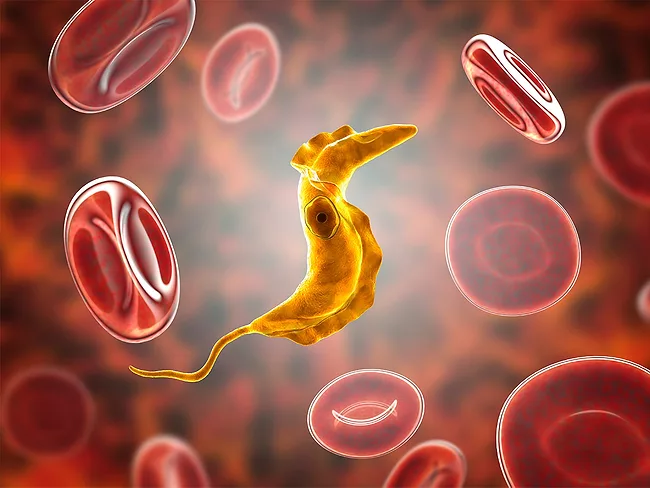
To combat trypanosomiasis and leishmaniasis, researchers from the University of Modena and Reggio Emilia and collaborators conducted a study focusing on pteridine reductase 1 (PTR1), a catalytic protein crucial to the folate metabolic pathway in Trypanosomatid parasites.
Bioversys AG has described 3-(phenylsulfonyl)-[1,2,3]triazolo[1,5a]quinazolin-5(4h)-one derivatives with the ability to interact with accessory gene regulator A (AgrA) and inhibit the expression of AgrA-regulated virulence factors reported to be useful for the treatment of bacterial infections and skin inflammation.
 RSS
RSS