3H Pharmaceuticals Co. Ltd. has synthesized Werner syndrome ATP-dependent helicase (WRN; RECQ3; RECQL2) inhibitors reported to be useful for the treatment of cancer.
Innovstone Therapeutics Ltd. has disclosed integrin αLβ2 (LFA-1)/ICAM-1 interaction inhibitors and/or RASP-trapping agents reported to be useful for the treatment of dry eye syndrome.
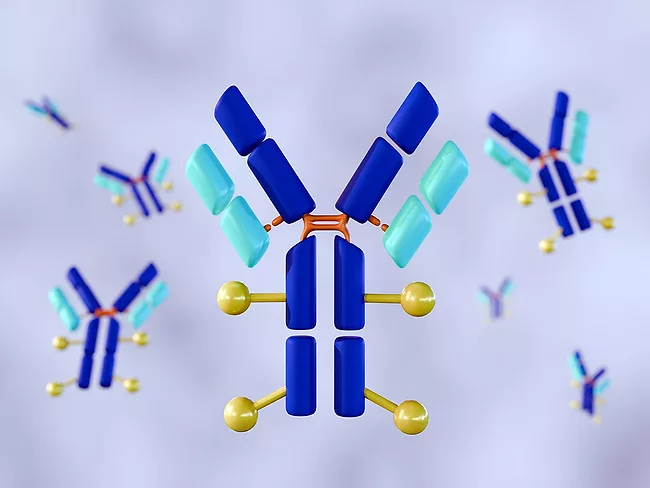
CIS Biopharma AG recently presented an antibody-drug conjugate (ADC) targeting the L1 cell adhesion molecule (L1CAM/CD171) as a potential candidate for the treatment of advanced tumors.
Two attractive drug targets in tumors are carbonic anhydrase IX (CAIX), which helps maintain pH homeostasis in the hypoxic tumor, and glutathione peroxidase 4 (GPX4), which can reduce oxidative stress. Researchers from Università degli Studi di Firenze and collaborators aimed to inhibit both CAIX and GPX4 simultaneously.
Pinotbio Inc. recently reported a novel antibody-drug conjugate (ADC), named PBX-004, consisting of an ITGB6-targeting antibody conjugated to a potent topoisomerase I (TOP1) inhibitor payload.
Researchers at 35pharma Inc. have recently presented data for the activin receptor inhibitor HS-235, which is under development for the treatment of obesity as it exerts body composition and metabolism control.
Investigators from the University of Science and Technology of China and RNAlfa Biotech have described a novel mRNA-based vaccine candidate against Dabie Banda virus (DBV), which has fatality rates of up to 30% in some East Asian countries.
Korro Bio Inc. has nominated KRRO-121 as its next development candidate, for the treatment of patients with hyperammonemia, including patients with urea cycle disorders and hepatic encephalopathy.
Sutro Biopharma Inc. has outlined its next-generation antibody-drug conjugate (ADC) pipeline following recent IND clearance and initiation of phase I for its tissue factor-targeting ADC, STRO-004.
Gentibio Inc. has developed and presented data for GNTI-823, an allogeneic tissue Treg engineered from peripheral blood CD4+ T cells with CRISPR-based editing to induce FOXP3 expression, a rapamycin-inducible IL-2 signaling complex and an alarmin-responsive transgene.

 RSS
RSS