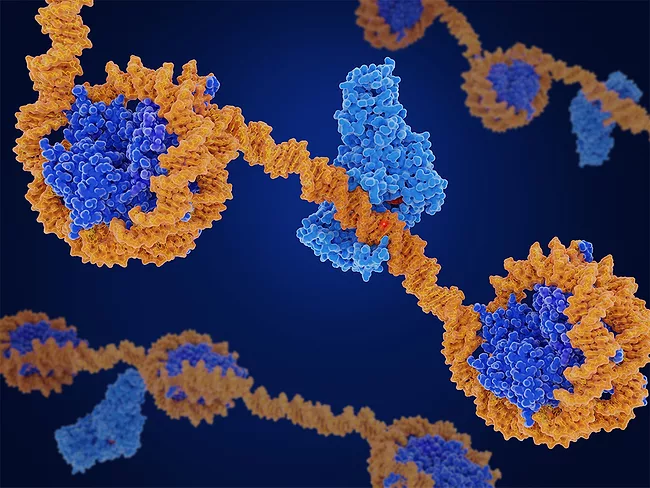
Telomir Pharmaceuticals Inc. has released new in vitro data revealing that Telomir-1 potently inhibits three key histone demethylase enzymes – JMJD3, FBXL10 and FBXL11 – that regulate gene expression through epigenetic mechanisms.
Experimental drugs that directly inhibit the NSD2 enzyme have shown potential as an effective strategy against hard-to-treat cancers, such as lung and pancreatic tumors driven by KRAS mutations. The therapeutic mechanism involves reversing a histone H3 methylation that promotes open chromatin and the expression of oncogenes.
Quantumpharm Inc., known as Xtalpi Inc., announced receiving $51 million up front from a potential $5.99 billion deal with Dovetree LLC on Aug. 6. The collaboration, first inked through a letter of intent between the two parties on June 23, will combine Shenzhen, China-based Xtalpi’s AI-based and robotics-driven discovery platform with Dovetree’s “biological insights.” The goal will be to select and validate potential first-in-class candidates for Dovetree across five areas of oncology, immunology and inflammatory diseases, neurological disorders and metabolic dysregulation.
Hebei Yiling Medicine Research Institute Co. Ltd. has described piperidine indole derivatives targeting complement factor B (CFB) reported to be useful for the treatment of inflammatory disorders, and hematological, neurodegenerative and autoimmune diseases.
Dana-Farber Cancer Institute Inc. has divulged ubiquitin carboxyl-terminal hydrolase 28 (USP28; KIAA1515) inhibitors reported to be useful for the treatment of cancer and autoimmune disease.
Foshan Ionova Biotherapeutics Co. Ltd. has described proteolysis targeting chimeras (PROTACs) comprising an E3 ubiquitin-protein ligase binding moiety covalently linked to an androgen receptor variant 7 (AR-v7) targeting moiety acting as AR-v7 degradation inducers reported to be useful for the treatment of prostate cancer.
Astrazeneca AB has synthesized transient receptor potential cation channel subfamily V member 4 (TRPV4) antagonists reported to be useful for the treatment of inflammatory disorders, respiratory diseases, metabolic diseases, dermatological disorders, neuromuscular disorders, genetic disorders, cancer and pain, among others.
Haisco Pharmaceutical Group Co. Ltd. has disclosed fibroblast growth factor receptor 2 (FGFR2) inhibitors reported to be useful for the treatment of cancer.
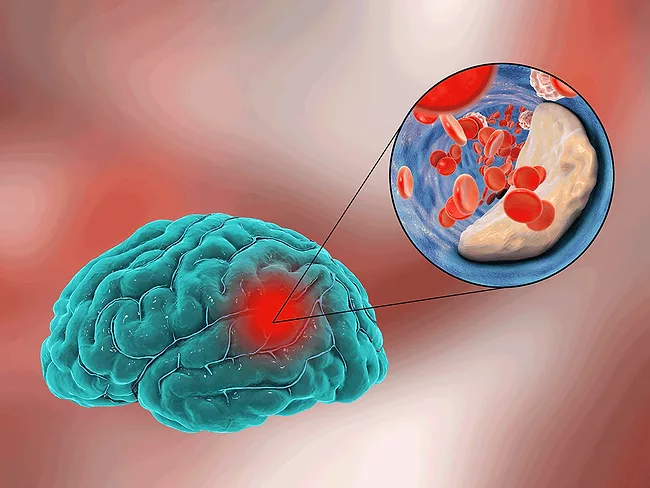
Ischemic stroke triggers a strong neuroinflammatory response, with microglial activation and neutrophil infiltration contributing to blood-brain barrier disruption and worsening neuronal damage.

 RSS
RSS