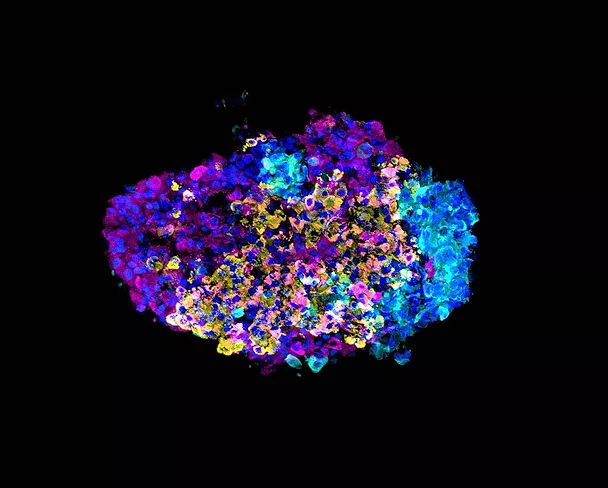
In type 2 diabetes patients, inadequate hyperglycemic control can lead to insulin-secreting β-cell exhaustion, dedifferentiation and eventual loss. Since adult β cells have limited proliferative capacity, this final stage cannot be reversed.
Dyne Therapeutics Inc. presented their most recent work to advance novel therapeutics for facioscapulohumeral muscular dystrophy (FHSD). FSHD is an autosomal dominant genetic disorder characterized by muscle weakness and atrophy. Dyne Therapeutics previously developed the FORCE platform, which uses an antigen-binding fragment (Fab) specifically targeting telomeric repeat binding factor-1 (TfR1) for targeted therapeutic delivery.
Cannabinoid CB1 receptors have been a potential target for nonopioid-based pain treatment, but actually targeting the pathway has been hindered by issues with tolerance and unwanted CNS side effects. Peripherally selective CB1 agonists developed to overcome these problems have not fully resolved these issues, meaning the peripheral selectivity has to be substantially enhanced.
Multiomic Health Ltd. and Alloy Therapeutics Inc. have signed a memorandum of understanding to jointly discover and develop first-in-class renal tissue-targeting drugs. Precision medicines for chronic renal conditions targeted to the kidney tissue of specific patient subpopulations are expected to improve efficacy and safety compared to conventional systemic drugs.
In a study published in Nature Communications, researchers from Nanjing University present a novel nanovaccine cocktail formulated by individual conjugation of antigen p210 and adjuvant CpG ODNs onto superparamagnetic iron oxide nanoparticles (SPIONs).
At the recently launched Alzheimer’s & Parkinson’s Diseases Conference held in Vienna, Lotte Bjerre Knudsen from Novo Nordisk A/S, who has extensive experience in glucagon-like peptide-1 (GLP-1) research, delivered a plenary lecture focused on the role of GLP-1 receptor agonists, such as semaglutide, in attenuating neuroinflammation and neurodegeneration.
Transplanting an animal organ into a human is now a closer reality following the successful xenotransplantation of a genetically modified pig liver into a patient diagnosed with brain death in China. The operation was intended to evaluate organ function over a 10-day period. This is a complex experimental trial that did not involve removing the patient's liver and still requires further study. However, the positive preclinical results suggest this strategy could save the lives of those waiting for a human organ, at least in certain cases.
Biocryst Pharmaceuticals Inc. has described kallikrein 5 (KLK5; KLK-L2) inhibitors reported to be useful for the treatment of allergy, asthma, cancer, conjunctivitis, dermatological disorders, gastrointestinal conditions, inflammatory disorders and rhinitis, among others.
West Pharmaceutical Services Inc. has divulged pyrazolopyridine-containing compounds reported to be useful as DNA-dependent protein kinase (DNA-PK) inhibitors.
Convelo Therapeutics Inc. and Genentech Inc. have identified lanosterol 14α-demethylase (CYP51A1; CYP51) inhibitors reported to be useful for the treatment of multiple sclerosis, encephalomyelitis, optic neuritis, schizophrenia, amyotrophic lateral sclerosis, Alzheimer’s disease, Parkinson’s disease and Huntington’s disease, among others.
 RSS
RSS