Lunit Inc. reported a new collaboration with Microsoft Corp. July 2 to jointly develop medical AI programs accessible on Microsoft’s Azure cloud platform.
In recognition of the fact that diversity, equity and inclusion are necessary prerequisites for precision medicine, the European Academy of Neurology announced the launch of a DEI Hub at its 11th Congress, which is being held in Helsinki through June 24.
The U.K. government will offer women home-testing kits for cervical screening as part of an effort to tackle barriers and get more of them taking this potentially life-saving test.
Pregnant women with type 1 diabetes who used a hybrid closed loop automated insulin delivery system averaged more than three additional hours per day in their recommended glucose range than those who managed their diabetes with insulin injections or non-automated pump systems, a study presented at the 85th Scientific Sessions of the American Association in Chicago demonstrated.
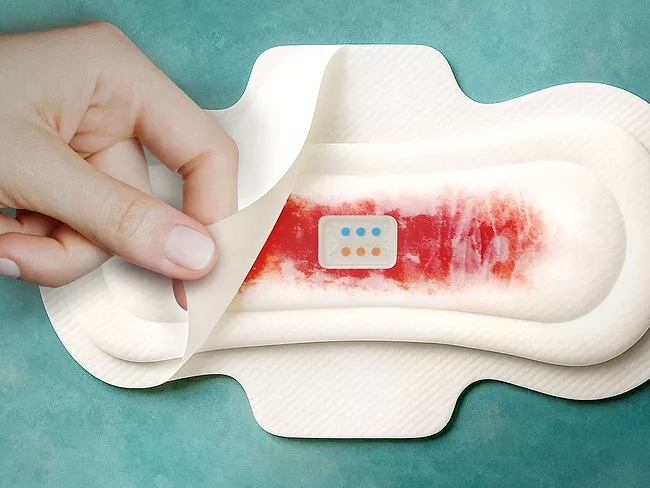
Researchers at ETH Zürich developed Menstruai, a device that detects in menstruation blood biomarkers associated with certain diseases. Menstruai uses a sensor built into a sanitary pad and changes color if certain biomarkers are present. The first of its kind technology has the potential to enable the early detection of diseases and transform women’s health care.
GC Genome Corp. priced a Kosdaq offering of 4 million shares at ₩10,500 per share May 27, entailing a gross ₩42 billion (US$30.5 million) raise in early June. The Yongin, South Korea-based genomics subsidiary of GC Biopharma Corp. fixed its shares price to the top of its ₩9,000 to ₩15,000 price band May 27 after conducting demand forecasting on domestic and international institutional investors from May 19 to May 23.
Hinge Health Inc.’s flexibility produced big rewards as the digital therapy company for physical rehabilitation finally began trading on the NYSE under the symbol HNGE on May 22 after delaying its IPO twice. Hinge co-founders Daniel Perez and Gabriel Mecklenburg rang the opening bell for the stock exchange to celebrate the offering’s $437 million haul.
Phase Scientific International Ltd. raised $34 million in a series A round to accelerate research and development of its early disease detection technology for multiple cancers, women's health issues, and infectious diseases.
Mirvie Inc. continues the development of precision medicine for pregnancy-related conditions with its Encompass blood test to predict preeclampsia risk and individualized support to head off the life-threatening complication that affects one in 12 pregnancies. The test, which received U.S. FDA breakthrough device designation in 2022, is now available to order online with clinician review via telehealth.
“Just simply getting old, from age 50 to 75, increased risk for Alzheimer’s disease by 100-fold, which really dwarfed 10-fold increase in risk, conferred by all known risk factors combined, including APOE genotype, being a female, hypertension, smoking, physical inactivity and diabetes.
 RSS
RSS