The U.S. Supreme Court preserved the U.S. Preventative Services Task Force coverage mandate that requires payers to cover certain preventive services at no cost to patients in a 6-3 ruling. That’s very good news for many diagnostics companies including Exact Sciences Corp. and Guardant Health Inc. as well as companies that manufacture HIV pre-exposure prophylaxis (PReP) medications such as Gilead Sciences Inc.
Industry’s reaction to the U.S. FDA’s draft guidance for remote regulatory assessments included a request for more clarity on when the agency would issue a post-assessment report, but the final guidance makes clear the FDA sees no compelling reason to issue such a report in every instance.
Despite the controversies swirling around the June meeting of the U.S. CDC’s Advisory Committee for Immunization Practices (ACIP), the reconstituted committee delivered good news to Merck & Co. Inc. when it voted 5-2 June 26 to recommend that infants younger than 8 months who are not protected by maternal vaccination get one dose of a monoclonal as they head into their first respiratory syncytial virus season.
Although the U.S. CDC’s Advisory Committee for Immunization Practices (ACIP) was scheduled to vote June 25 on recommendations for maternal and pediatric respiratory syncytial virus vaccines, it adjourned by pushing that vote to the second day of the meeting. But before leaving for the day, it got an earful of comments from pediatricians, nurses and even a retired FDA scientist urging the CDC to reinstate the 17 committee members Health and Human Services Secretary Robert Kennedy dismissed two weeks earlier and replaced with eight new members.
Barely a day before the eight new members of the U.S. CDC’s Advisory Committee for Immunization Practices (ACIP) are supposed to hold their first meeting, Sen. Bill Cassidy, R-La., called for the June 25 meeting to be postponed.
The June 25-26 meeting of the U.S. CDC’s Advisory Committee for Immunization Practices (ACIP) will be anything but business as usual. In wiping the slate clean just two weeks before the panel was to meet, Health and Human Services Secretary Robert Kennedy made sure of that.
The realignment within the U.S. FDA continued with reports of the removal of two high level executives. When asked by BioWorld if the Center for Biologics Evaluation and Research’s (CBER) Office of Therapeutic Products director and deputy director had been forced out and if so, why, an HHS spokesperson responded on background with a single sentence: “Center directors deserve to be supported by managers that are aligned with aggressive goals to expeditiously advance therapeutics for rare diseases using the gold standard of science.”
After years of conversations surrounding indirect research costs, academic groups are now under the gun to quickly come up with an alternative to the NIH’s proposed 15% across-the-board cap on indirect costs and the decades-old university-by-university negotiated rate that can exceed a 50% add-on to a grant.
On the same day that FDA Commissioner Martin Makary spoke in a fireside chat during the 2025 Biotechnology Innovation Organization’s International Convention, the agency unveiled a pilot commissioner’s national priority voucher program that will enable companies to receive a shortened FDA review time of one to two months.
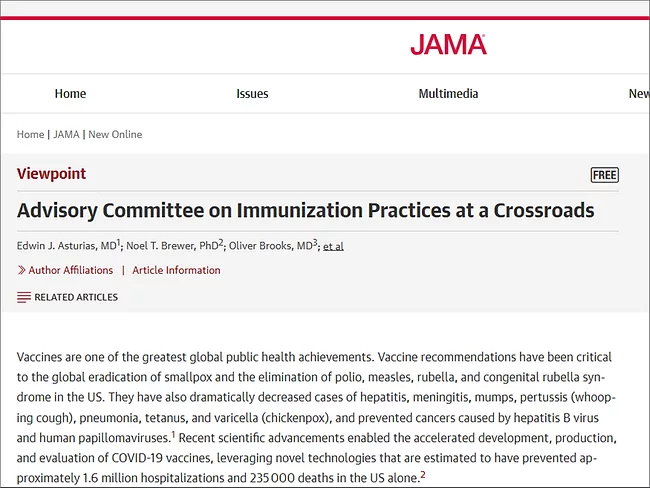
The 17 members abruptly terminated June 9 from the U.S. CDC’s Advisory Committee for Immunization Practices (ACIP) are not going gently into the night. Instead, they’re raging against what could be the dying of the light. The 17 raised their collective voices in a June 16 JAMA opinion piece to decry what’s at stake with Health and Human Services Secretary Robert Kennedy’s efforts, in his words, to “reestablish public confidence in vaccine science” by cleansing ACIP of what he claimed were conflicts due to members’ financial ties to industry.
 RSS
RSS