China was already making strides to lead the biotechnology industry in many key areas such as cell therapies and AI, but the chaotic nature of the Trump administration and the turmoil in the U.S. has catapulted China’s status as a more “dependable” partner, presenters said during the Bio Hong Kong conference, Sept. 10 to 13.
It took a memo from the president for the U.S. FDA to begin reining in direct-to-consumer prescription drug advertising with its feel-good messaging and hurried recitation of a few serious adverse events.
Speaking at a Sept. 9 media briefing on the newly released Make America Healthy Again Strategy, U.S. Health and Human Services Secretary Robert Kennedy confirmed what could be the worst fears of many vaccine experts.
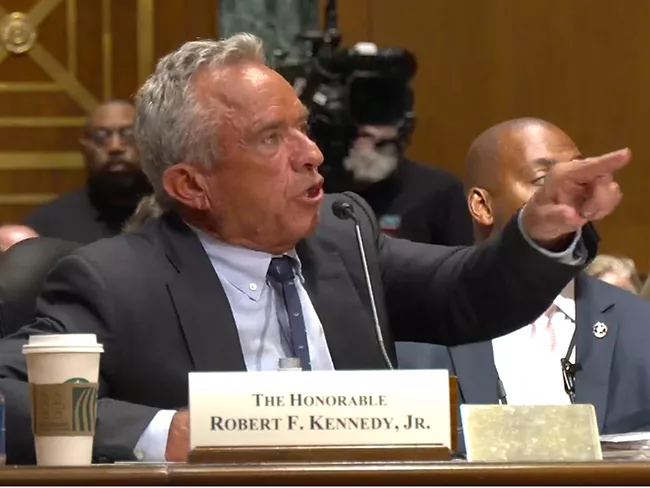
Sparks flew both ways Sept. 4 as Democratic senators pushed for Robert Kennedy to resign as secretary of the U.S. Department of Health and Human Services (HHS) during a Senate Finance Committee hearing ostensibly held to discuss the Trump administration’s 2026 health care agenda. But with Kennedy the only witness, the hearing focused on Kennedy’s perceived failings as HHS secretary. “The United States is in the midst of a health care calamity,” Ranking Member Ron Wyden, D-Ore., said in his opening comments, which were laden with personal attacks.
The vaccine dominoes continue to fall in the U.S. This time one fell on the FDA’s Vaccines and Related Biological Products Advisory Committee, as one of Health and Human Services Secretary Robert Kennedy’s most outspoken critics was removed from the panel nearly a year and a half before his term was to expire.
Three milestones expected to bring the reality of U.S. prescription drug price negotiations into focus are hovering on the horizon. First, the CMS is scheduled to publish its maximum fair prices (MFPs) for the round 2 selected drugs by Nov. 30. Then, on Jan. 1, the MFPs for the first round kick in, affecting not only the 10 selected drugs, but a dozen approved biosimilars referencing the three biologics in that round, 94 generics either approved or tentatively approved that reference the small molecules on the list, and perhaps other innovator drugs in the same therapeutic spaces. And by Feb. 1, CMS must publish the list of up to 15 drugs selected for negotiations for the 2028 price year. That list will be the first to include Part B drugs.
The U.S. Department of Health and Human Services reported Aug. 27 that Susan Monarez no longer occupies the post of director for the CDC, a development that arose within hours of the FDA’s approval of two COVID-19 vaccines with historically restrictive labeled indications.
On Thursday, the Supreme Court handed the Trump administration another significant victory in its attempts to defund NIH-sponsored research. In a 5-4 decision, the justices paused the June 16 order of U.S. District Judge William Young to restore funding for hundreds of canceled NIH research grants focusing on gender and diversity, equity and inclusion (DEI). The funding had first been cut through a series of executive orders shortly after President Donald Trump resumed power in January.
No matter what level of tariff the Trump administration ends up imposing on biopharmaceuticals across the world, drugs and their precursors originating in the EU will face no more than a 15% tariff when imported to the U.S., according to an Aug. 21 EU-U.S. joint statement regarding the trade framework agreement between the two trade partners.
For more than 30 years, the U.S. CDC’s Advisory Committee for Immunization Practices (ACIP) and the American Academy of Pediatrics (AAP) worked together to harmonize their evidence-based vaccine schedules. Not anymore.
 RSS
RSS