On the heels of the multibillion-dollar licensing deal between Bristol Myers Squibb Co. and Jiangsu Hengrui Pharmaceuticals Co. Ltd., Chairman John Moolenaar (R-MI), of the House Select Committee on the Chinese Communist Party, sent a letter to Treasury Secretary Scott Bessent urging him to add biotechnology as a prohibited technology under the Comprehensive Outbound Investment National Security (COINS) Act of 2025.
On the heels of the multibillion-dollar licensing deal between Bristol Myers Squibb Co. and Jiangsu Hengrui Pharmaceuticals Co. Ltd., Chairman John Moolenaar (R-MI), of the House Select Committee on the Chinese Communist Party, sent a letter to Treasury Secretary Scott Bessent urging him to add biotechnology as a prohibited technology under the Comprehensive Outbound Investment National Security (COINS) Act of 2025.
As of May 21, the U.S. SEC’s “no-deny” settlement policy is dead. For the past 50 years, the agency has required settling defendants to sign an agreement stating that they neither admit nor deny the SEC’s allegations. And beyond that, the standard settlement prohibits, under threat of court action, the defendants from ever denying the allegations publicly. According to an SEC notice to be published in the May 21 Federal Register, the agency has reconsidered the issue and is now rescinding the no-deny rule.
Of all the issues that could be on the table at the talks between U.S. President Donald Trump and China President Xi Jinping, the life sciences sector is the “sweet spot” for collaboration between the two countries in a way that would benefit the world, Sen. Thom Tillis, R-N.C., said in a Brookings Institution webinar in advance of the two-day summit that starts May 14.
On the heels of the ouster of Marty Makary as the U.S. FDA commissioner and the serial leadership vacancies at the CDC and the FDA’s drugs and biologics centers, the government’s adherence to science took another blow May 16 when Sen. Bill Cassidy, R-La., lost the Louisiana primary, ending his bid for re-election.
The U.S. Patent and Trademark Office (USPTO) is driving home its message that inter partes reviews (IPRs) are not to be used in conjunction with court action presenting “inconsistent positions” as a litigation strategy.
Of all the issues that could be on the table at the talks between U.S. President Donald Trump and China President Xi Jinping, the life sciences sector is the “sweet spot” for collaboration between the two countries in a way that would benefit the world, Sen. Thom Tillis, R-N.C., said in a Brookings Institution webinar in advance of the two-day summit that starts May 14.
It’s a sure bet when the U.S. Trade Representative releases its annual Special 301 Report that Chile, China, India, Indonesia, Russia and Venezuela will be on the Priority Watch List. The 2026 report was no exception.
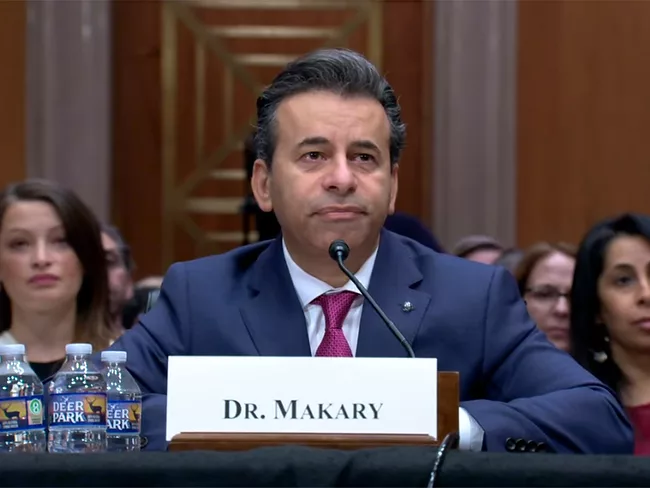
U.S. President Donald Trump ended days of rumors and speculation when he confirmed May 12 that Marty Makary is resigning as FDA commissioner. Speaking with reporters before heading off to China for a two-day summit, Trump wouldn’t comment on whether he or someone else asked Makary to step down. However, while calling Makary a “wonderful man” and a “great guy, who’s a friend of mine,” the president acknowledged that “he was having some difficulty” at the FDA.
It’s a sure bet when the U.S. Trade Representative releases its annual Special 301 Report that Chile, China, India, Indonesia, Russia and Venezuela will be on the Priority Watch List. The 2026 report was no exception.
 RSS
RSS