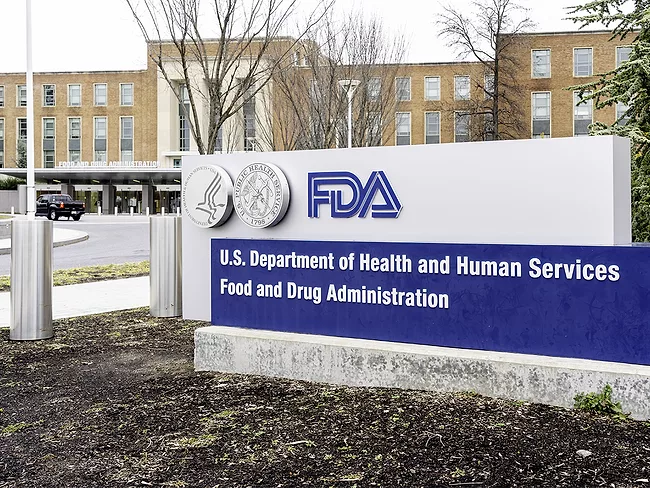
The U.S. FDA’s January 2025 draft guidance for AI-enabled device software functions has not fared well in terms of industry response. Two major trade associations argue that the draft is at least somewhat redundant with existing agency guidance.
Nearly three weeks into the job, U.S. FDA Commissioner Marty Makary provided a comprehensive overview of his vision for the much-reduced agency, even as he’s taking first steps to implement his agenda.
First quarter earnings reports from Johnson & Johnson and Abbott Laboratories provided some surprising insights into the likely hit med-tech companies will sustain with current tariffs. The main takeaway? The impact of the trade war with China is far greater than expected by most analysts.
The next major shock wave to hit the U.S. biopharma and med-tech industries could be the fiscal 2026 federal budget. Nearly one-third of the discretionary budget for the Department of Health and Human Services (HHS) could be wiped out, according to the White House Office of Management and Budget’s “pre-decisional” budget proposal, or passback, for HHS.
The recent staff cuts at the U.S. FDA’s device center caught the attention of outsiders but also caught the attention of those who work on premarket applications for 510(k) and PMA filings.
In a blast from the past, U.S. President Donald Trump signed an executive order April 15 to deliver on his 2016 campaign promises and strengthen or reinstate efforts of his first administration to drive down prescription drug prices. “My first term included numerous significant actions, including some of the most aggressive in recent history, to deliver lower prescription drug prices to American patients,” Trump noted in the order, which builds on many of those actions, including increased competition, re-importation, price transparency and a mandate to pass discounts through to patients.
The Trump administration sent several signals about the imposition of tariffs on semiconductors – a vital component for many devices. While imaging systems sell infrequently and may not suffer from a short-term crimp in supplies of semiconductors, items such as pacemakers sell by the hundreds of thousands each year in the U.S. a fact that makes semiconductor products a crucial component of the well-being of millions of Americans.
U.S. tariffs on biopharmaceuticals have advanced beyond administration talking points.As a precursor to tariffs, Commerce Secretary Howard Lutnick initiated an investigation under section 232 of the Trade Expansion Act to determine the effects on national security of importing prescription drugs, according to a request for public comments scheduled to be published in the April 16 Federal Register. Publication of the notice will kick off a 21-day comment period.
The U.S. Medicare draft inpatient rule for fiscal 2026 discusses a number of coding proposals, although the agency seems disinclined to go along with a proposal to increase payment rates for TAVR devices by switching the procedures to a different diagnostic-related group.
As new clinical trials regulations were signed into law in the U.K., an analysis of 4,616 submissions to conduct studies has highlighted what is required for the updated law to translate into a more efficient, streamlined and adaptable regulatory framework.
 RSS
RSS