The U.K. government has announced the latest measures to speed up and expand clinical trials, launching Be Part of Research, a central national register where people can search and sign up to take part in studies.
How the U.S. FDA might respond became a serious question for Wall Street as Sarepta Therapeutics Inc. made known a second death due to acute liver failure with gene therapy Elevidys (delandistrogene moxeparvovec), cleared for Duchenne muscular dystrophy (DMD). Shares of Cambridge, Mass.-based Sarepta (NASDAQ:SRPT) closed June 16 at $20.94, down $15.24, or 42%, as Wall Street digested the news.
As it prepares to present the latest data from the phase I/II clinical trial of EO-2463, Enterome SA has secured $19 million to expand and complete the study, and to scope phase III development of the microbiome-derived off-the-shelf immunotherapy in the treatment of non-Hodgkin lymphoma.
Celldex Inc.’s KIT inhibitor, barzolvolimab, which hit its phase II endpoints in late 2023, kicking off phase III development in chronic spontaneous urticaria, offered up some impressive long-term findings at the EAACI Congress 2025, including complete responses in patients for as long as seven months after the cessation of therapy, which analysts said could position the drug as a potentially best-in-class option.
3Sbio Inc. reported interim phase II study results of its PD-1/VEGF bispecific antibody, SSGJ-707 – a “fabulous” asset, according to Pfizer Inc. CEO Albert Bourla, that landed in Pfizer’s cancer arsenal via a potential $6 billion deal in May, of which $1.2 billion was paid up front.
Ascletis Pharma Inc.’s once-daily oral fatty acid synthase inhibitor, denifanstat, demonstrated statistically significant and clinically meaningful improvements compared to placebo, meeting all primary and secondary endpoints in a phase III trial for moderate to severe acne vulgaris.
Insmed Inc.’s chair and CEO, Will Lewis, called the phase IIb trial of TPIP in pulmonary arterial hypertension a “clear and unequivocal success,” with analysts and investors wholeheartedly agreeing, as the company’s shares surged 28.7% June 10.
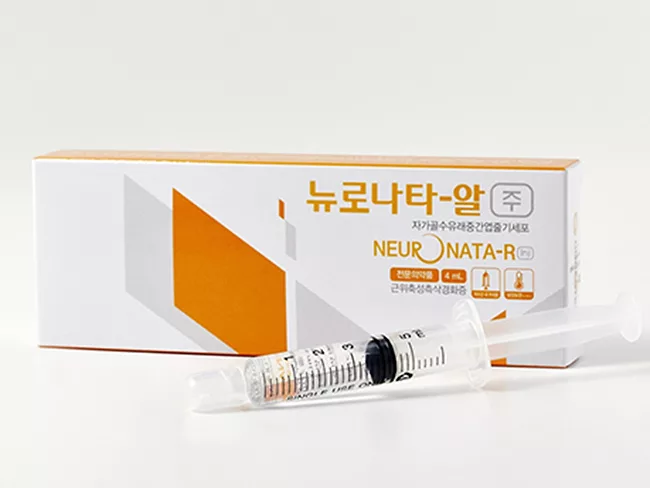
Corestemchemon Inc. is planning to file a BLA for Neuronata-R (lenzumestrocel) by the end of 2025 to gain accelerated approval from the U.S. FDA, company officials confirmed to BioWorld during a June 2 interview. Neuronata-R is an autologous bone marrow-derived mesenchymal stem cell therapy that first gained approval in South Korea in 2014 to delay the progression of amyotrophic lateral sclerosis (ALS), a progressive neurodegenerative disorder also known as Lou Gehrig’s disease.
One of the big questions going into the phase I readout for Metsera Inc.’s amylin analogue, MET-233i, was whether findings would support once-monthly dosing for the potential obesity candidate. They did. Results also indicated solid and dose-dependent weight loss activity, and Metsera was able to identify well-tolerated starting doses for subsequent studies, said Steve Marso, chief medical officer. “So we exceeded expectations on all three scientific objectives.”
In two phase III studies, Merck & Co. Inc.’s oral, once monthly proprotein convertase subtilisin/kexin type 9 (PCSK9) inhibitor produced statistically significant and clinically meaningful cuts in low-density lipoprotein cholesterol levels. The PCSK9 inhibitor is looking to fit into a crowded market that already has well-established therapies from other big pharmas and a potential competitor in development to treat another indication.
 RSS
RSS