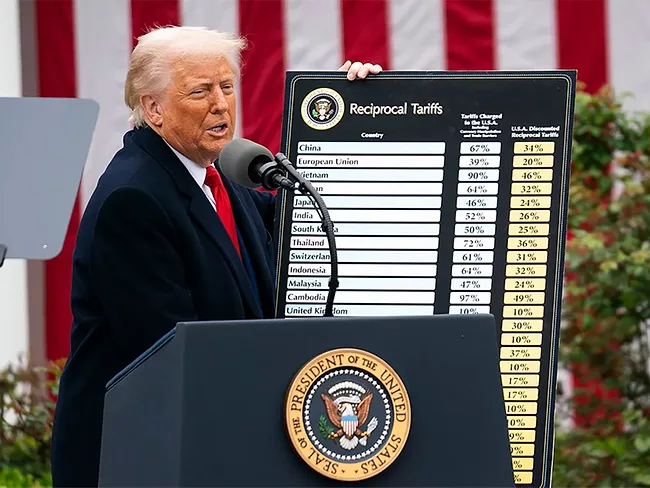
A number of biopharma and med-tech companies are committing to expand manufacturing and other facilities in the U.S. Some shifts could be driven by the tariffs imposed by President Trump in 2025, signaling a strategic move to mitigate costs and ensure continued growth
After a week of hype, the most-favored nation (MFN) drug pricing executive order (EO) U.S. President Donald Trump signed May 12 has a lot of bark but little bite, as one analyst put it. Brian Abrahams, head of global healthcare research at RBC Capital Markets LLC, said the EO is unlikely to rattle the biopharma sector, even though it lacked the certainty to completely remove the MFN overhang. “We see reason for relief and, alongside improving FDA clarity and limited tariff risk, expect biopharma to be viewed as increasingly investable,” Abrahams said.
The U.K. became the first country to reach agreement with the U.S. over threatened tariffs in an “economic prosperity deal” that leaves the pharma industry hanging on for the outcome of the U.S. section 232 probe into the implications of pharmaceutical imports for America’s national security.
Verastem Oncology Inc. CEO Dan Paterson said he is “not expecting a huge bolus [of ovarian cancer patients] at the beginning” of Avmapki/Fakzynja’s launch, but momentum will build over time. “Based on our market research, this [drug] is the most likely thing for them to go on next,” he added, noting that patients tend to be on the drug for an average of 18 months.
Finding that a lower court went too far with an injunction that ignores the Hatch-Waxman safe harbor protections for drug development, the U.S. Court of Appeals for the Federal Circuit handed Avadel CNS Pharmaceuticals LLC a win of sorts.
Planting seed money and “wishing” is not enough to claim “irreparable harm” to secure a preliminary injunction or to establish the standing required to appeal a patent board decision, the U.S. Court of Appeals for the Federal Circuit ruled May 7 in two decisions involving Incyte Corp. and Sun Pharmaceutical Industries Ltd.
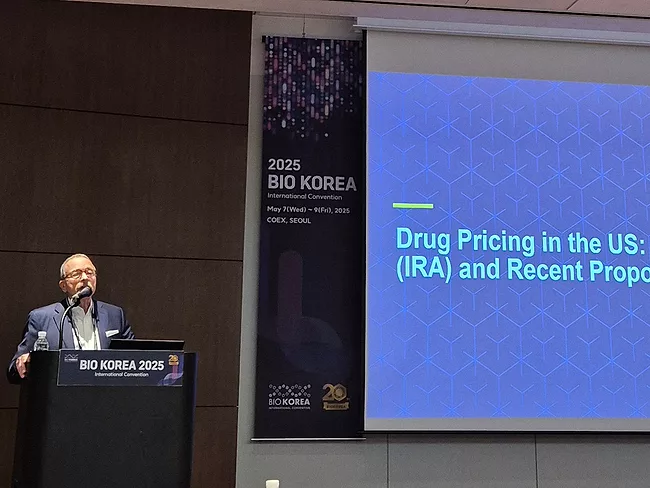
Ongoing policy issues in the U.S., including the Inflation Reduction Act and recent proposals under President Donald Trump’s administration, have wide ranging implications for the global biopharmaceutical industry, speakers at Bio Korea 2025 said May 8, including a heightened need for all biotechs to draft regulatory strategies.
Legislators in Washington again are considering a pair of bills that would affect how patents are obtained and sustained including the Patent Eligibility Restoration Act of 2025. This would constitute a big win for companies in the life sciences thanks to provisions that clarify just what is and is not eligible for patent protection.
In a throwback to the Obama administration, U.S. President Donald Trump signed an executive order pausing federally funded research using infectious pathogens and toxins that may pose a danger until a safer, more enforceable and transparent policy governing such research can be developed and implemented.
South Korean government and biopharmaceutical industry representatives urged American policymakers May 7 to refrain from imposing tariffs on pharmaceutical imports, and to spare allies if pharma tariffs are deemed necessary. Both Korea’s Ministry of Health and Welfare on May 4 and the Korea Biotechnology Industry Organization on May 6 submitted comments to the U.S. Department of Commerce in response to its ongoing investigation of pharmaceutical imports.

 RSS
RSS