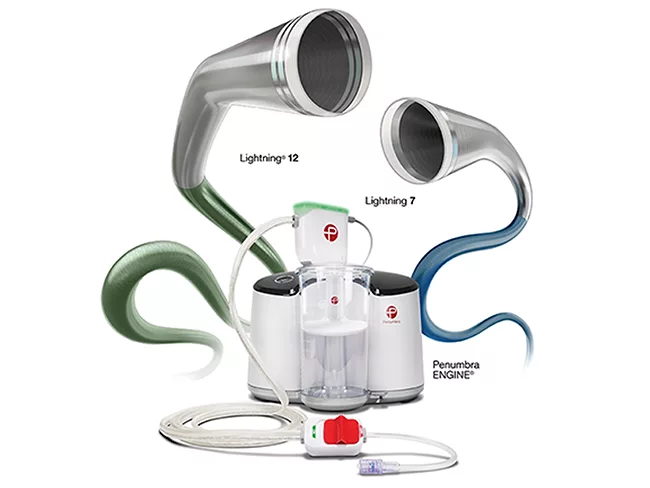
Penumbra Inc. presented new data at the LINC Symposium in Leipzig, Germany, evaluating its Indigo aspiration system for submassive pulmonary embolism (PE). The subgroup analysis evaluated performance outcomes of patients with main pulmonary artery (PA) emboli vs. discrete unilateral or bilateral PA emboli without main PA involvement. Data from the study suggests the system can be used effectively for both proximal and distal aspiration thrombectomy in the pulmonary arteries.
Sophia Genetics SA shared preliminary findings from its multimodal Deep-Lung-IV clinical study at the 2022 American Society of Clinical Oncology annual meeting. The study is utilizing Sophia’s cloud-based, artificial intelligence diagnostic platform to identify multimodal predictive signatures of response to immunotherapy for patients with advanced lung cancer.
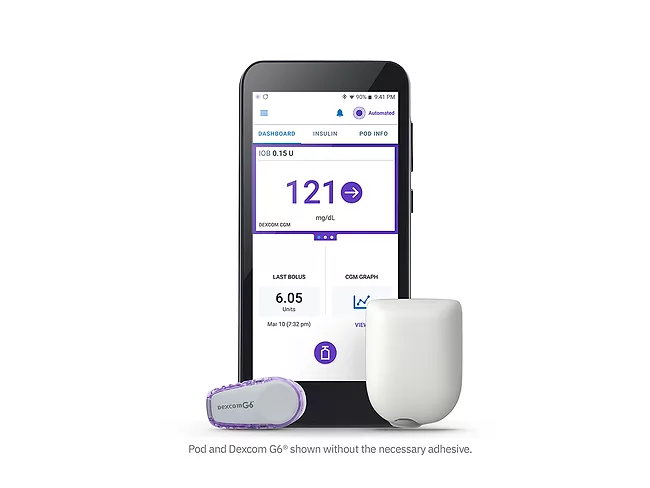
Several companies showed promising results for automated insulin delivery (AID) systems at the American Diabetes Association (ADA) annual meeting in New Orleans. Studies of the systems, also known as artificial pancreas systems, indicate that integration with continuous glucose monitoring (CGM) systems enables substantially improved glycemic control, with more time in range (TIR) and less hypoglycemia than seen with multiple daily injection (MDI) therapy or insulin-pump therapy.
Endotronix Inc. reported positive data from the SIRONA 2 clinical trial evaluating safety and efficacy of its Cordella pulmonary artery pressure sensor system in New York Heart Association (NYHA) class III heart failure (HF) patients.
Following last week’s FDA approval of its Onyx Frontier drug eluting stent (DES), Medtronic plc released results at EuroPCR from a real-world, multicenter prospective study using its Resolute Onyx platform for percutaneous coronary interventions (PCI) in the left main artery. Rehovot, Israel-based Pi-Cardia Ltd. also released early data for patients treated with its Short Cut transcatheter device for coronary obstruction prevention.
Abbott Laboratories Inc. presented one-year outcomes from its PORTICO NG study assessing the latest-generation transcatheter aortic valve implantation (TAVI) system, Navitor in patients with severe aortic stenosis. The valve, which includes a new active sealing cuff, builds on the company’s Portico transcatheter heart valve platform.
Abbott Laboratories Inc. reported 30-day results from its Triclip Bright Study at the EuroPCR meeting in Paris on May 19. The real-world outcomes showed that the company’s tricuspid repair systems Triclip and Triclip G4 transcatheter edge-to-edge repair (TEER) significantly reduced tricuspid regurgitation (TR) and substantially improved the quality of life across a wide range of anatomically diverse patients.
Jenavalve Technology Inc. presented first real-world data for a study evaluating the safety and efficacy of its Jenavalve Trilogy transcatheter aortic valve implantation (TAVI) system for the treatment of severe aortic regurgitation (AR). The data, presented at the EuroPCR meeting on May 18, met the primary safety and efficacy endpoints with no major adverse events and no moderate or severe AR at discharge.
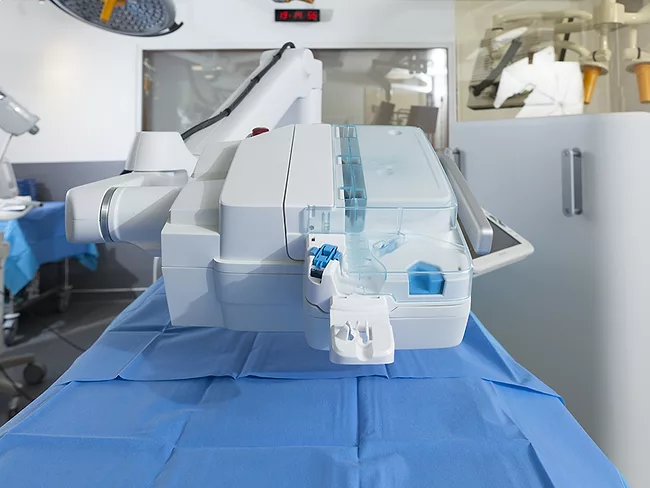
Robocath SAS presented results from the R-Evolution European clinical study assessing the safety and efficacy of its R-One robot for coronary angioplasty procedures. The study, which included 62 patients across six European centers, met all three primary endpoints, showing 100% clinical success, >95% technical success, and 84.5% average reduction in physician radiation exposure.
The second generation of Boston Scientific Corp.’s Acurate Neo2 valve has demonstrated better performance than its predecessor, showing a threefold reduction of paravalvular leakage (PVL) said researchers. During the hotline/late-breaking trials session on May 17 at the EuroPCR meeting held in Paris, Andrea Buono, interventional cardiologist at Fondazione Poliambulanza Istituto Ospedaliero in Brescia, Italy, presented results from a large study comparing the performance of Acurate Neo and Acurate Neo2 in 13 Italian centers.
 RSS
RSS