Johnson & Johnson has announced new data supporting use of its COVID-19 vaccine as a booster shot, after separate trial data from the U.K. showed effects of several vaccines waned after six months.
Lightpoint Medical Ltd. is stepping up commercialization activities and collaborating with Telix Pharmaceuticals Ltd. on radio-guided cancer surgery. The companies plan to initiate prostate cancer clinical trials evaluating Lightpoint’s Sensei with Telix’s investigational prostate cancer single photon emission computed tomography (SPECT) imaging agent TLX599-CDx.
Cardiac Dimensions Inc. launched the Empower trial of its Carillon mitral contour system for the treatment of heart failure patients with early-stage functional mitral regurgitation. The company expects to enroll up to 300 patients at 75 sites in the international, randomized, sham-controlled trial.
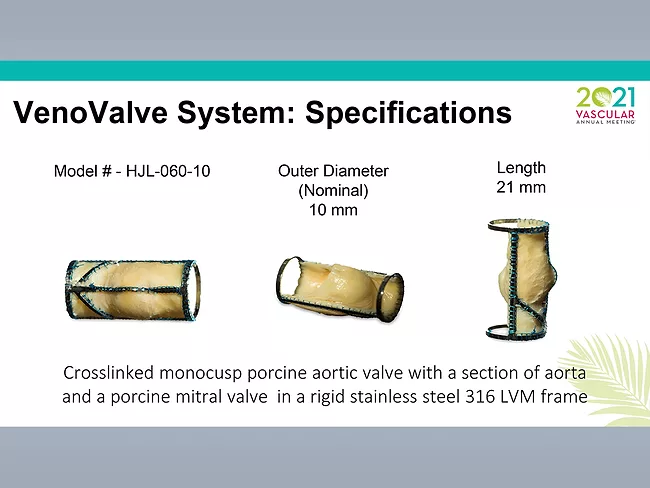
Jorge Ulloa of Hancock Jaffe Laboratories Inc. presented positive results from a first-in-human trial of implantation with its Venovalve device at the Society for Vascular Surgery annual meeting in San Diego. Two years following surgery, outcomes included more than 60% improvements in reflux and disease manifestations and 93% decrease in pain in patients with chronic venous insufficiency with no safety issues or venous ulcer recurrences.
Using a minimally invasive brain implant, Feinstein Institutes for Medical Research scientists produced tingling sensations in the fingers of patients who lacked the sense of touch as a result of nerve damage, according to a study published in Brain Stimulation. A second study by the team, which appeared in Frontiers in Neuroscience, used stereoelectroencephalography (SEEG) electrodes to decode neural signals to improve the hand control algorithms in brain-computer interfaces.
A less controversial option than aducanumab may be available soon to help individuals with mild to moderate Alzheimer’s disease-related dementia. Researchers at the Medical University of Vienna and the University of Toronto have developed a technique using ultrasound that reverses cognitive decline and they say it could be available for clinical use shortly.
Catheter ablation for atrial fibrillation has enjoyed an uneven reputation at best over the years, but the prospect of eliminating anti-arrhythmic drugs has proven difficult for both patients and clinicians to ignore. A new analysis of data from the Catheter Ablation vs. Antiarrhythmic Drug Therapy for Atrial Fibrillation (CABANA) study seems to answer the cost effectiveness question for ablation, however, representing yet another piece of evidence that should support increased sales of these devices in the coming years.
Polarityte Inc.’s Skinte product met primary and secondary endpoints in a randomized clinical trial evaluating healing of diabetic foot ulcers. Skinte is a human cellular and tissue-based product made from a patient’s own skin. Results from the trial and data from the product’s use from 2017 to 2021 during a period of enforcement discretion by the FDA were used by the company in its filing earlier this week of an investigational new drug application for Skinte.
TORONTO – What do ER doctors want most for their patients? Never to return to the ER, said Giovanni Ferrara, a professor at Edmonton’s University of Alberta Hospital's Division of Pulmonary Medicine. Ferrara is heading a feasibility project to see if a wearable device developed by Rochester, N.Y.-based Heath Care Originals Inc. can predict with scientific certainty when the condition of a patient with lung disease is worsening and requires another visit to the hospital.
PARIS – Royal Philips NV is working with the Spanish National Center for Cardiovascular Research (CNIC) on an ultrafast cardiac magnetic resonance imaging (MRI) protocol that could reduce scanning times to just a few minutes.
 RSS
RSS